
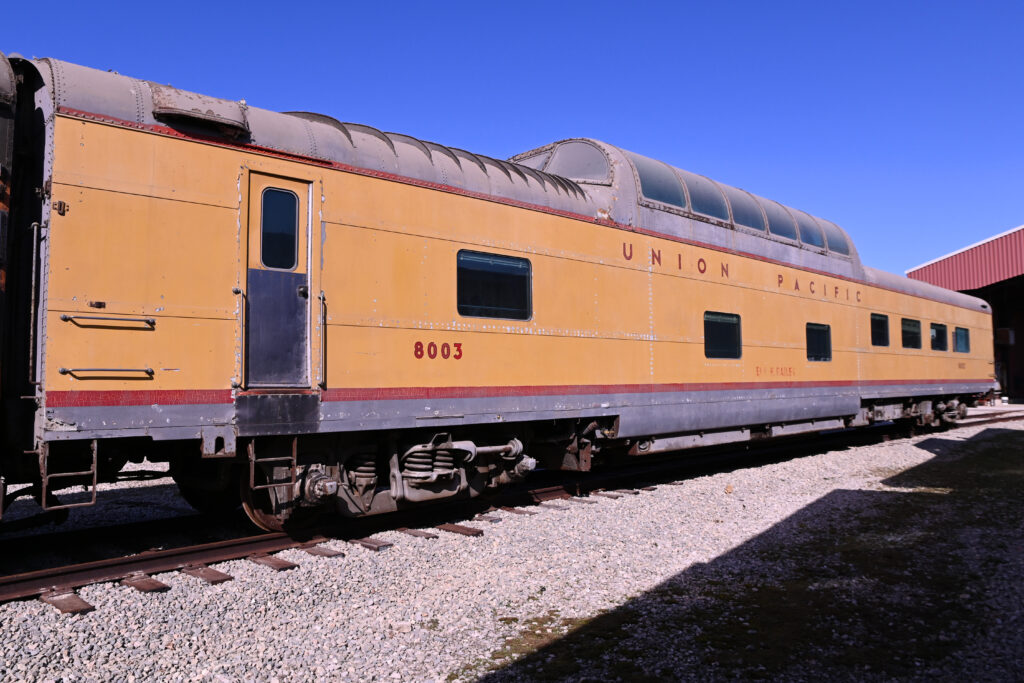
Thanks to a grant from the David L. and Rita E. Nelson Family Fund, the National Railroad Museum has begun a three-year restoration of the Union Pacific No. 8003 Dome Diner. The car was moved from the McCormick Pavilion into our restoration facility in May of 2024.
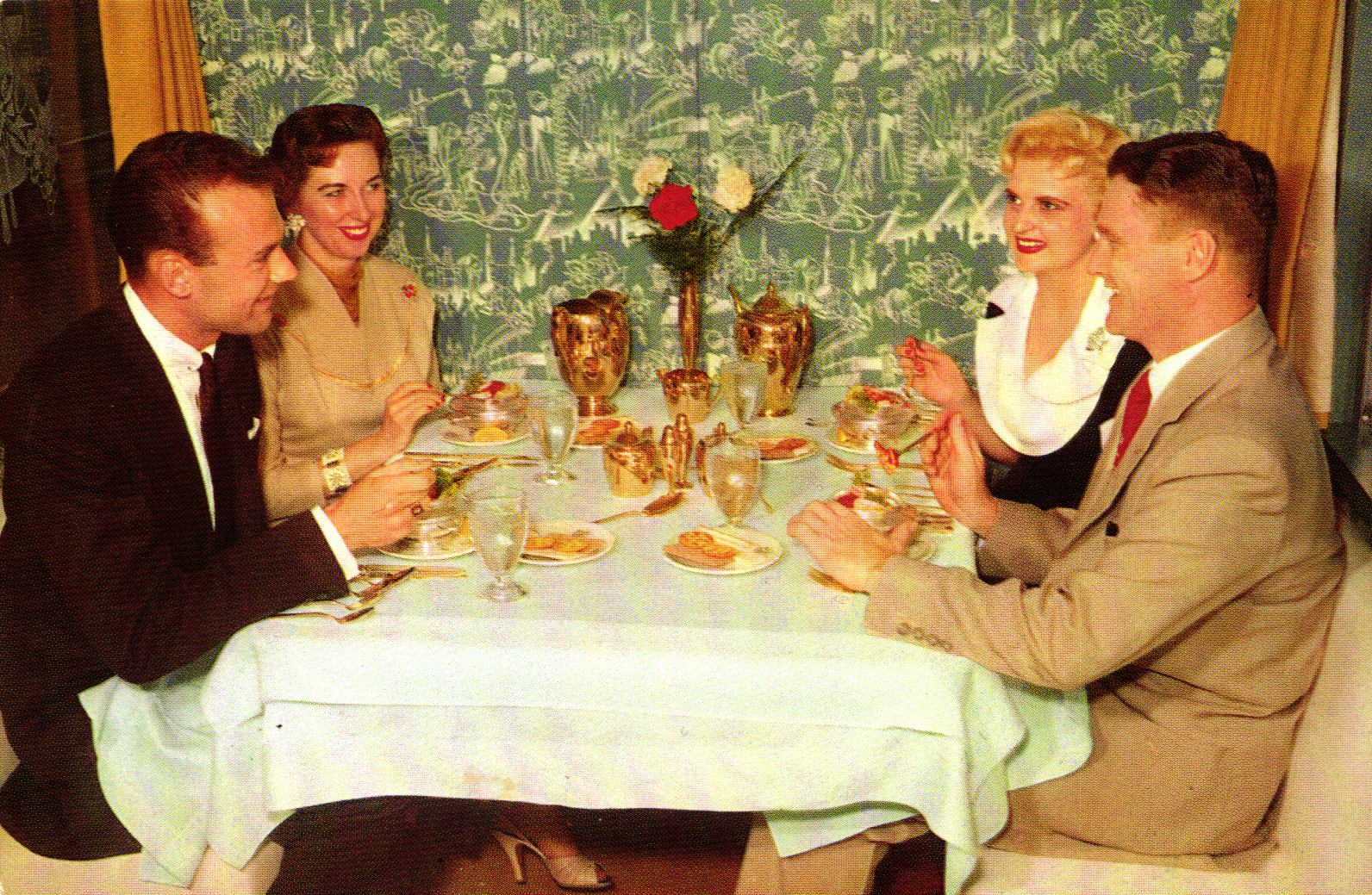
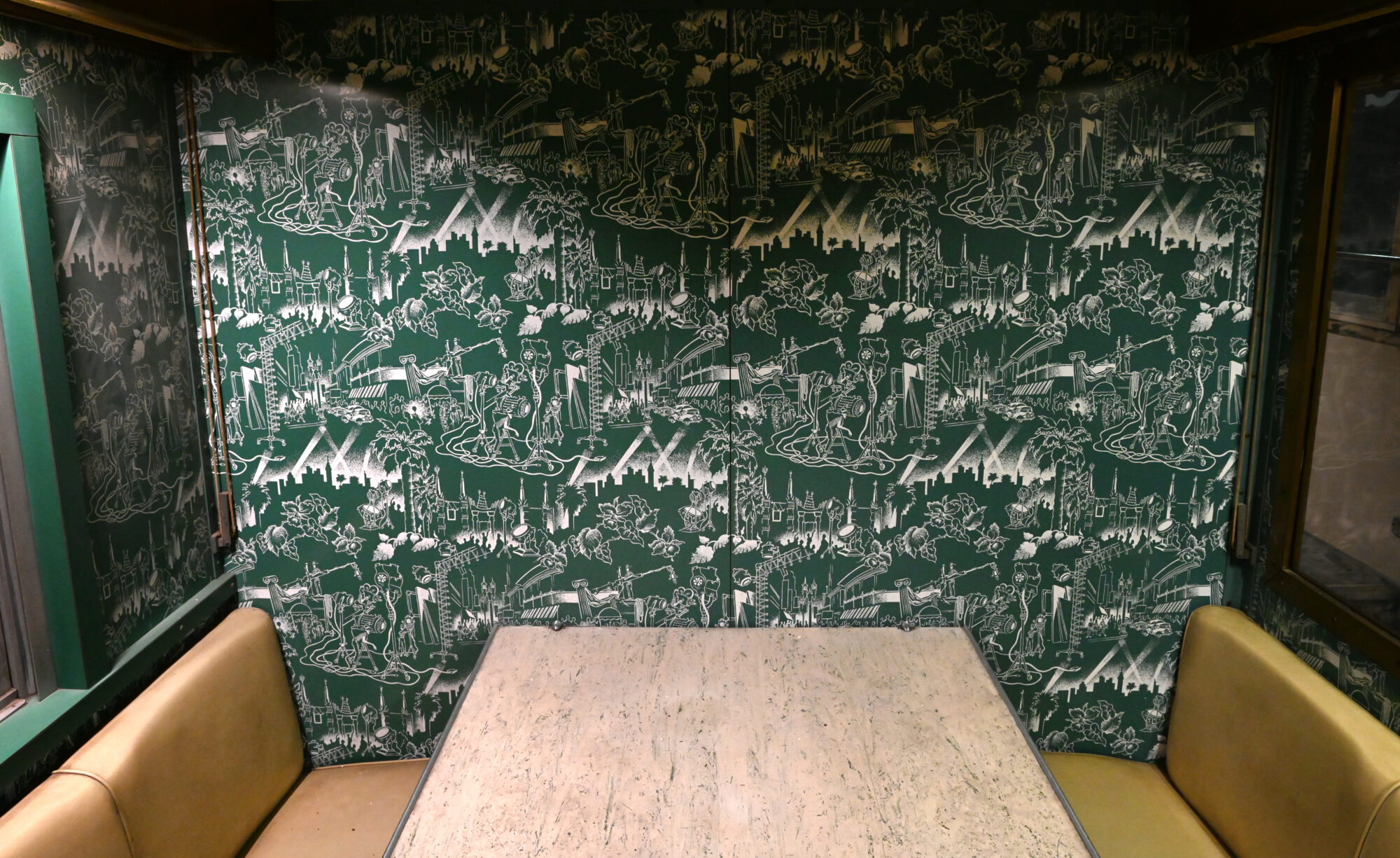
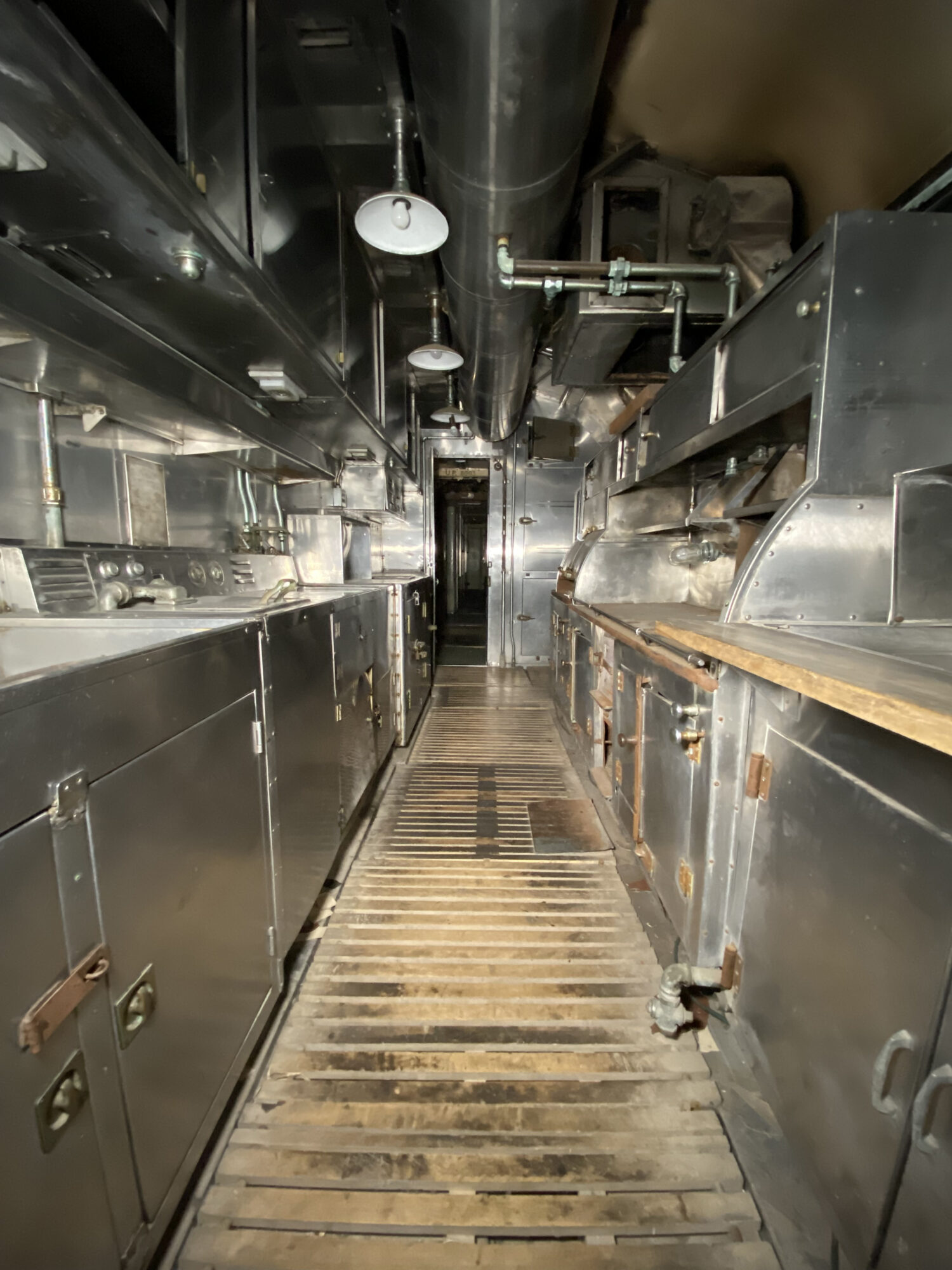
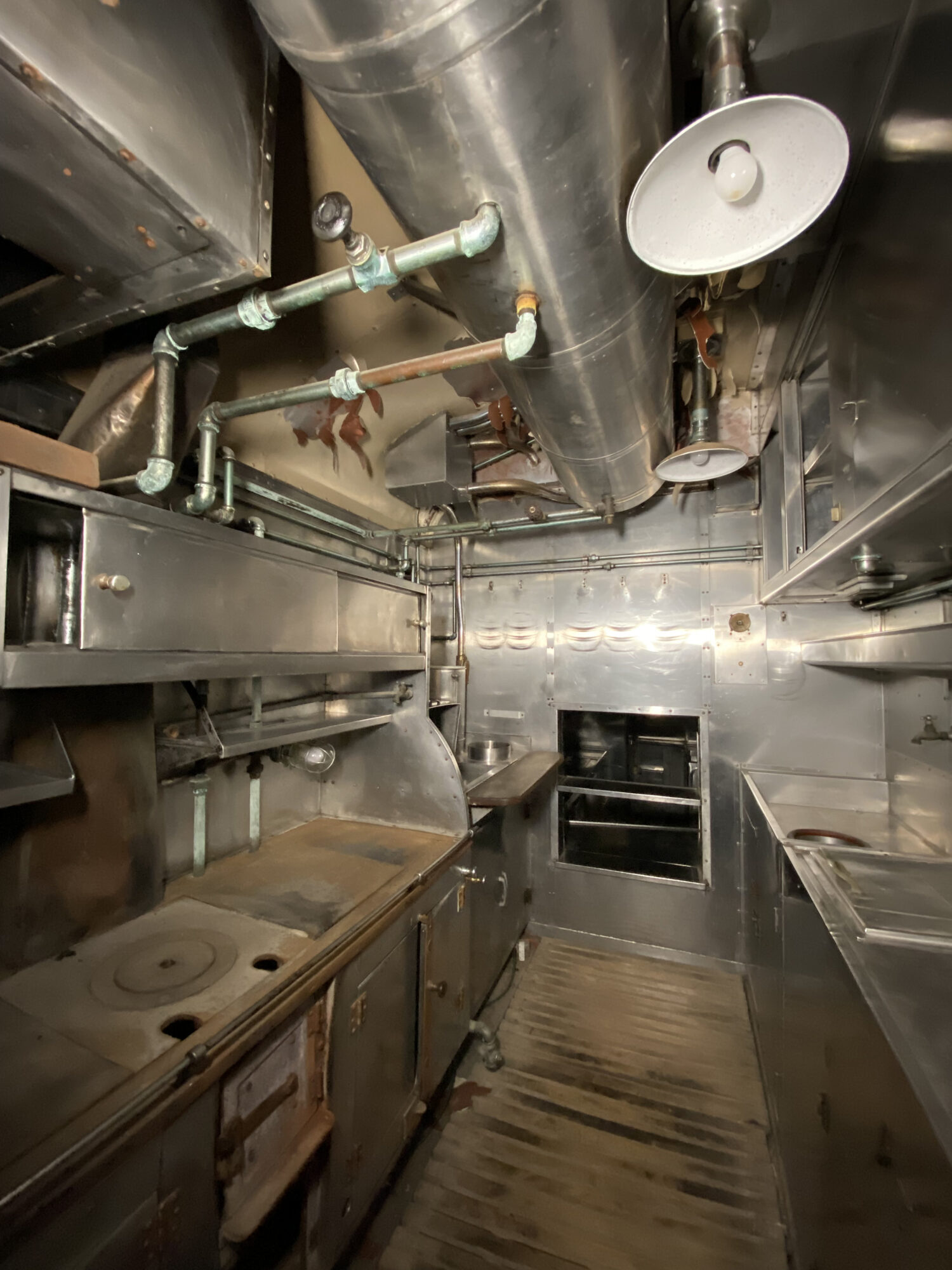
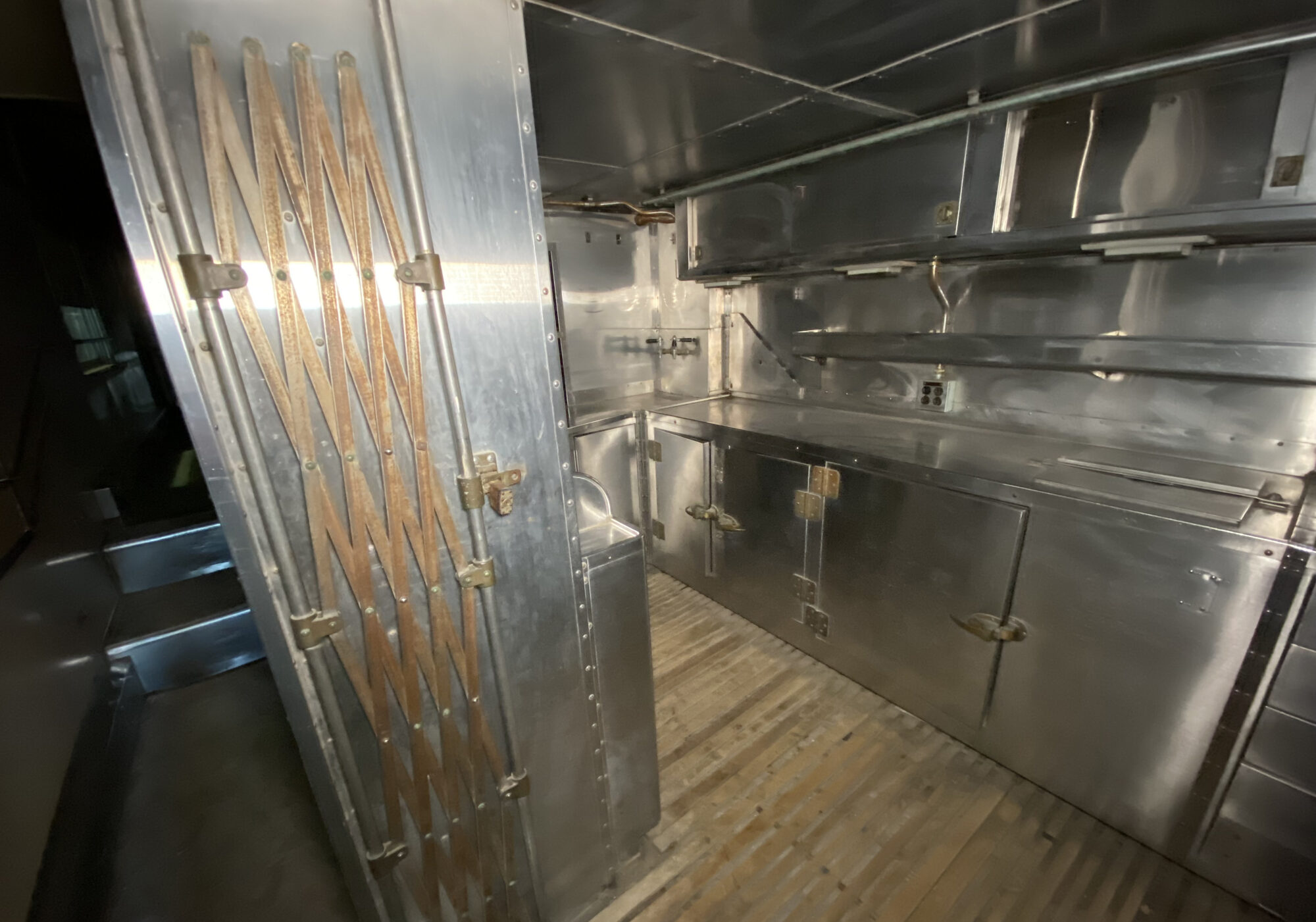
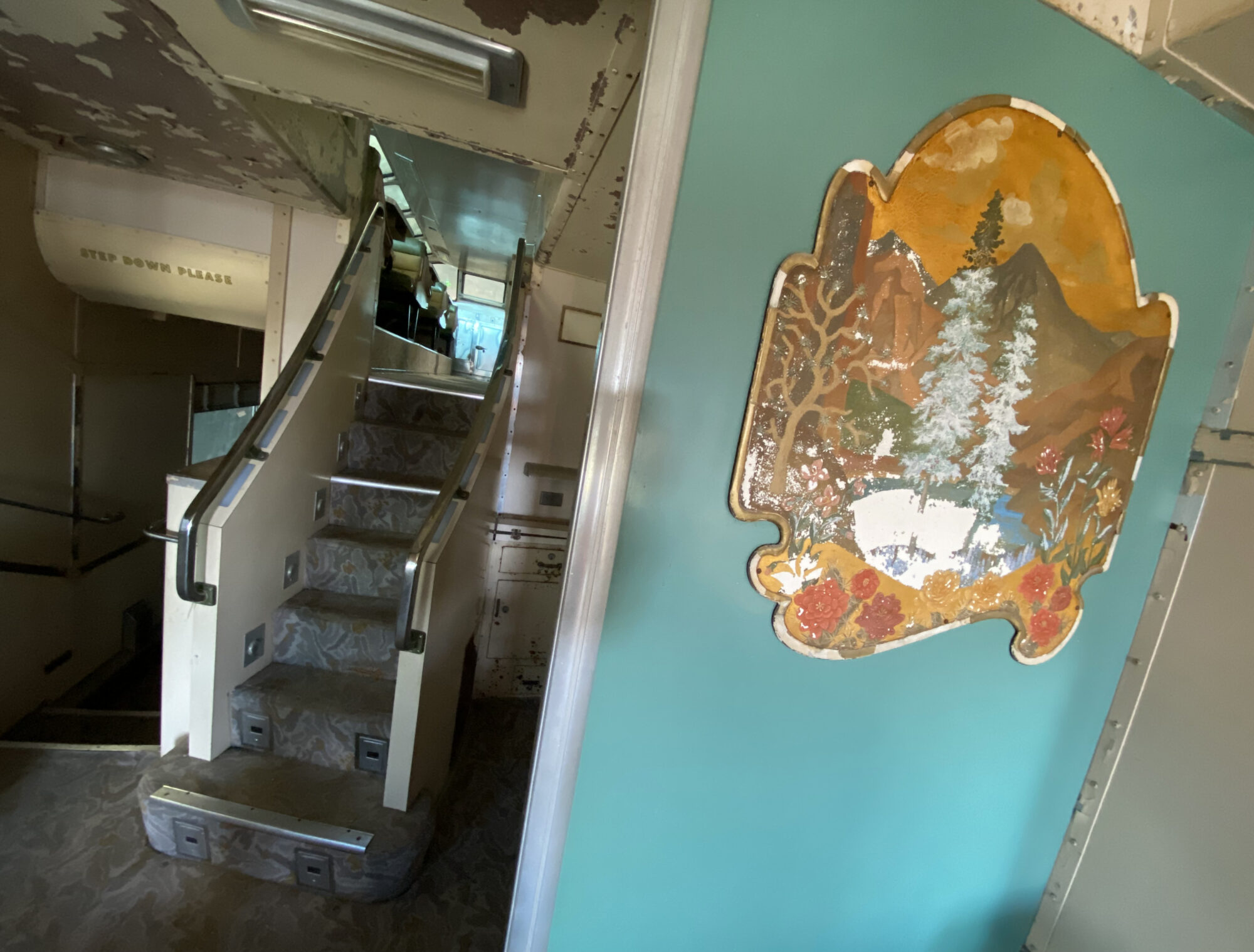
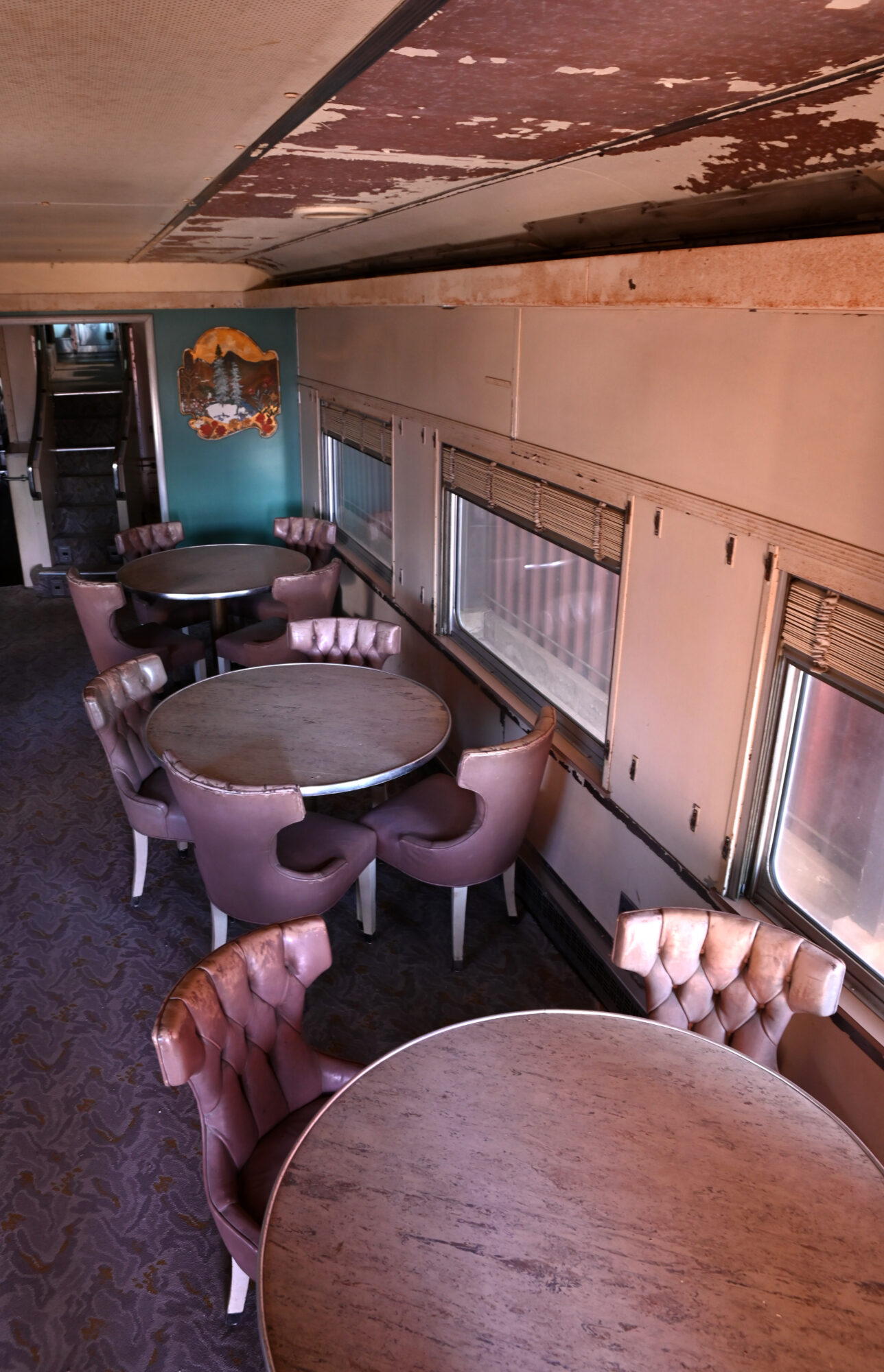
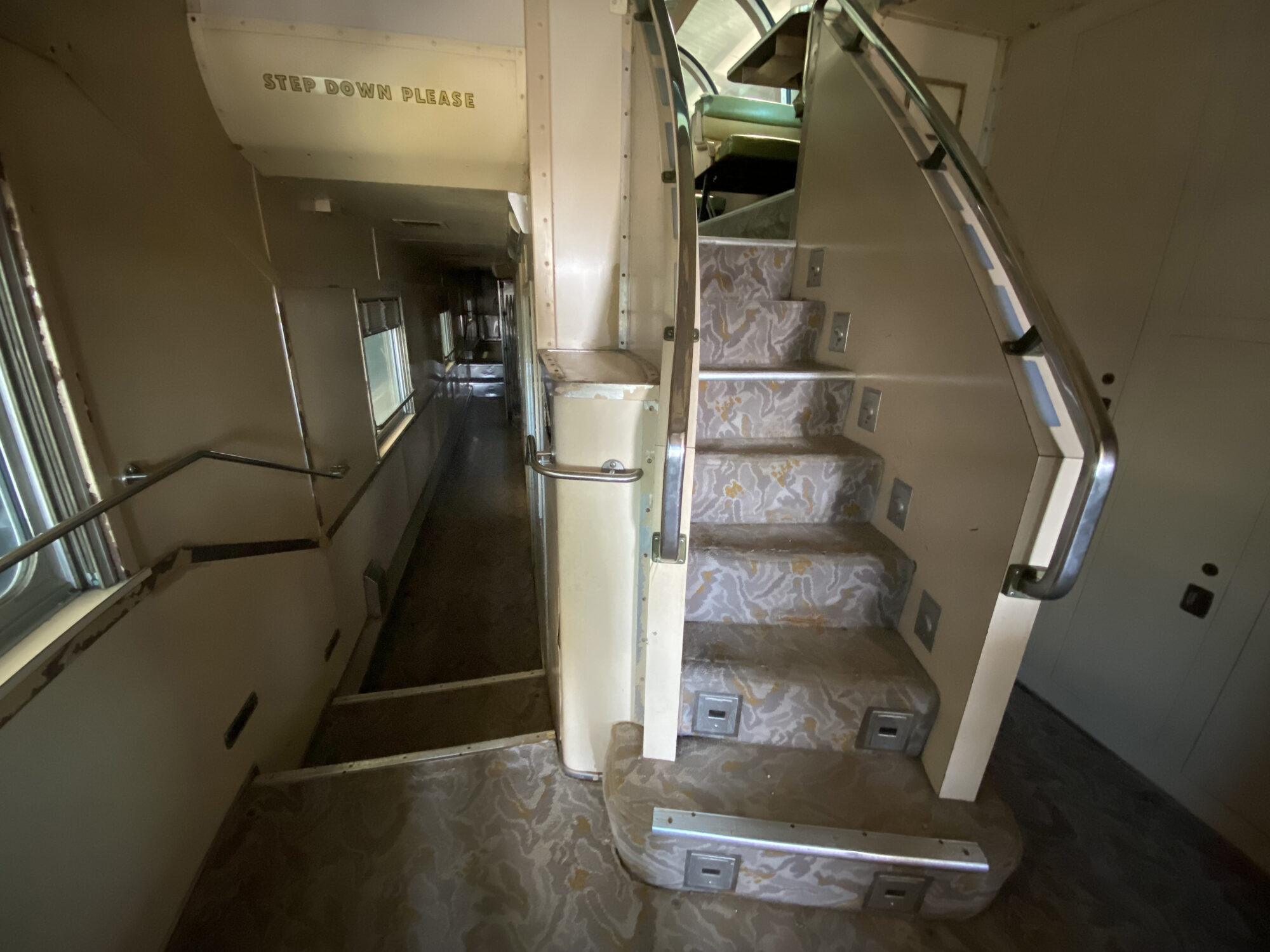
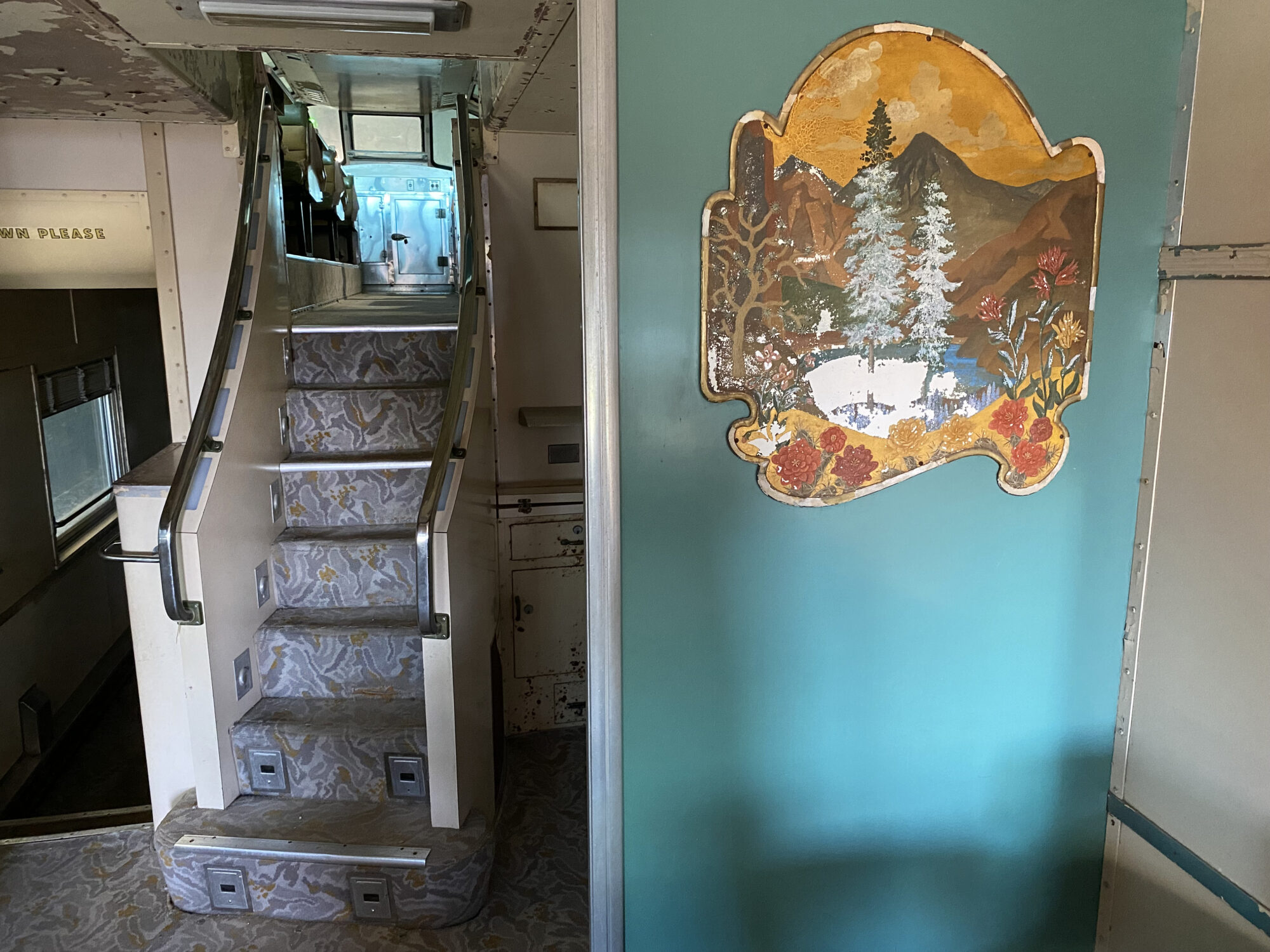
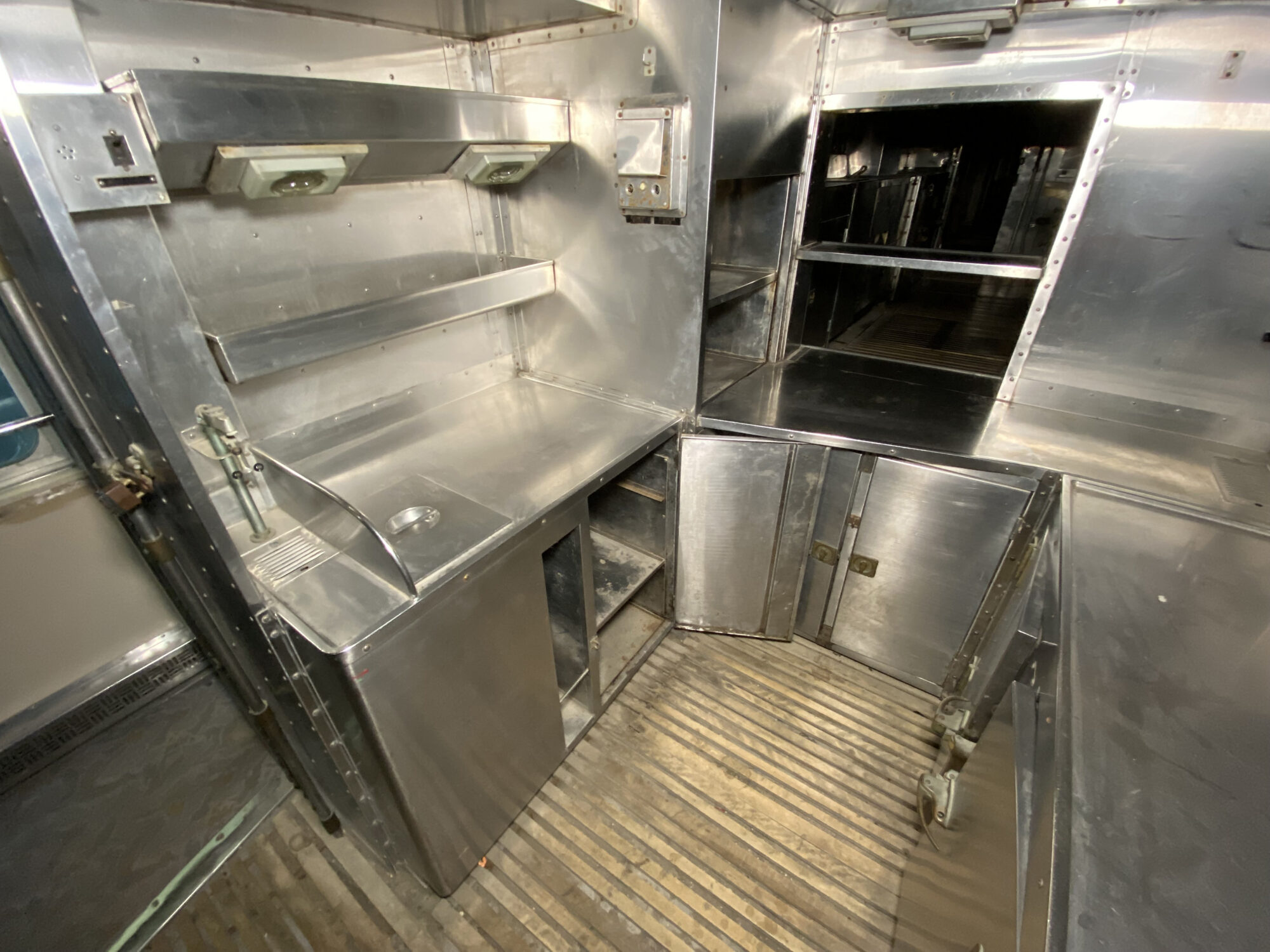
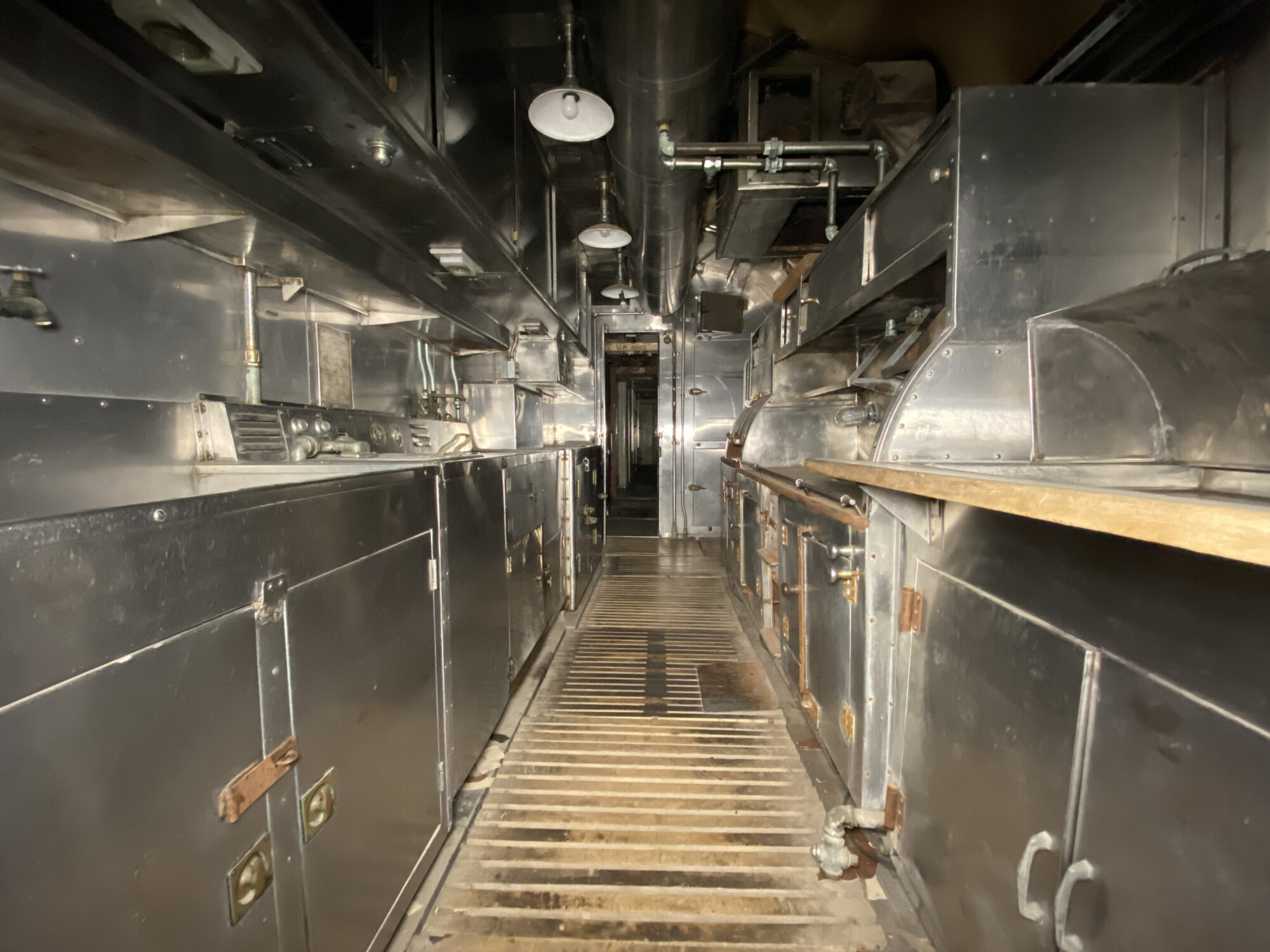
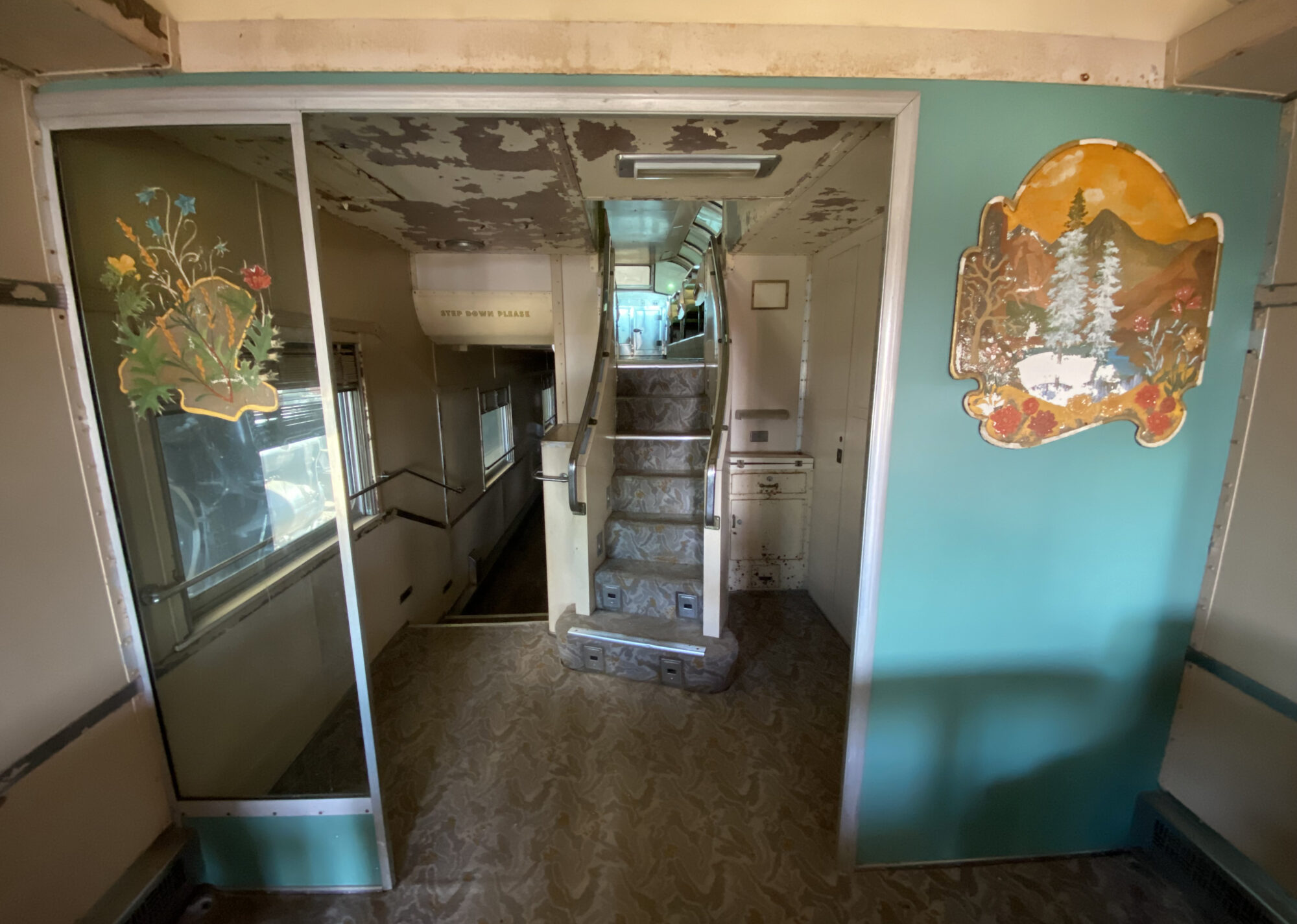
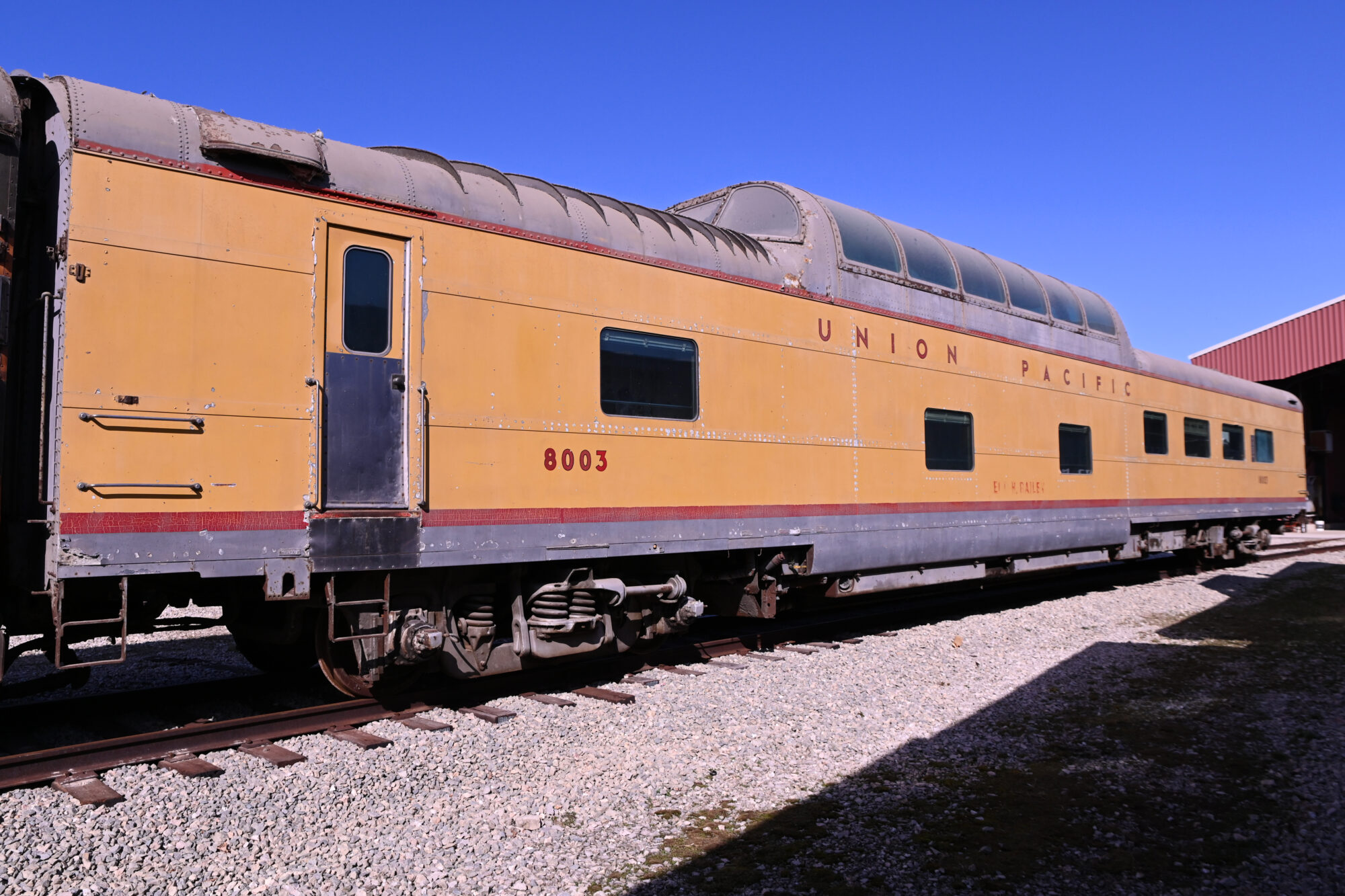
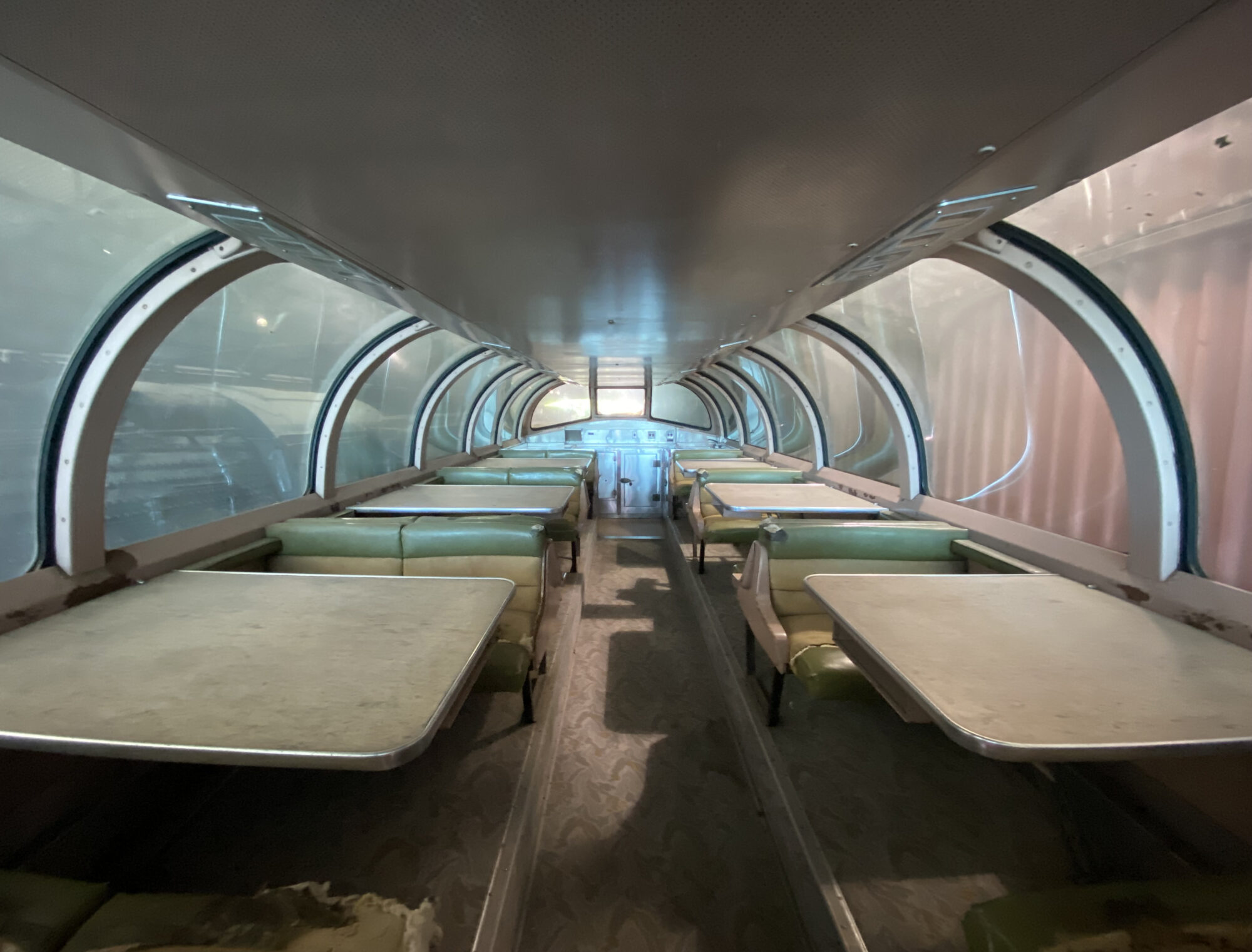
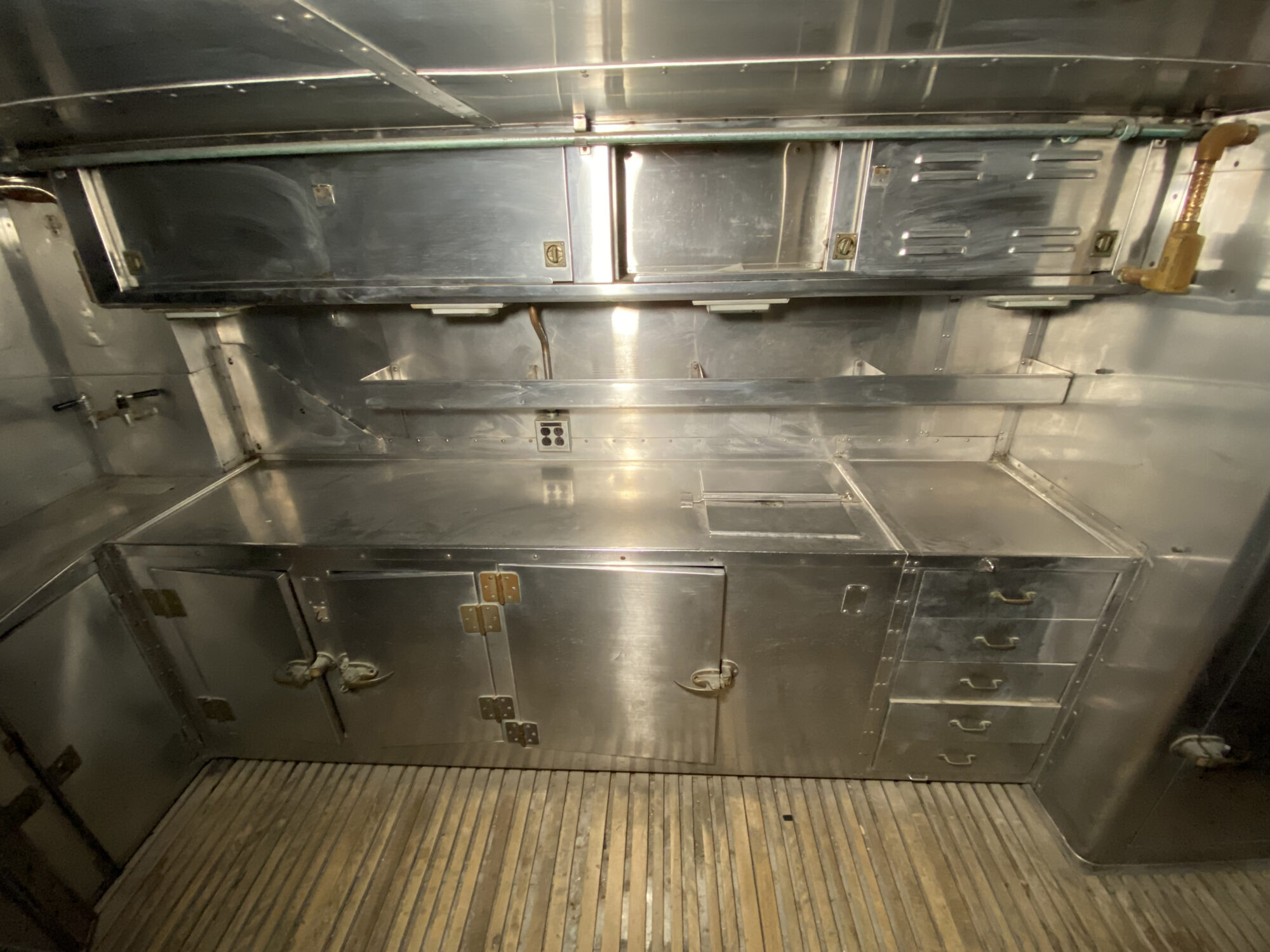
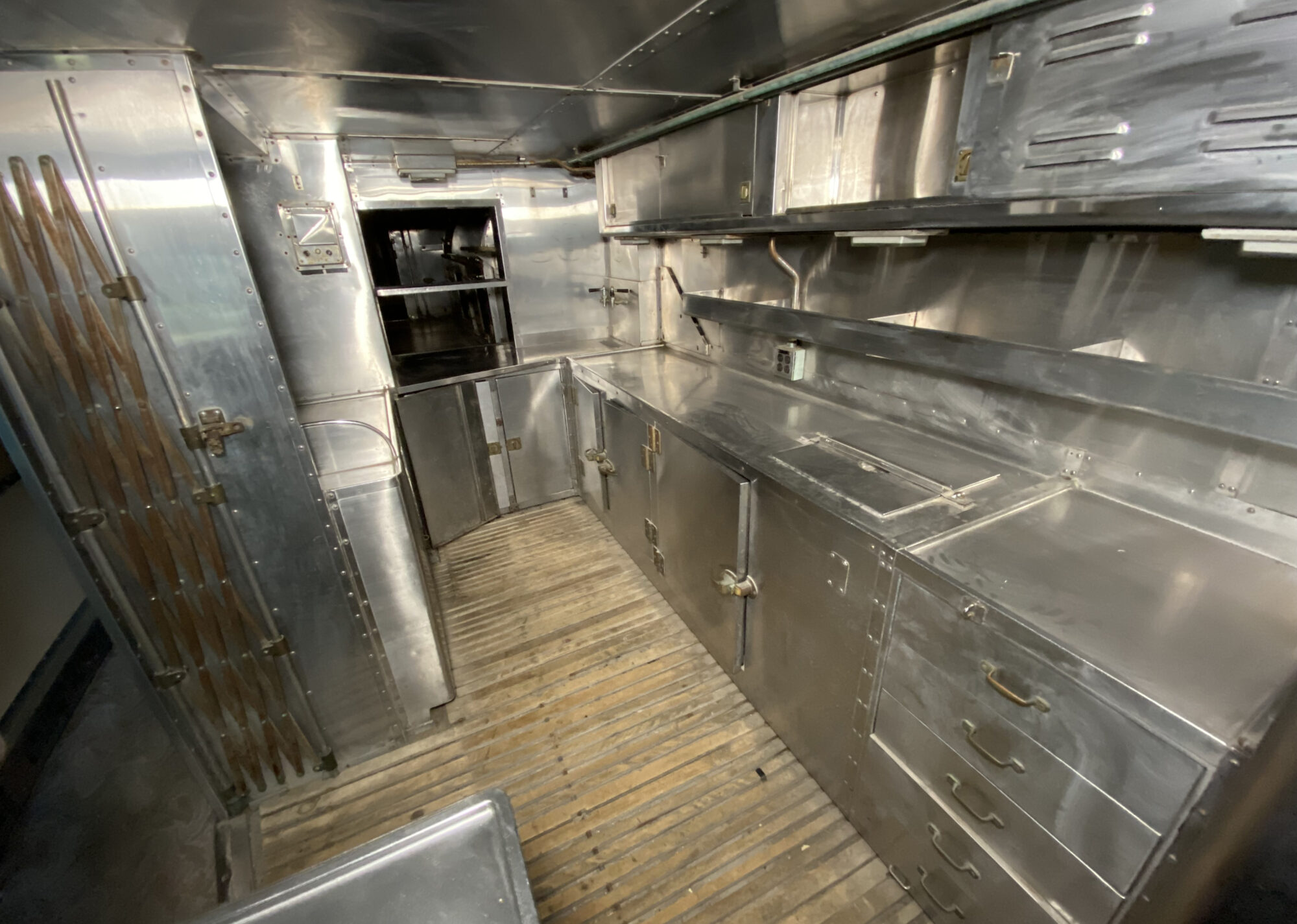
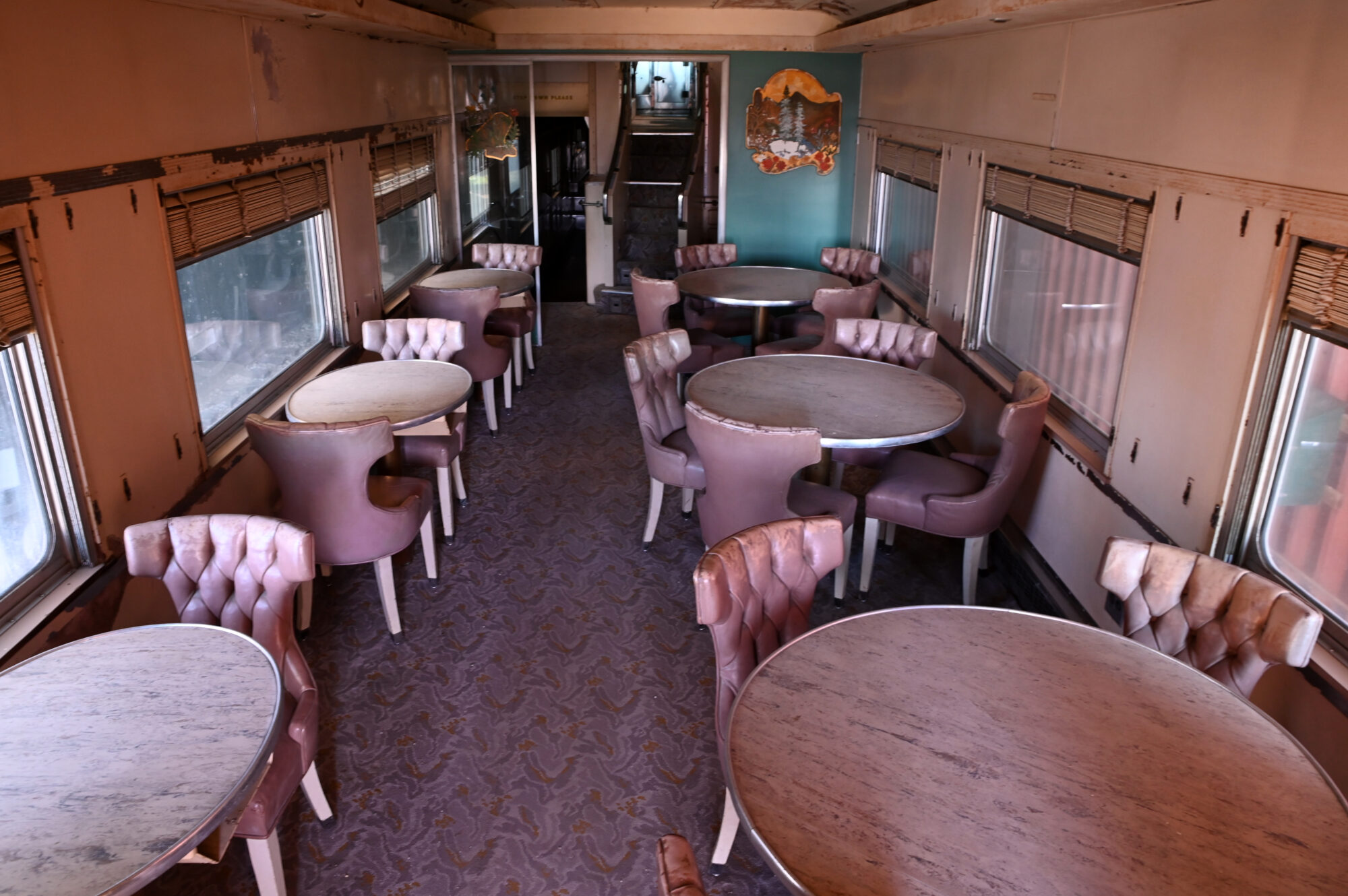
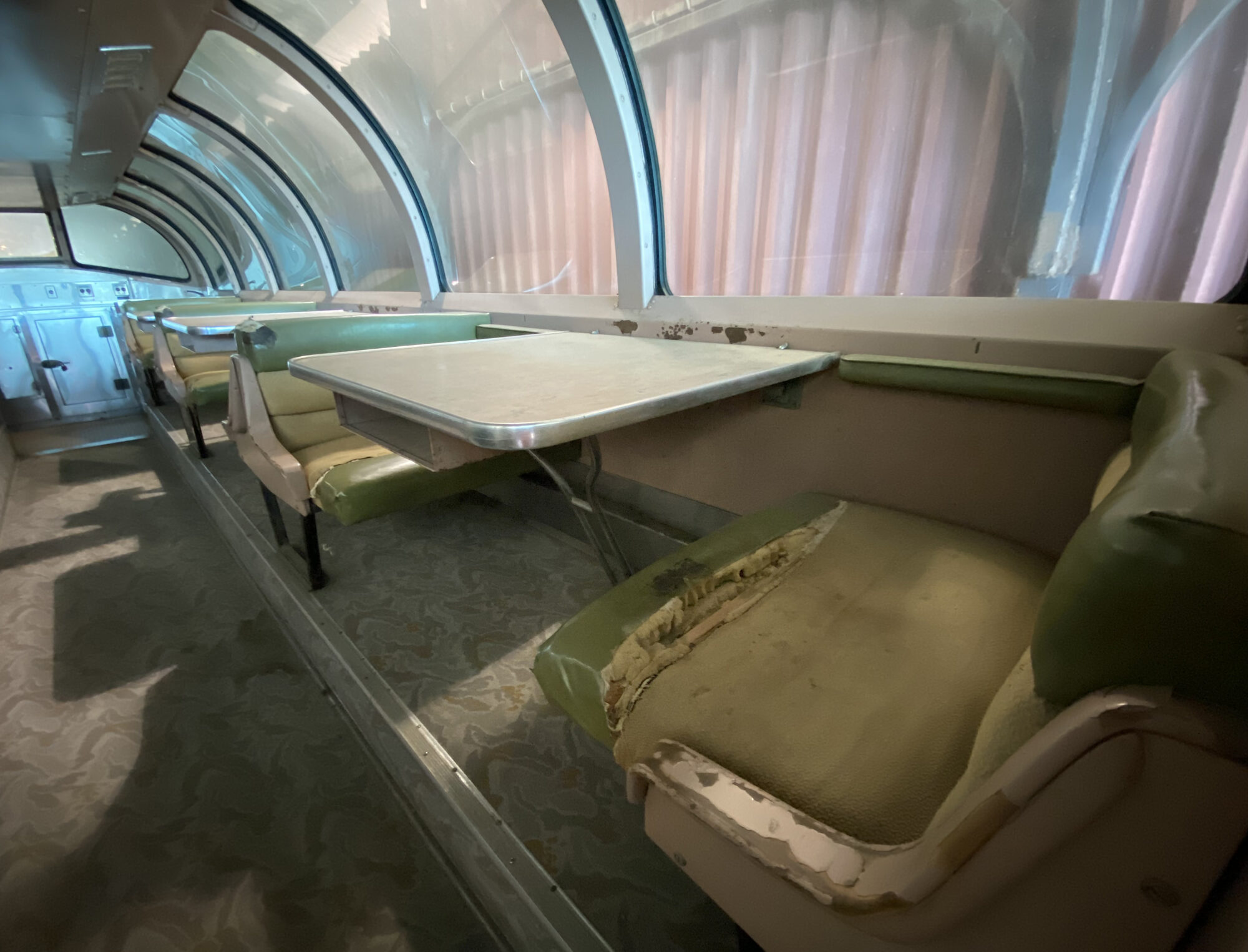
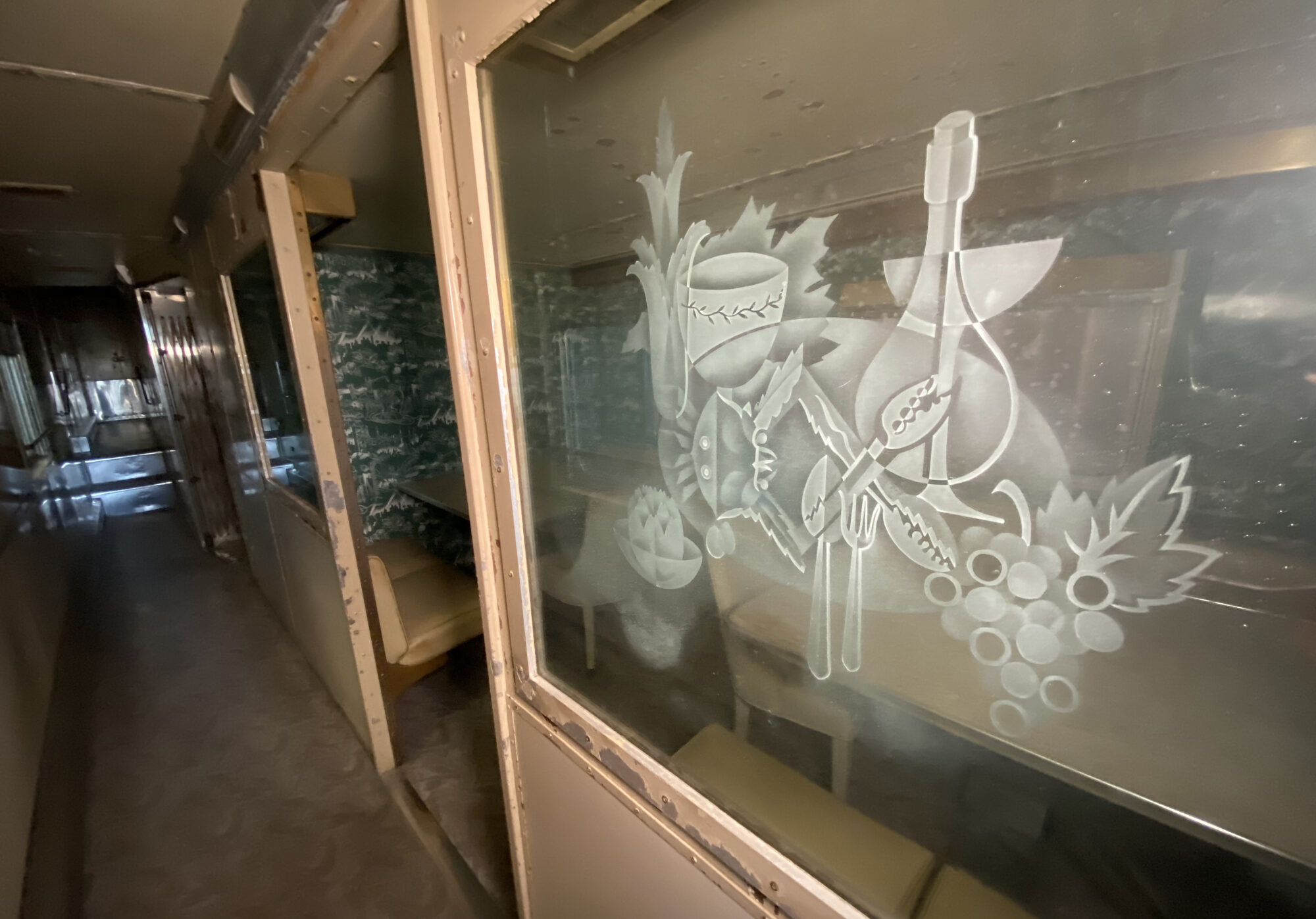
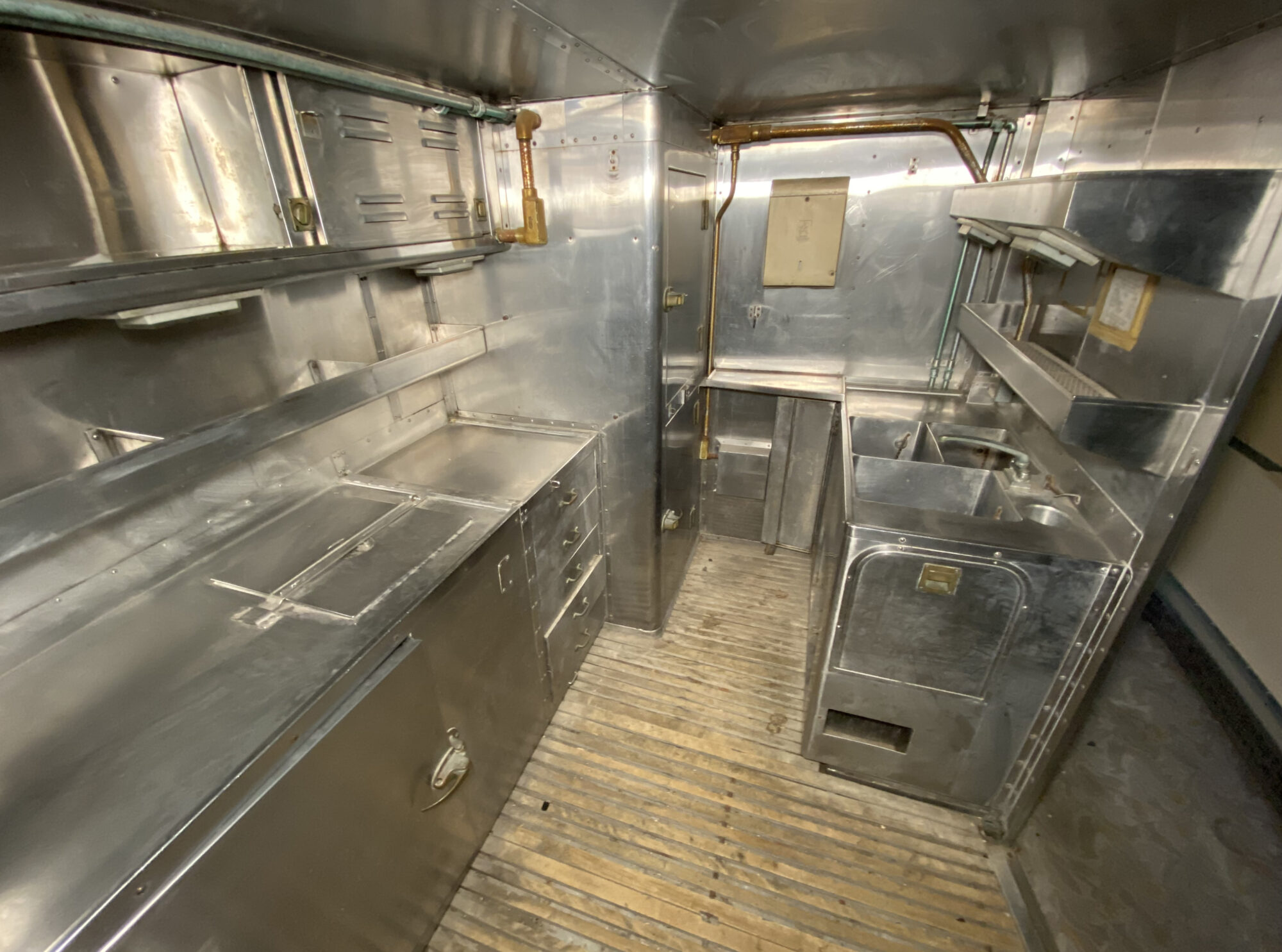
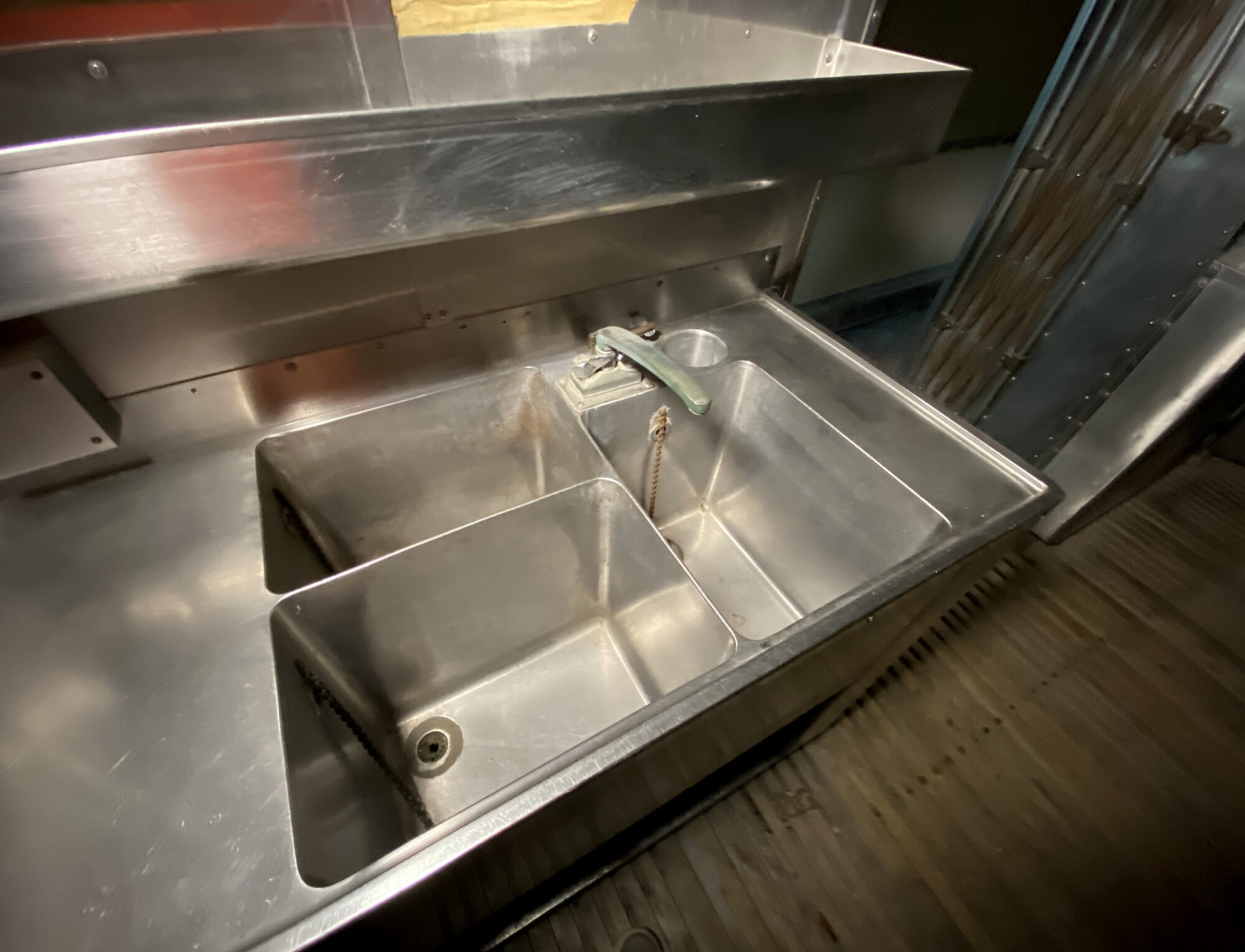
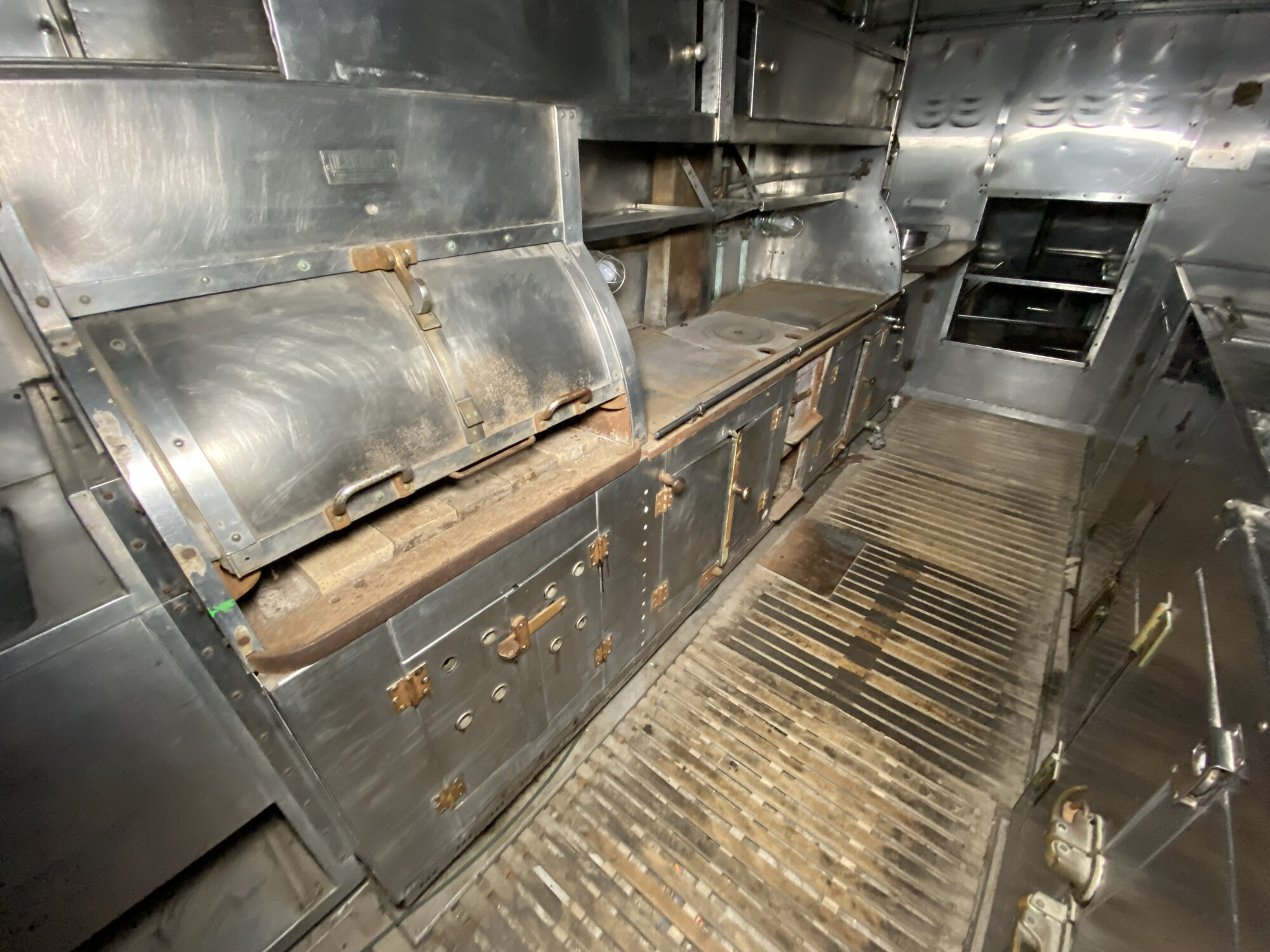
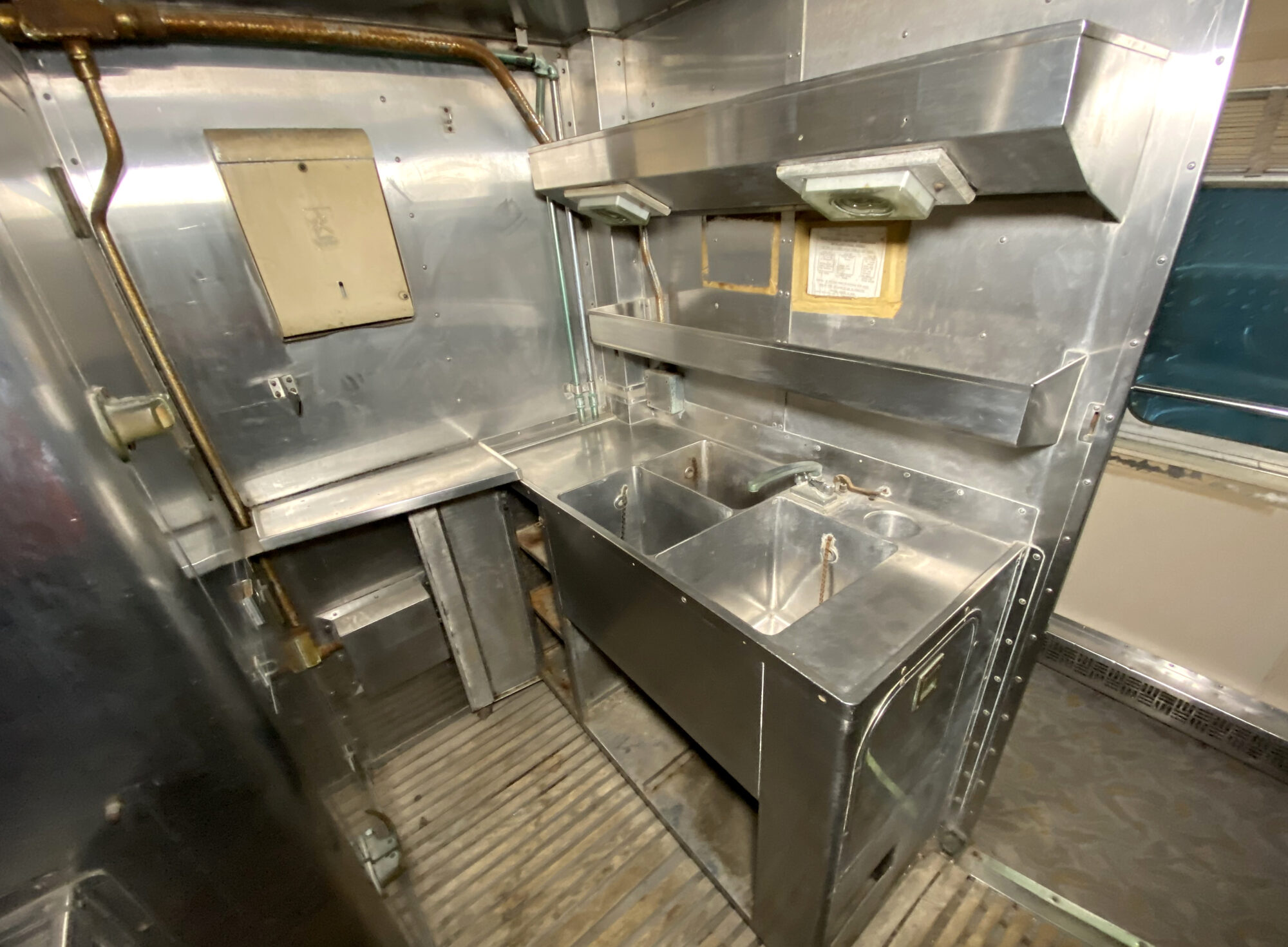
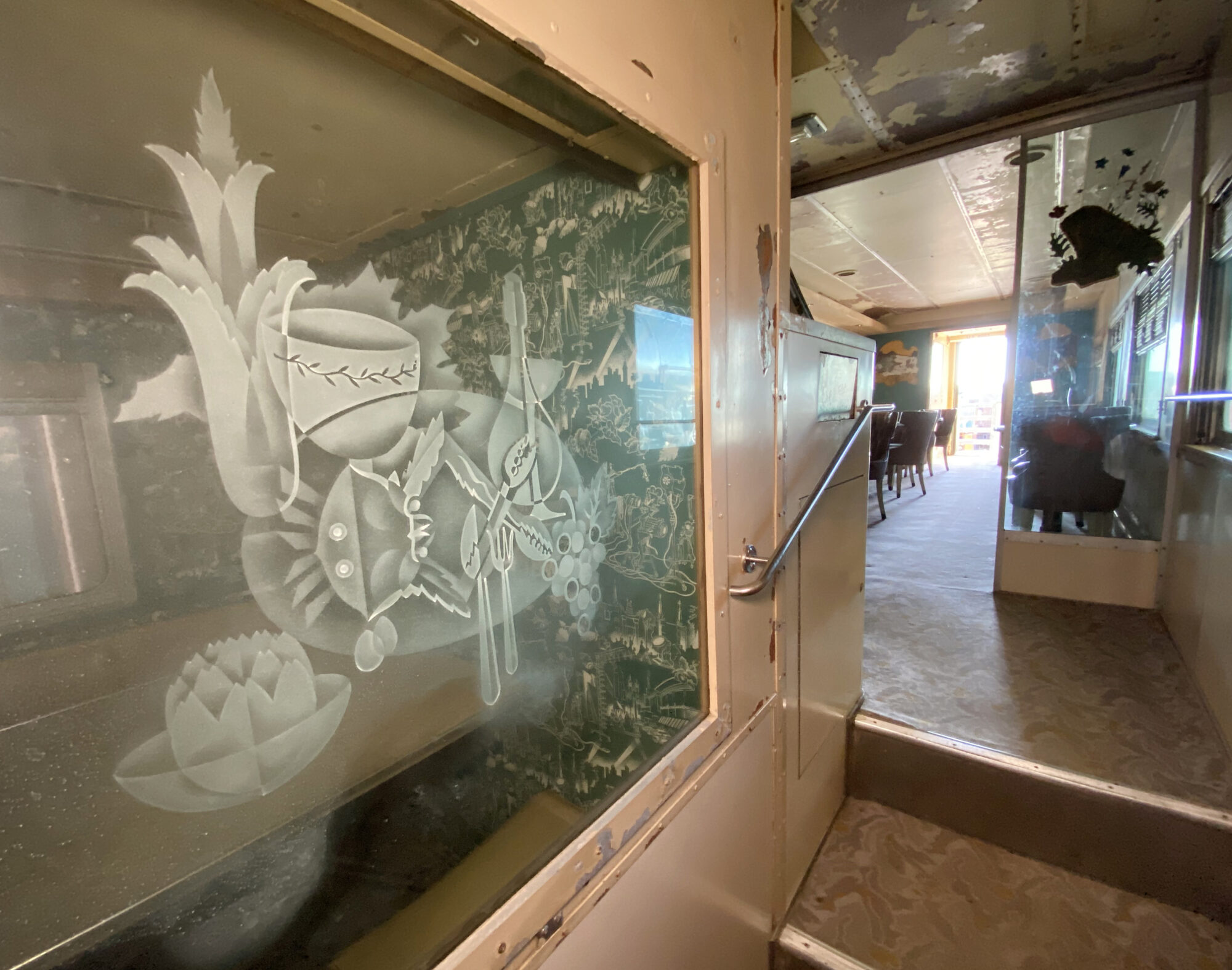
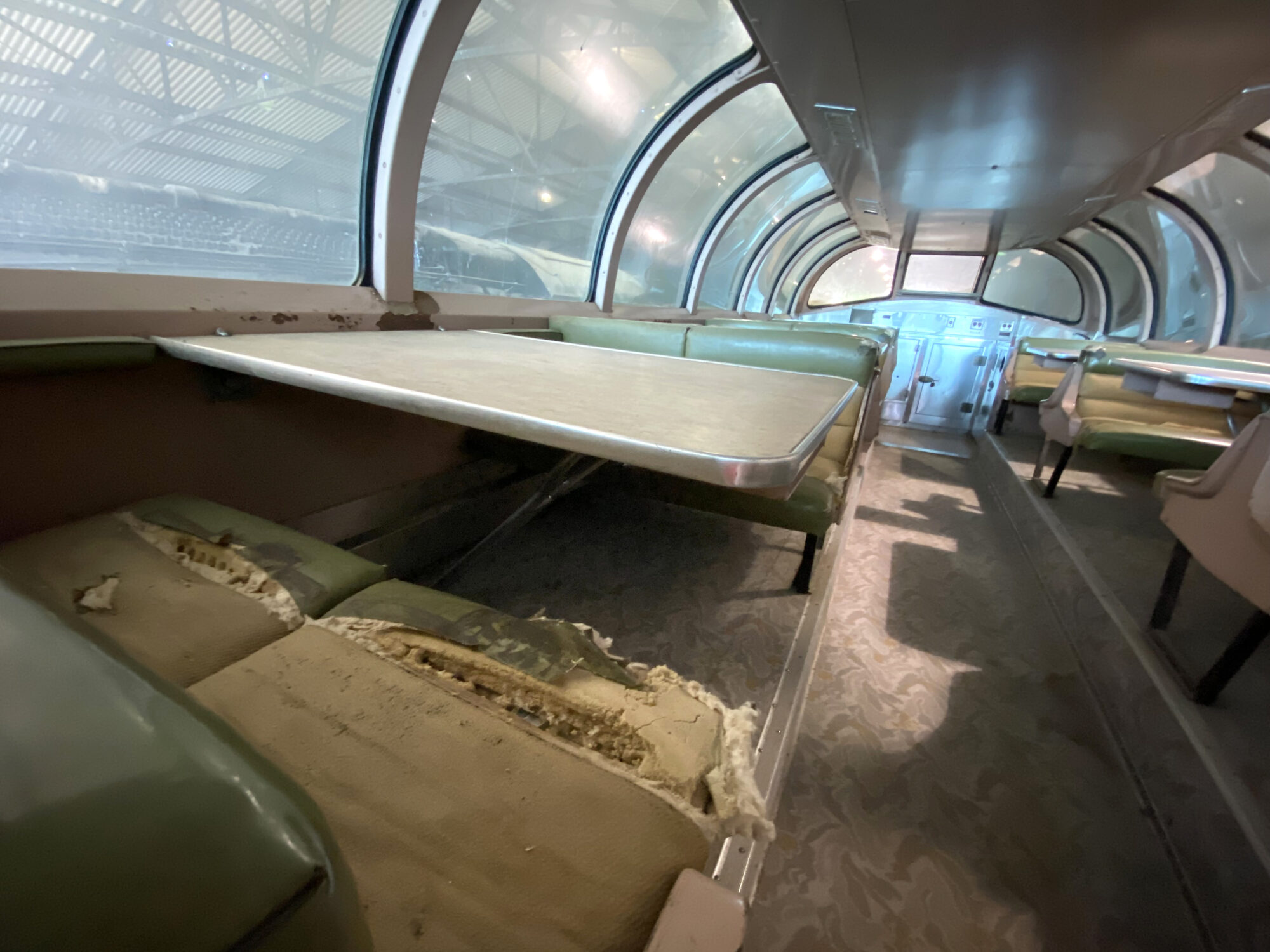
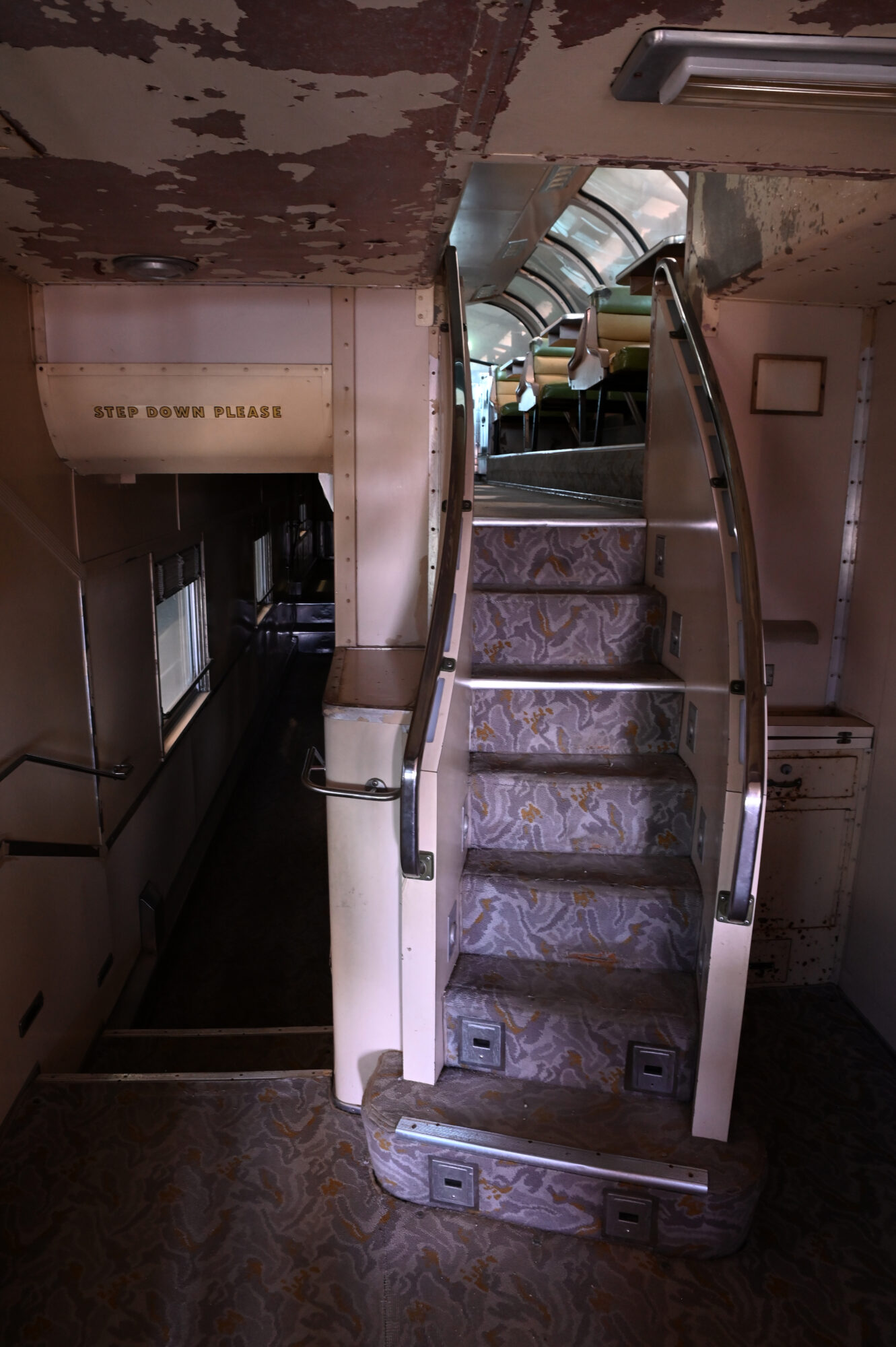
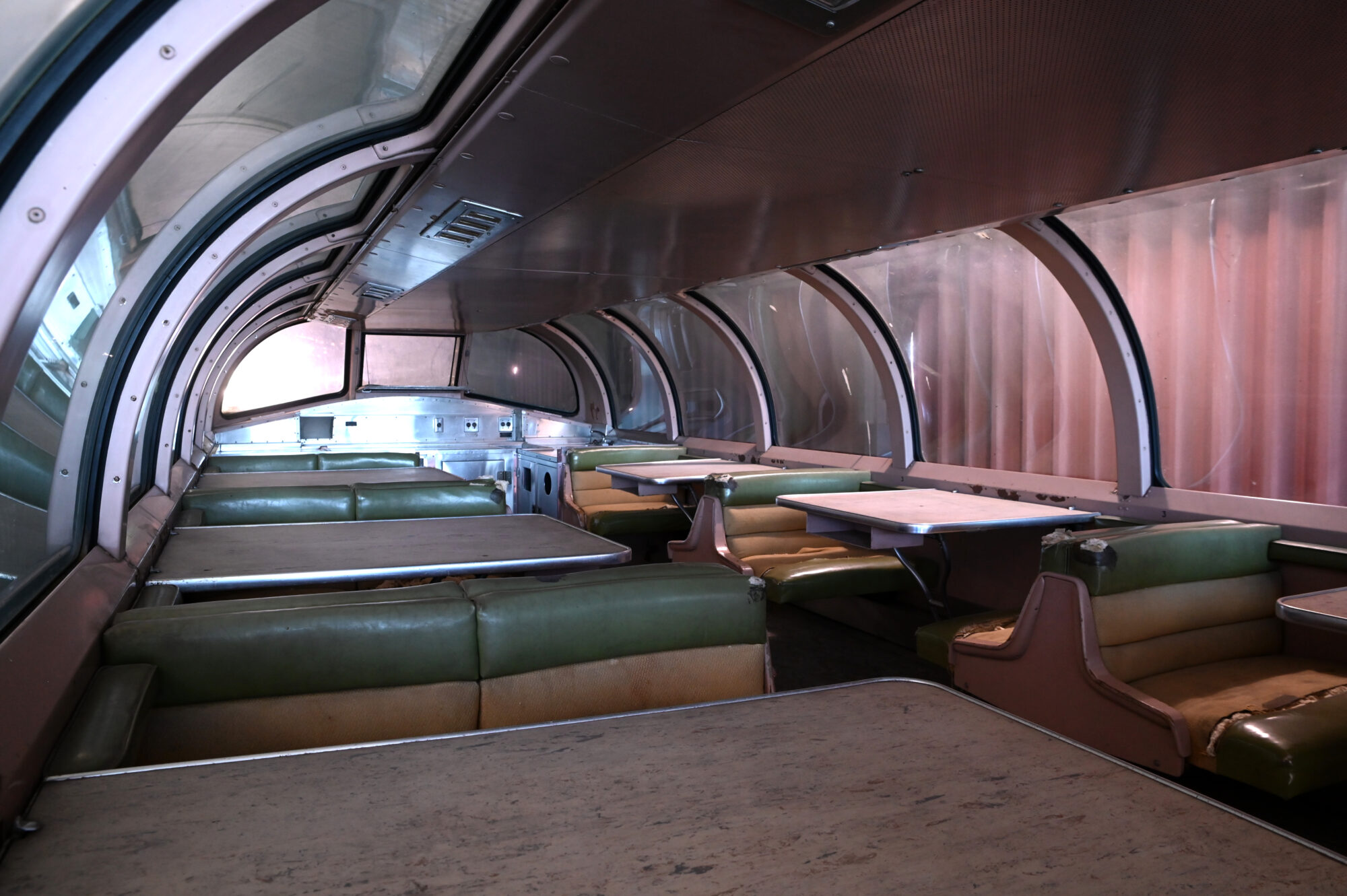
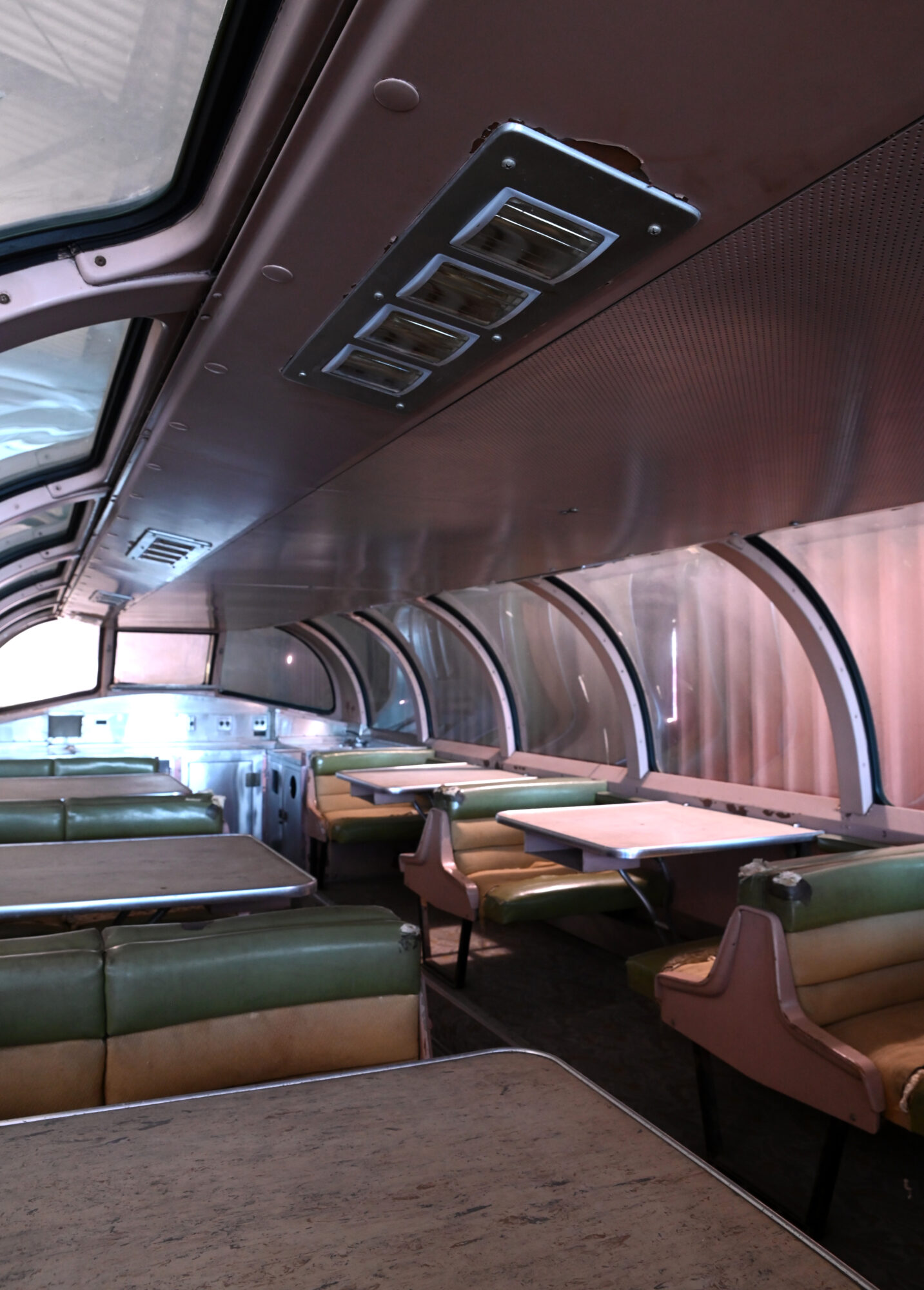
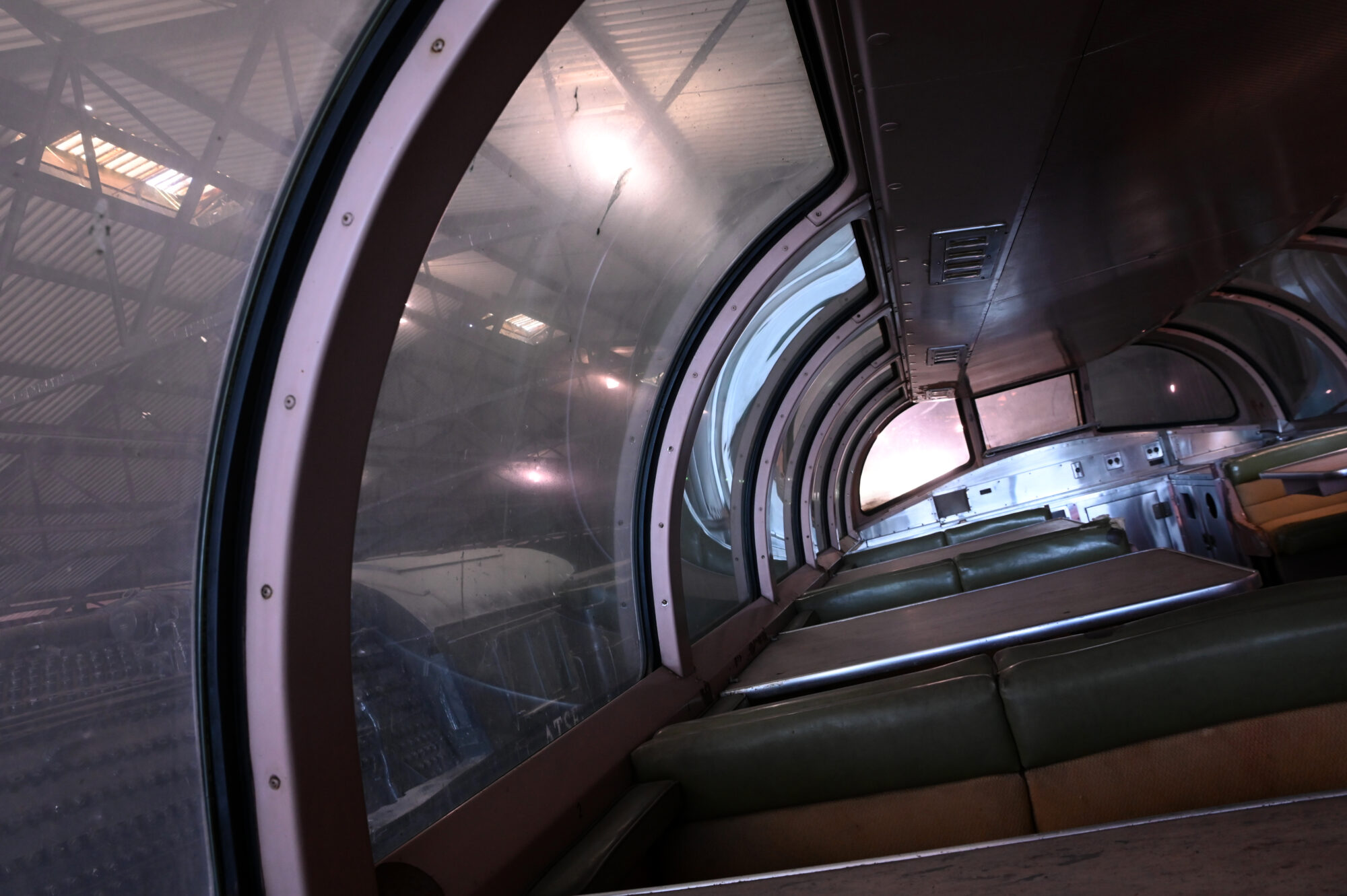
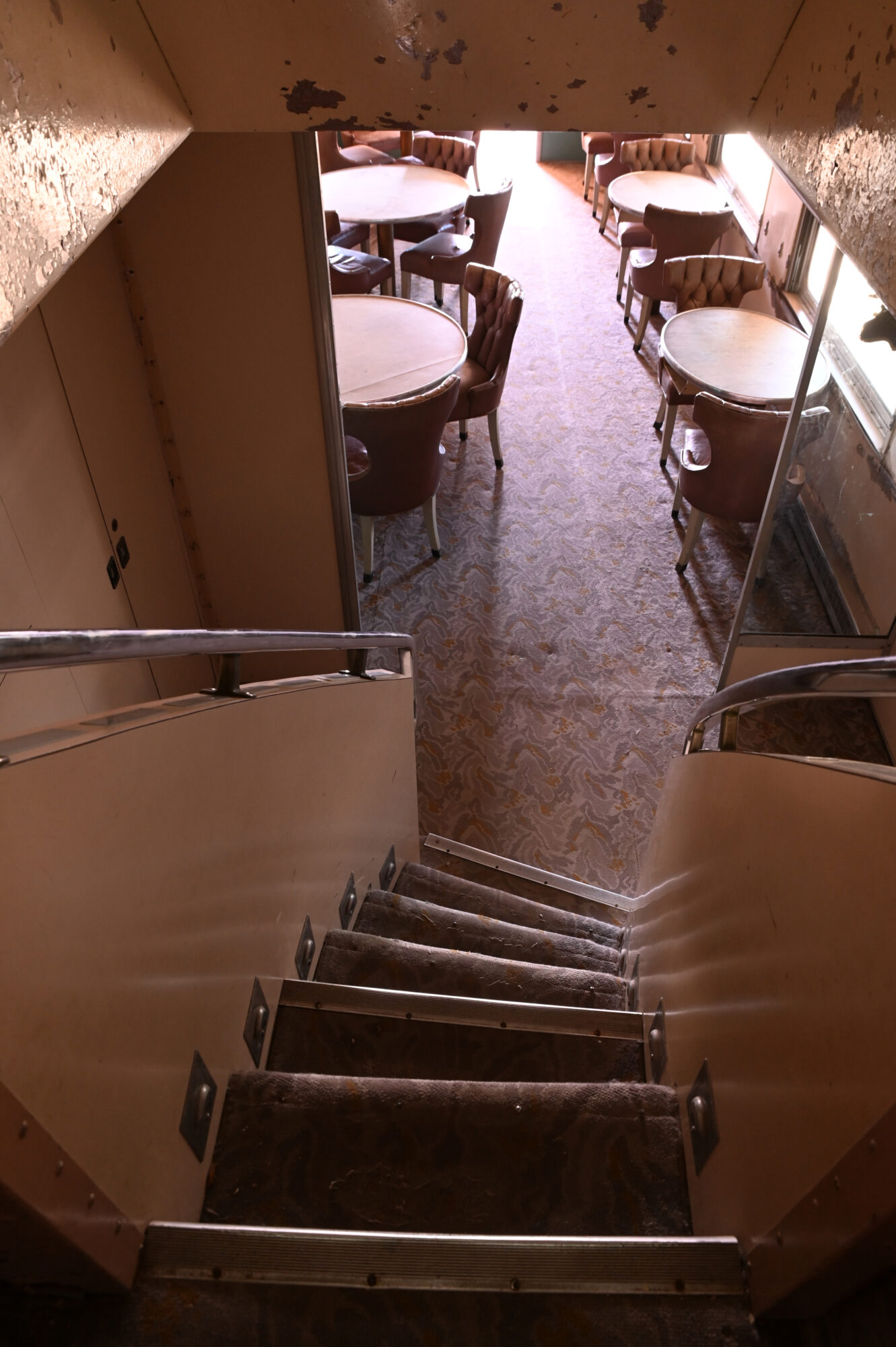
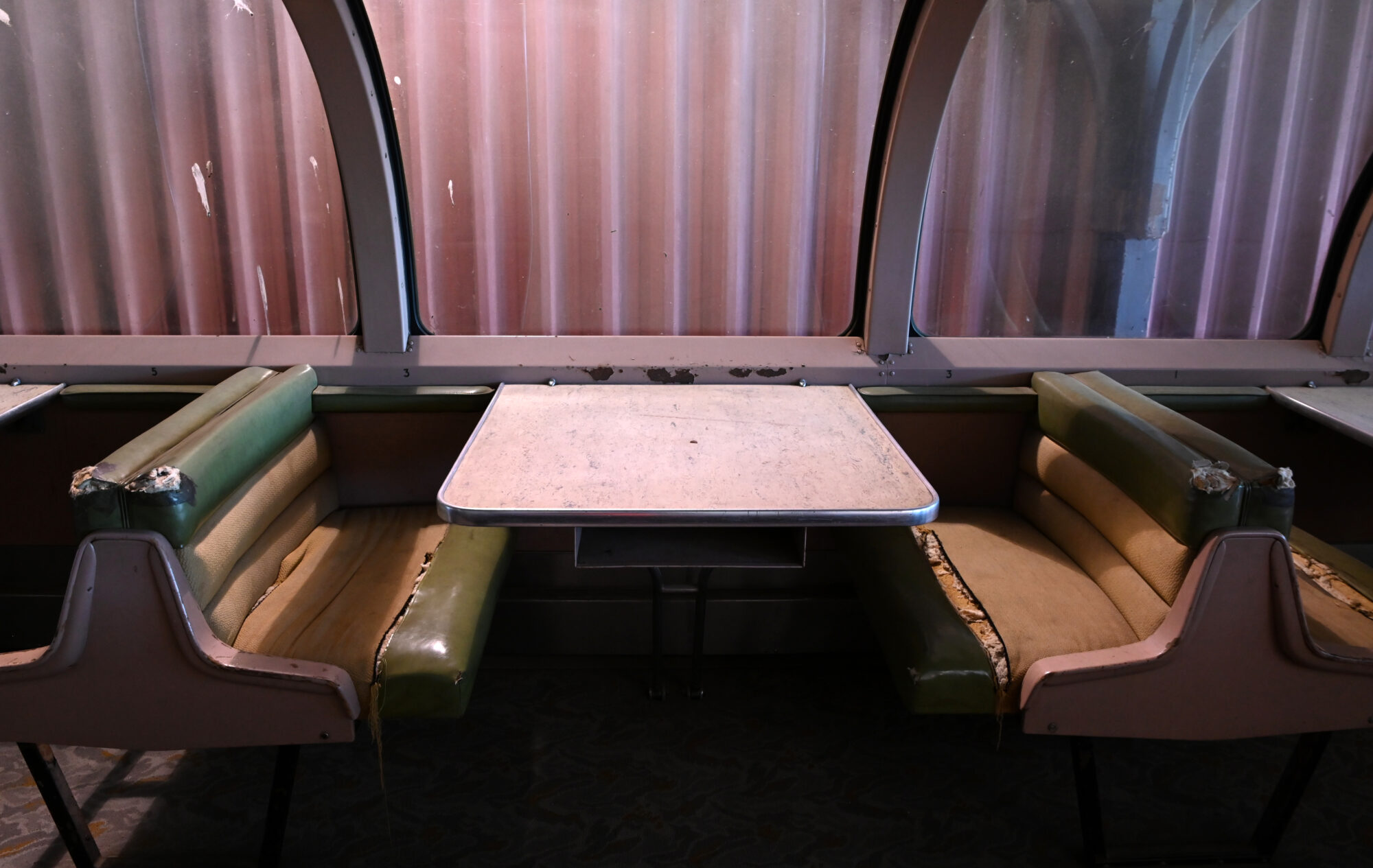
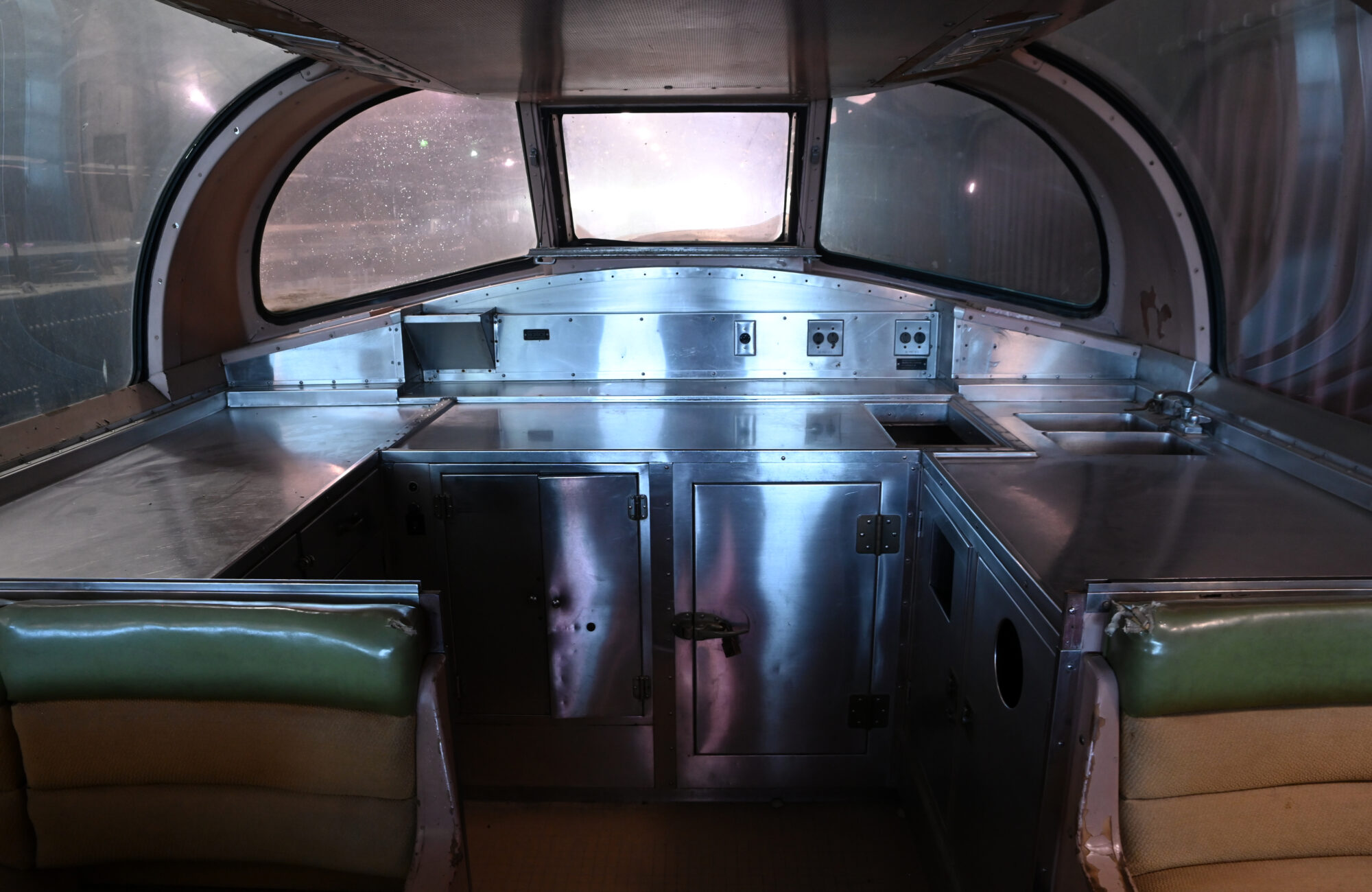
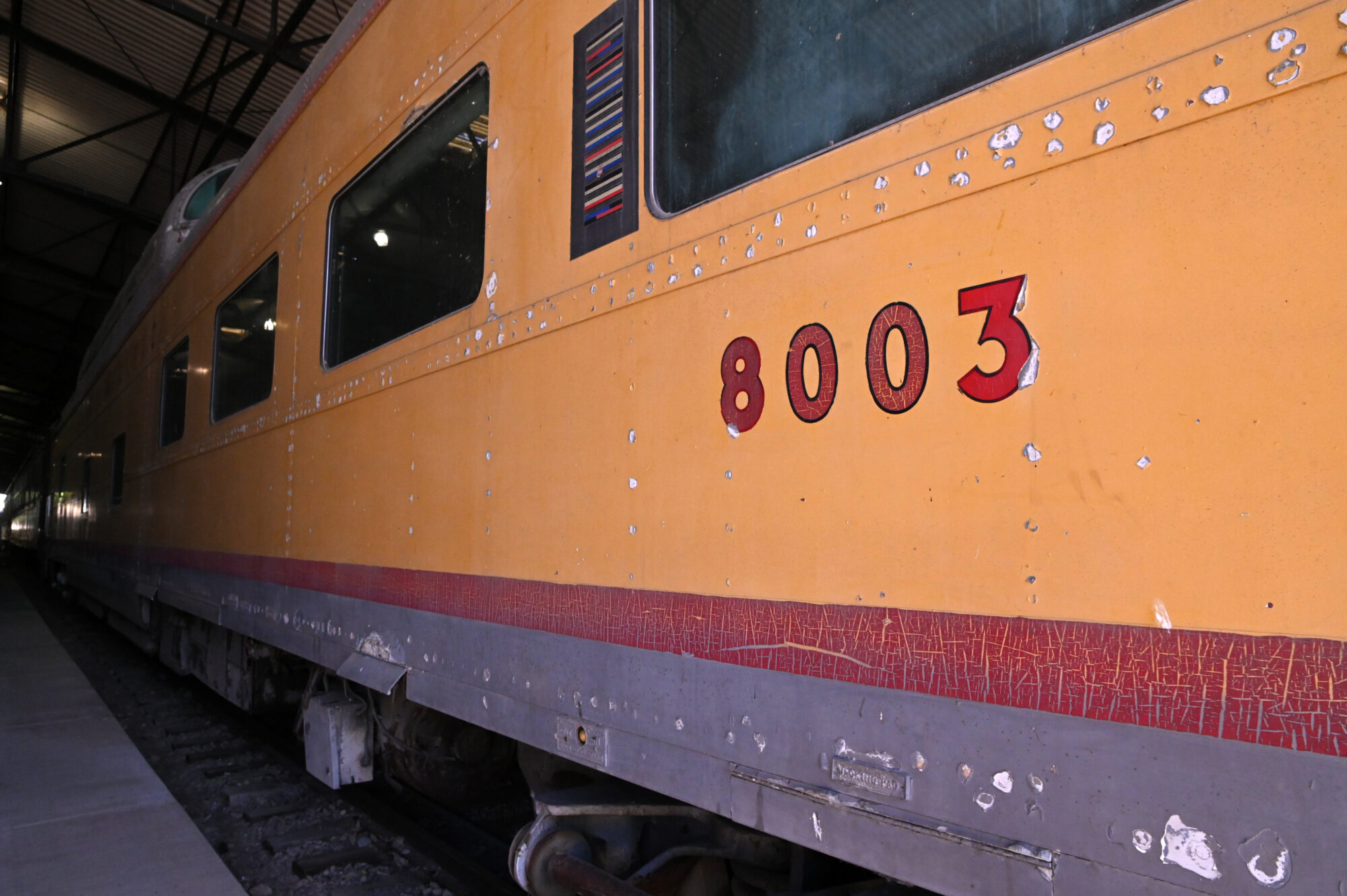
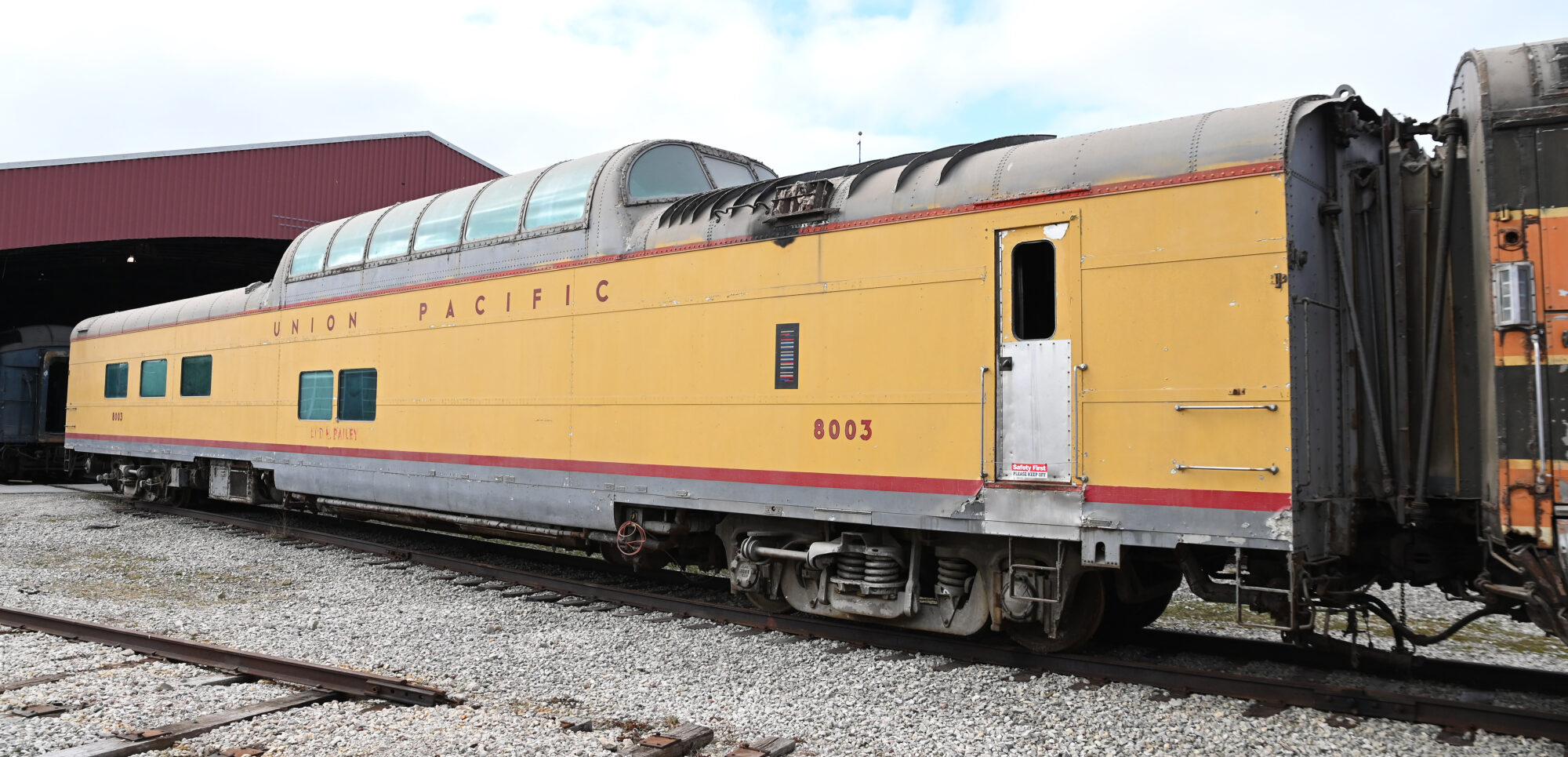
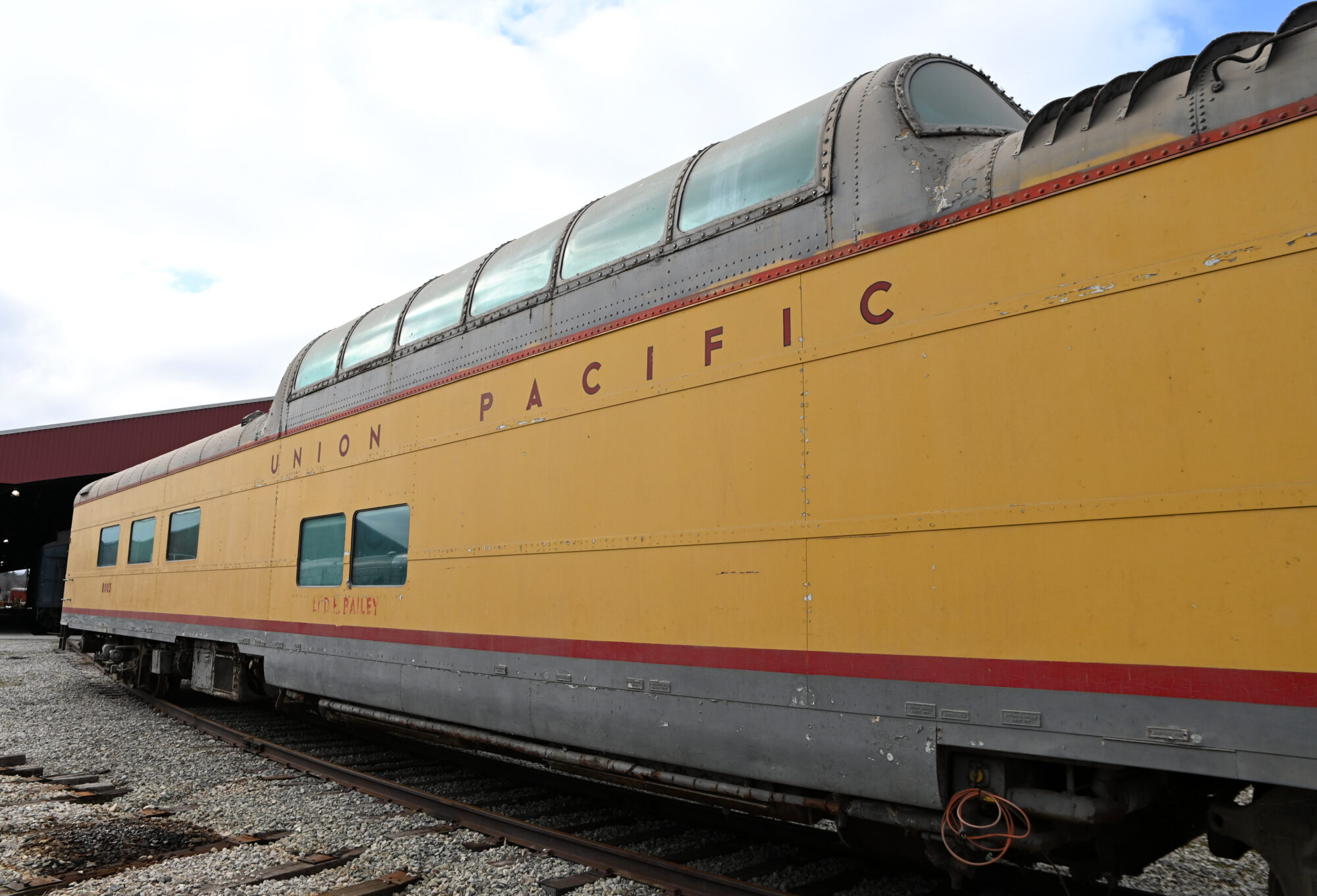
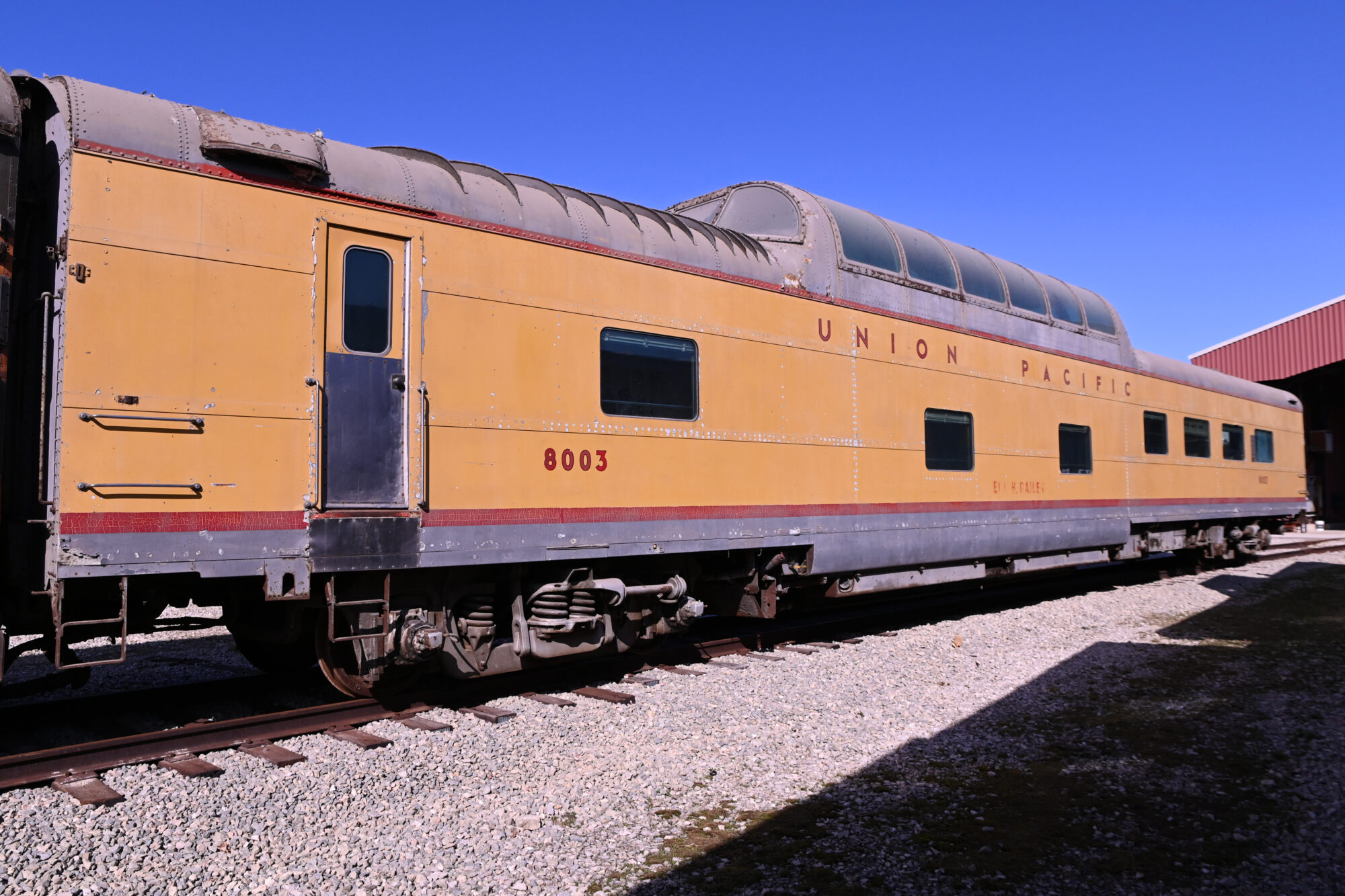
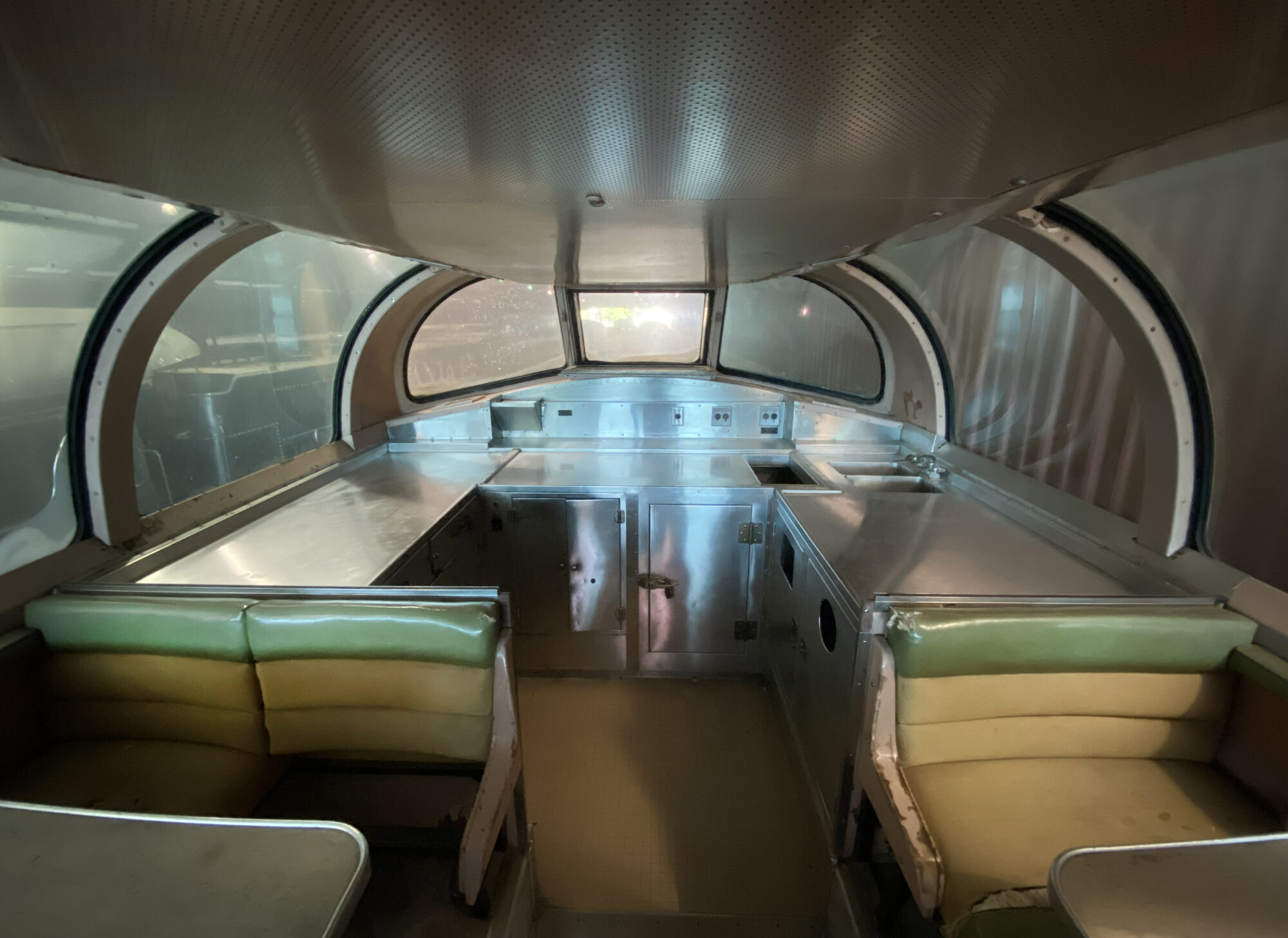
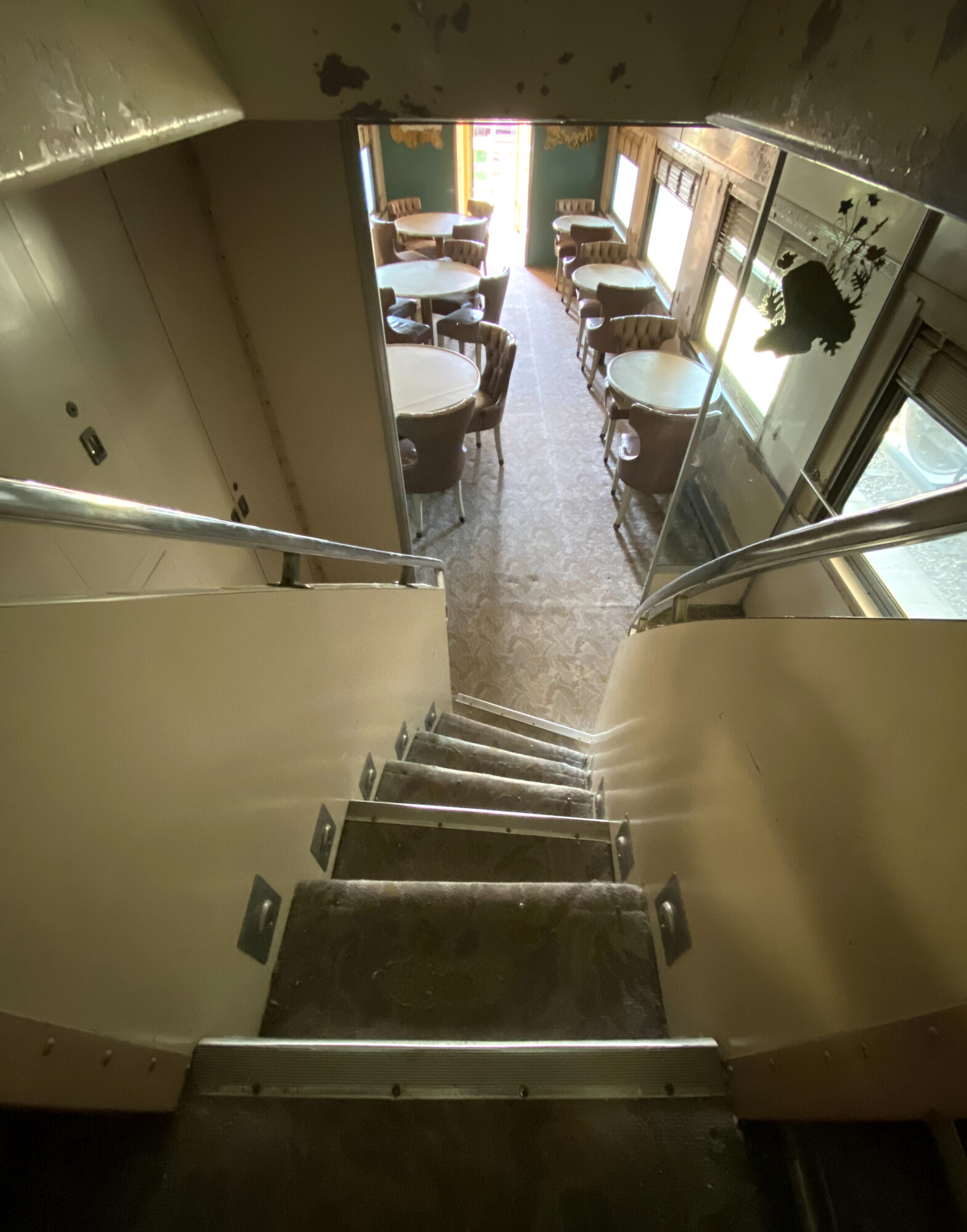
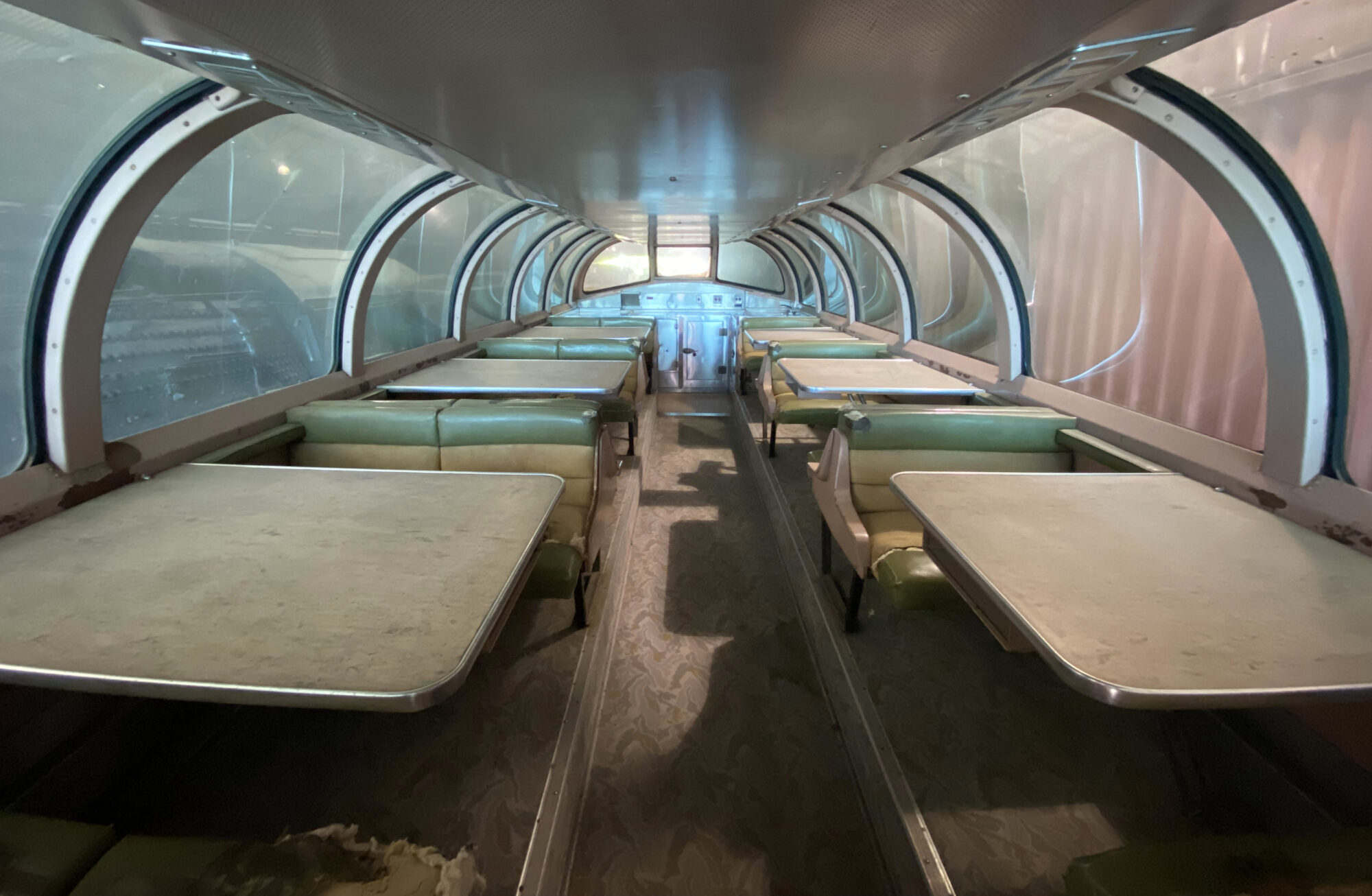
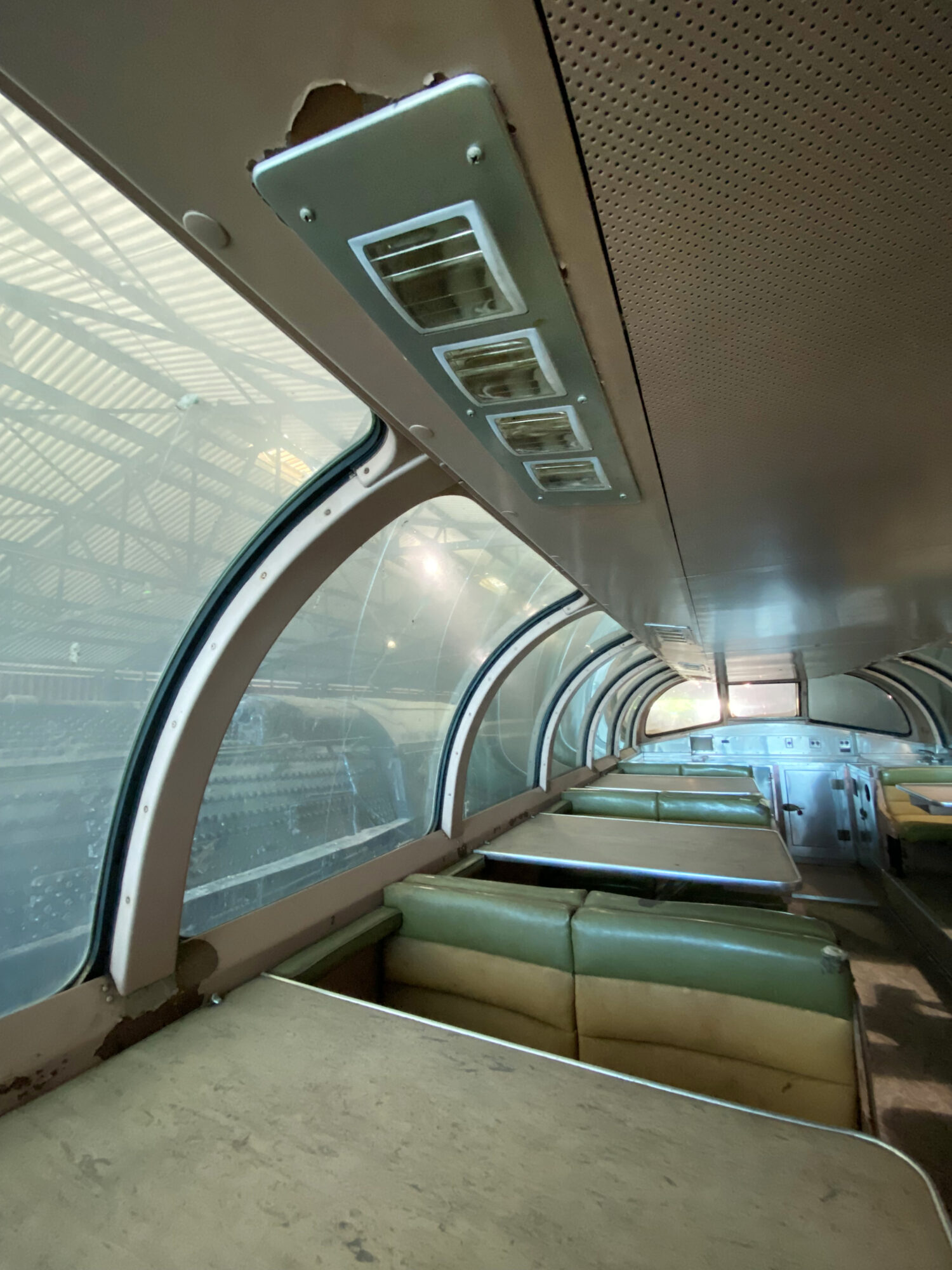
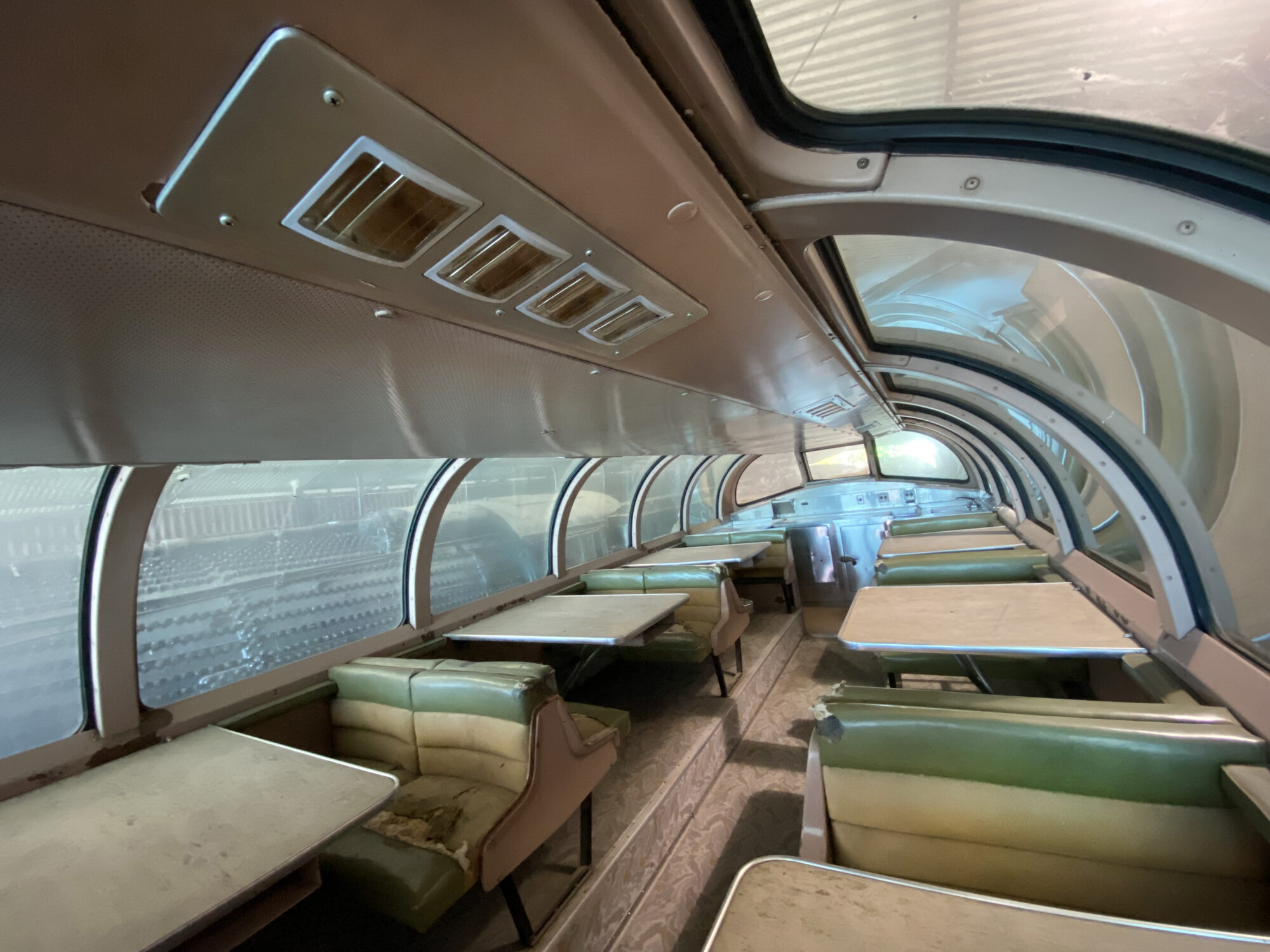
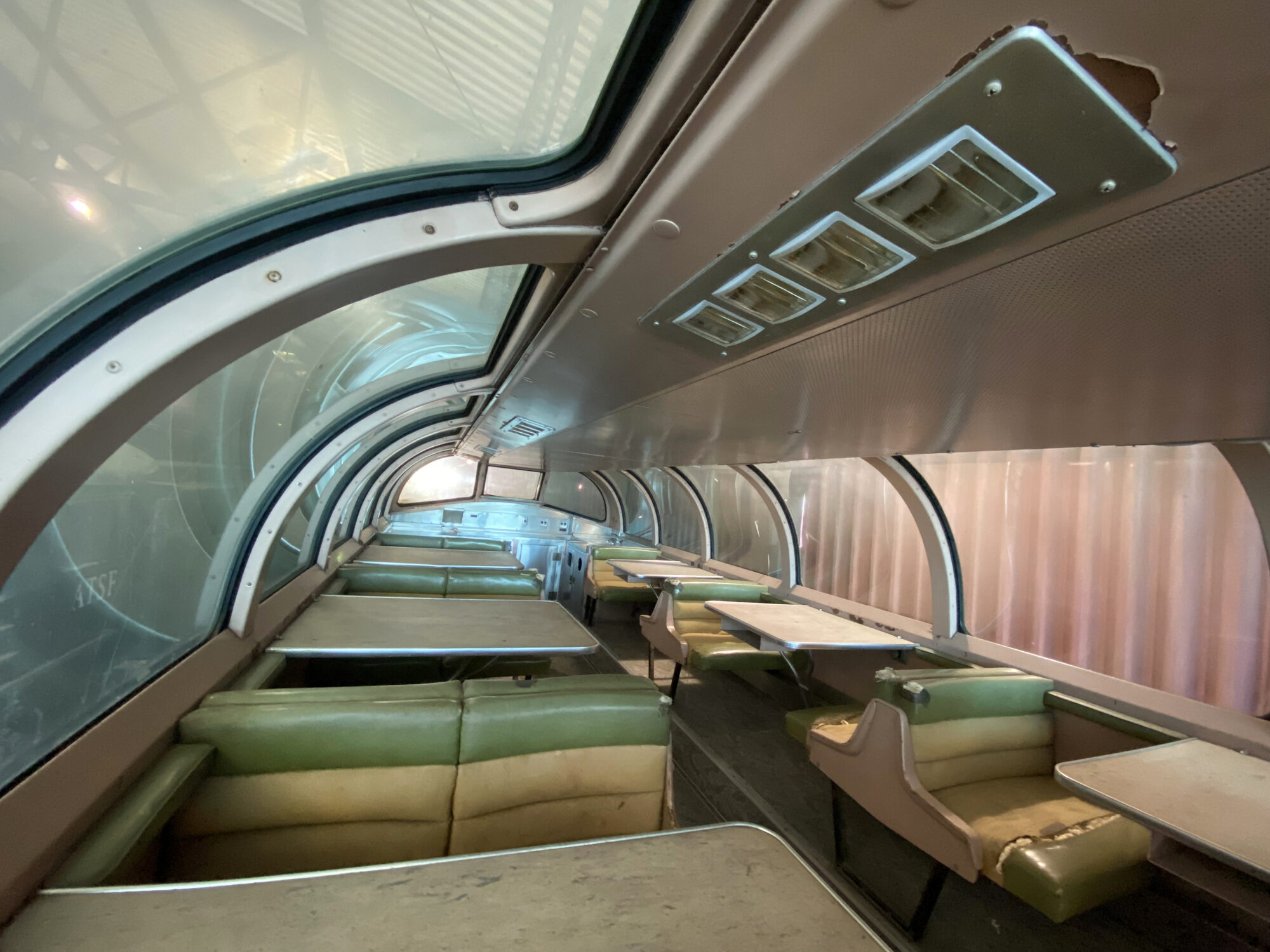
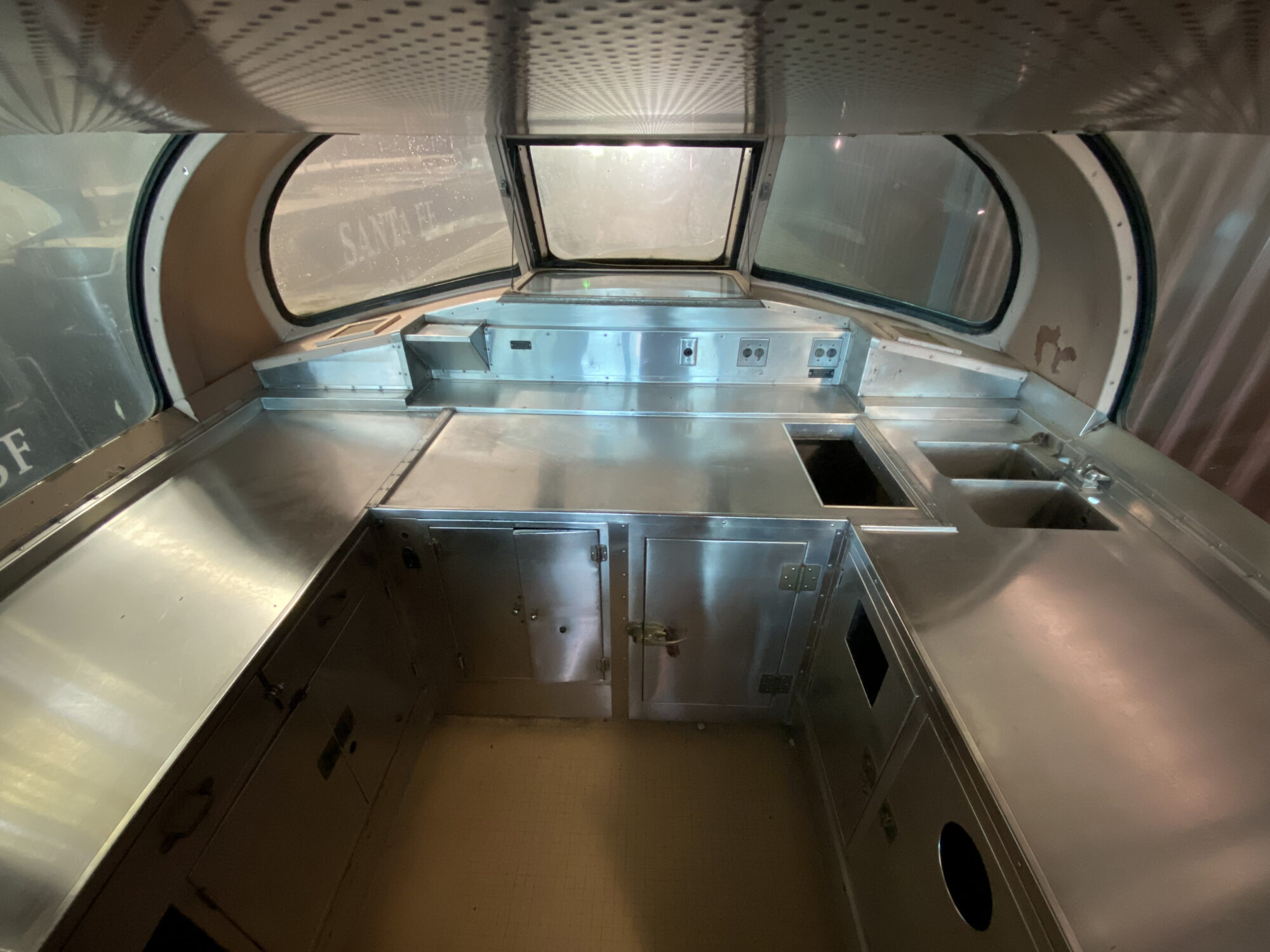
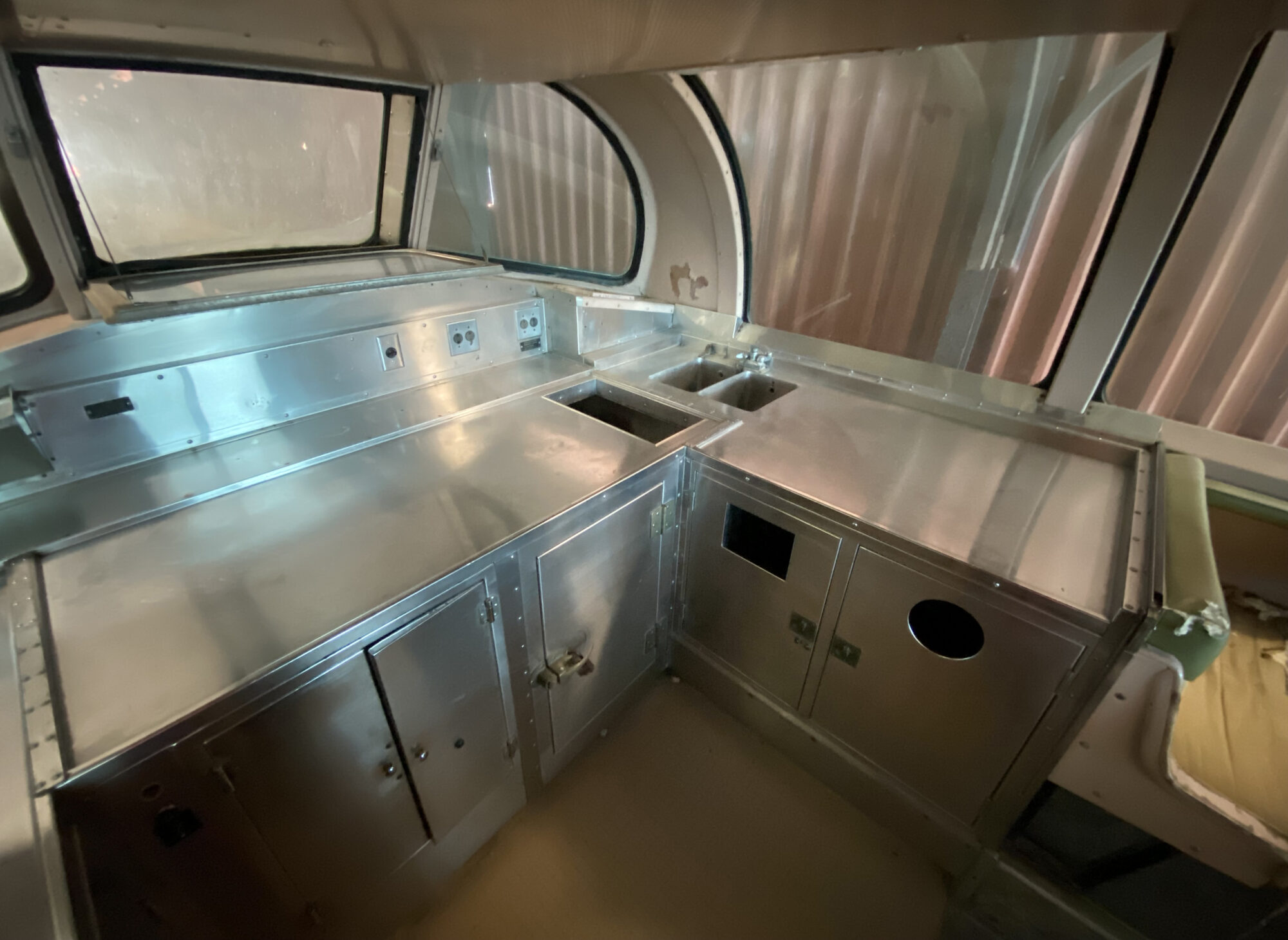
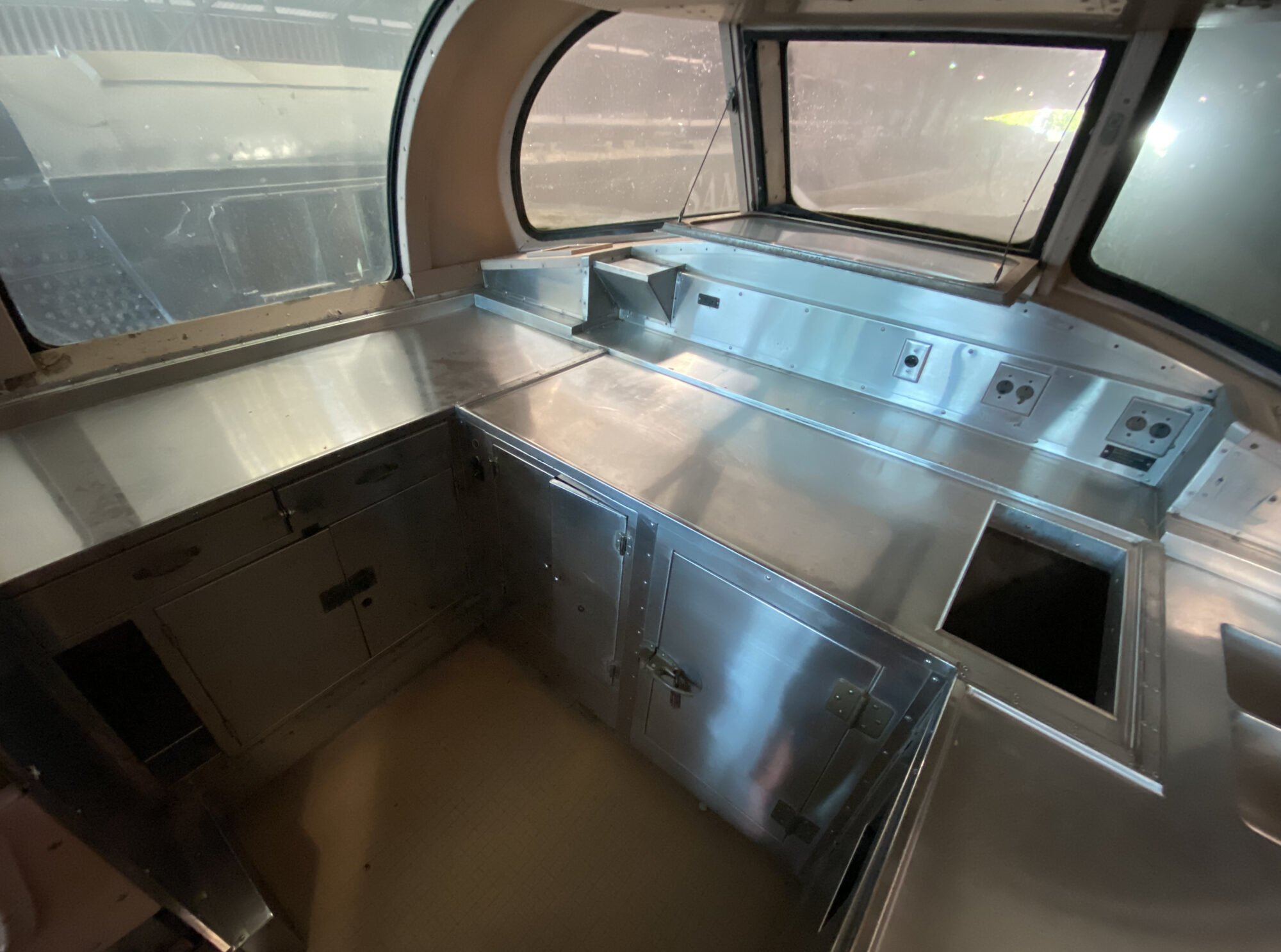
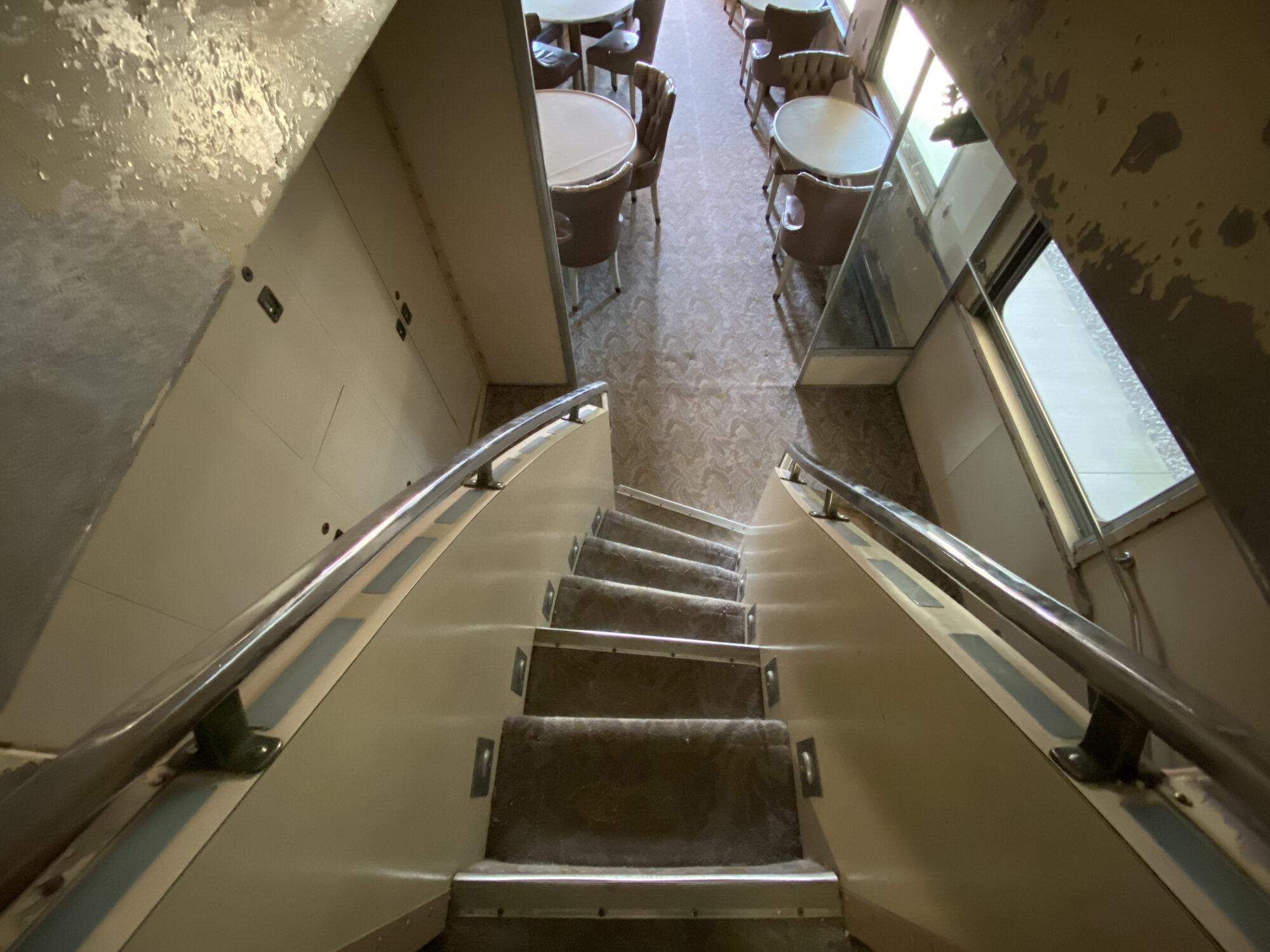
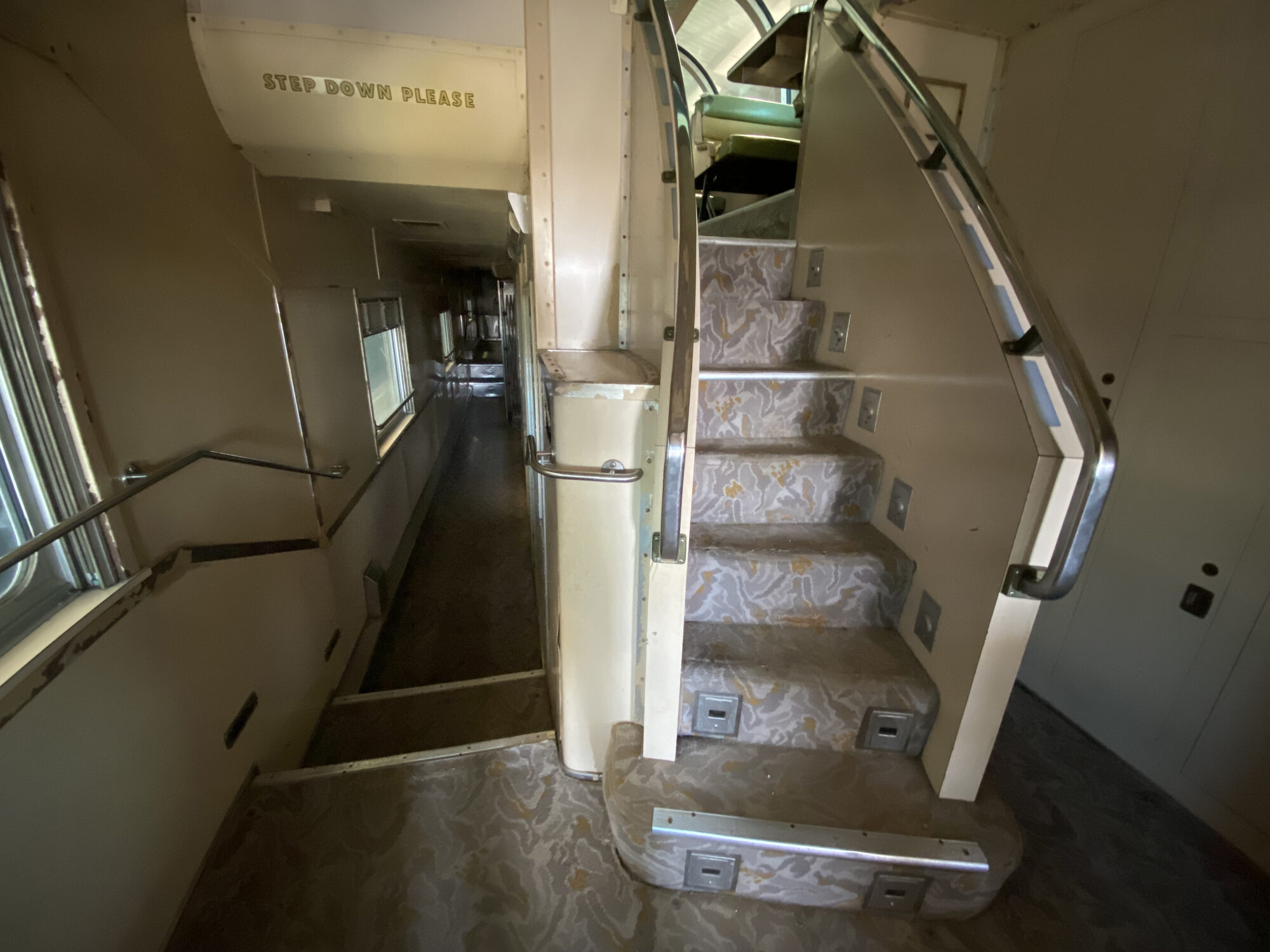
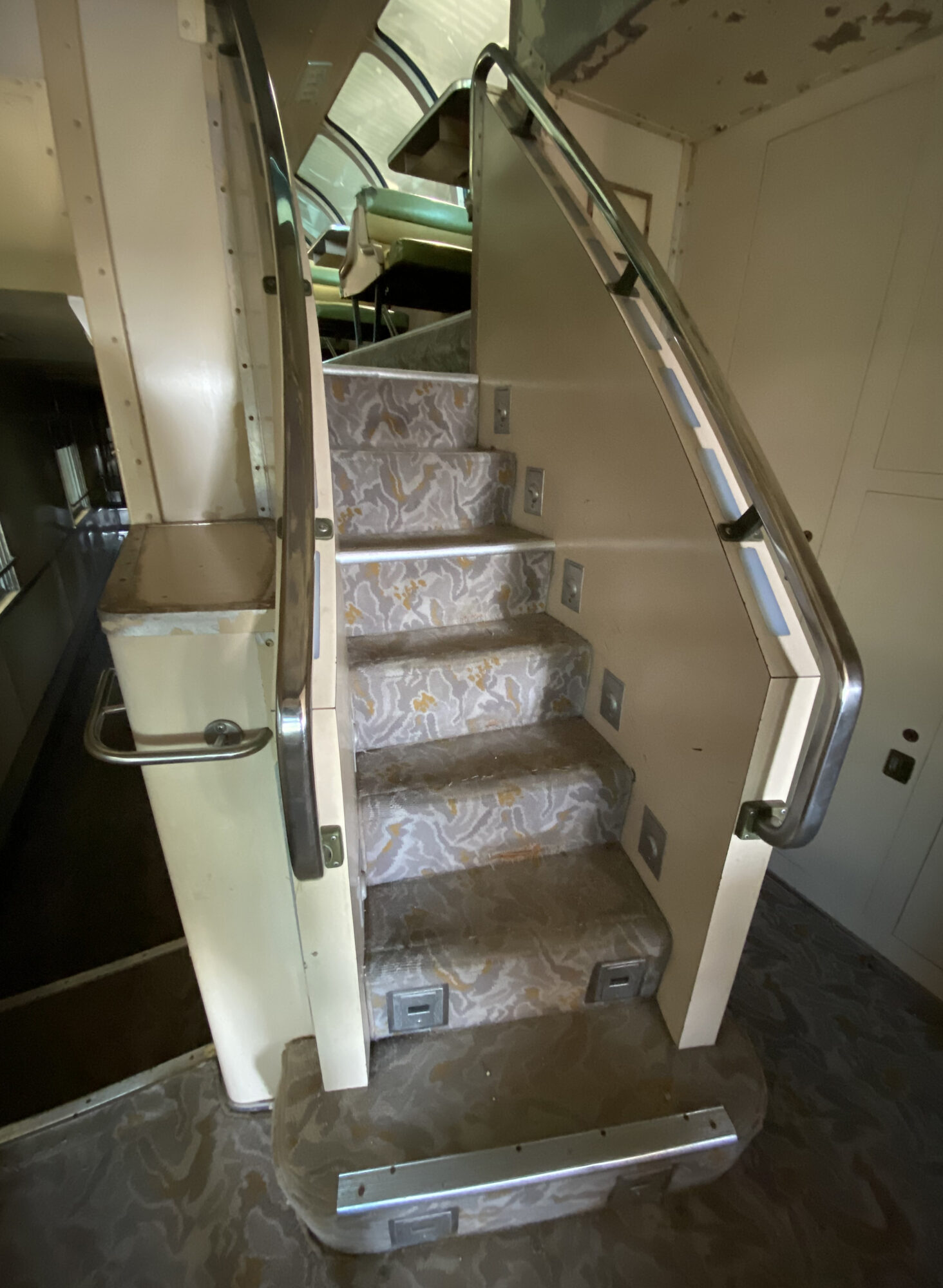
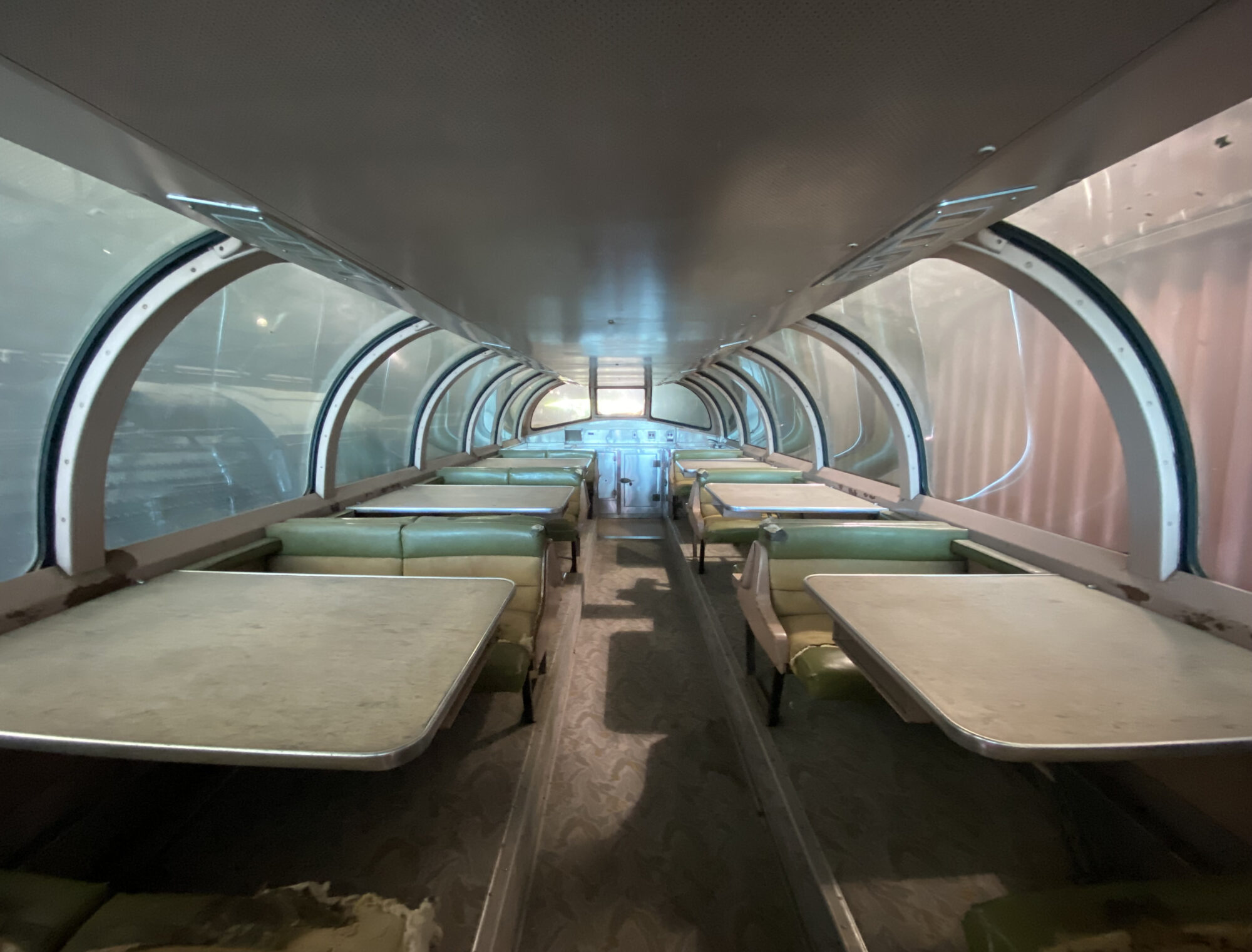
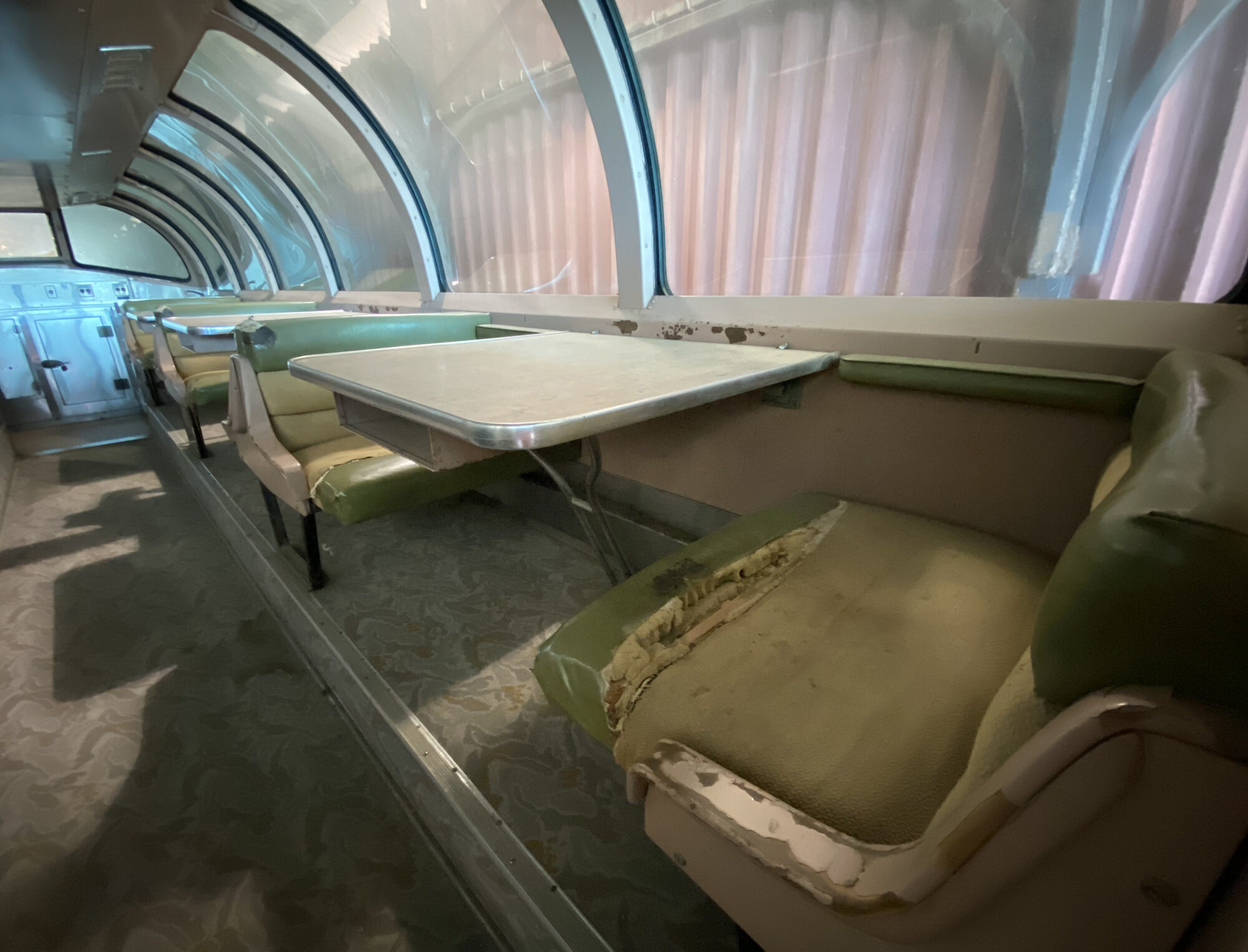
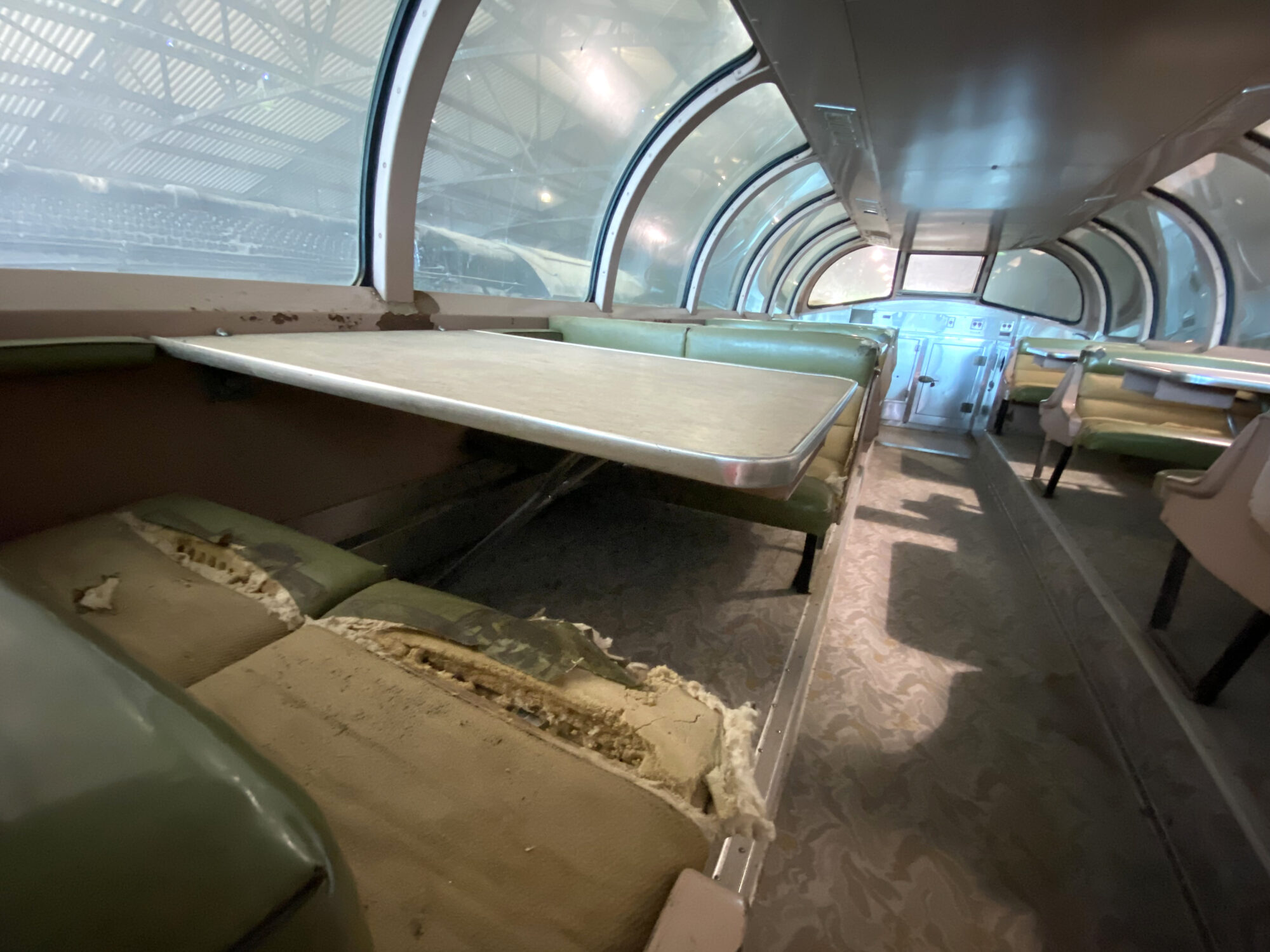
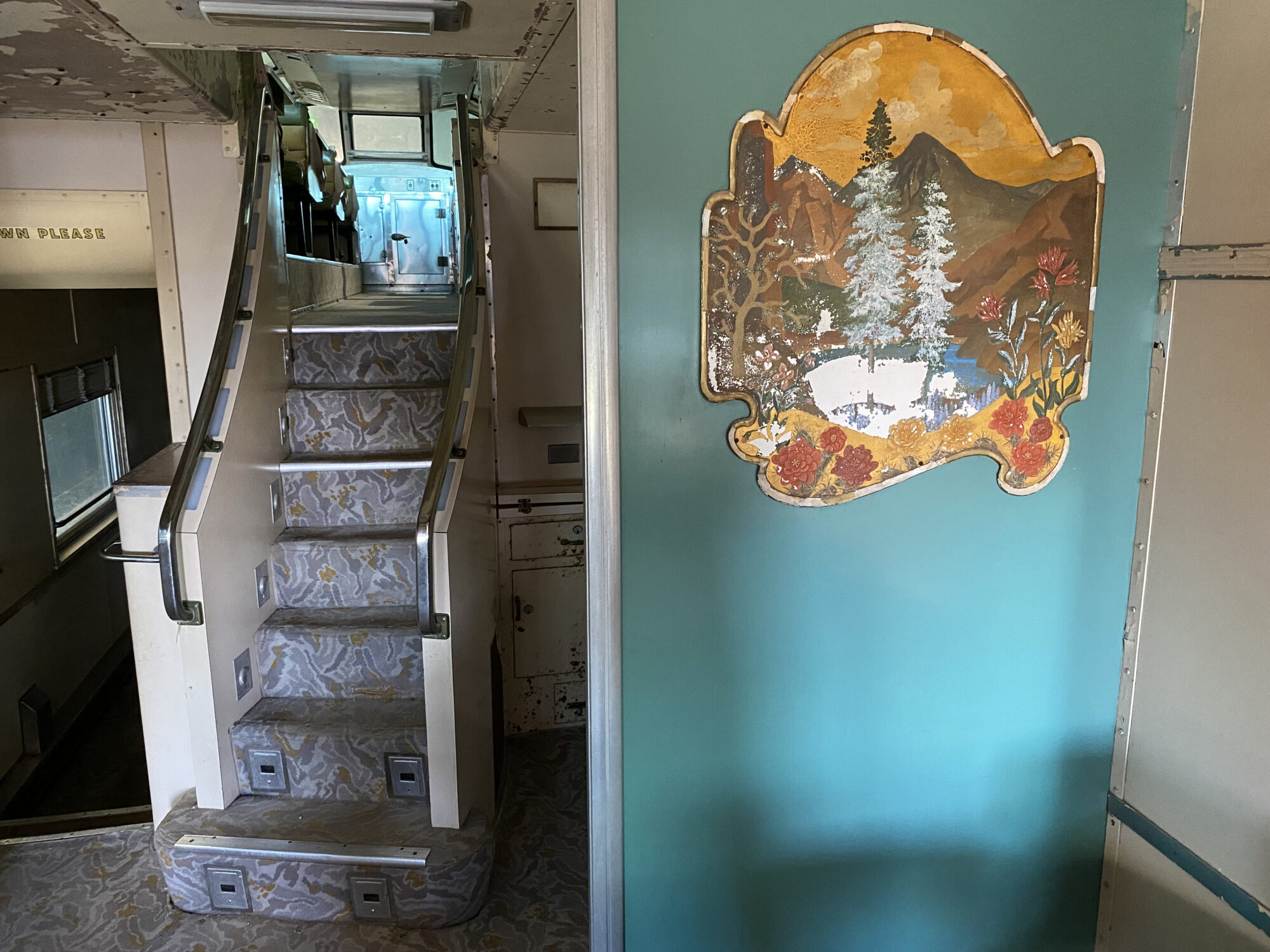
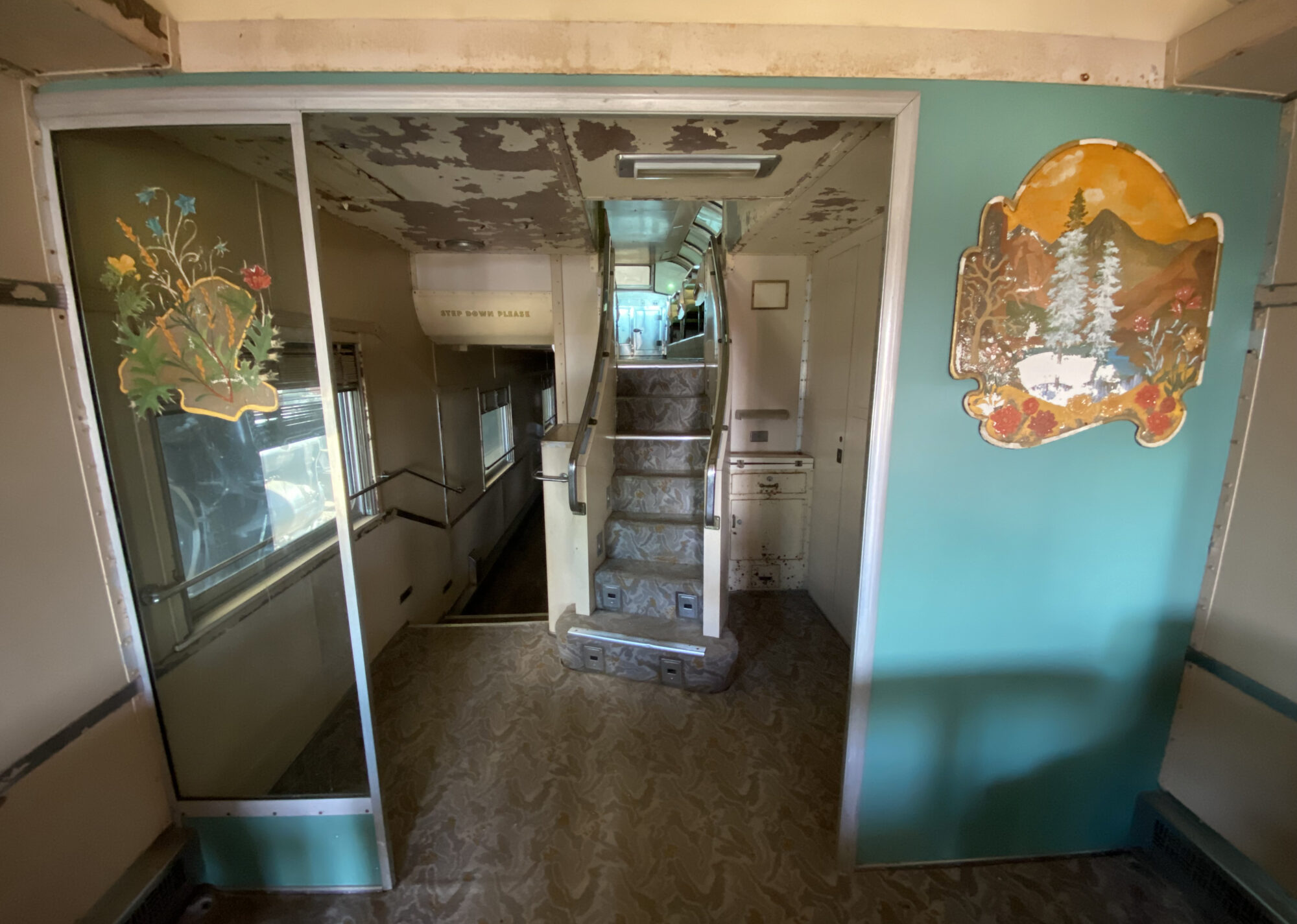
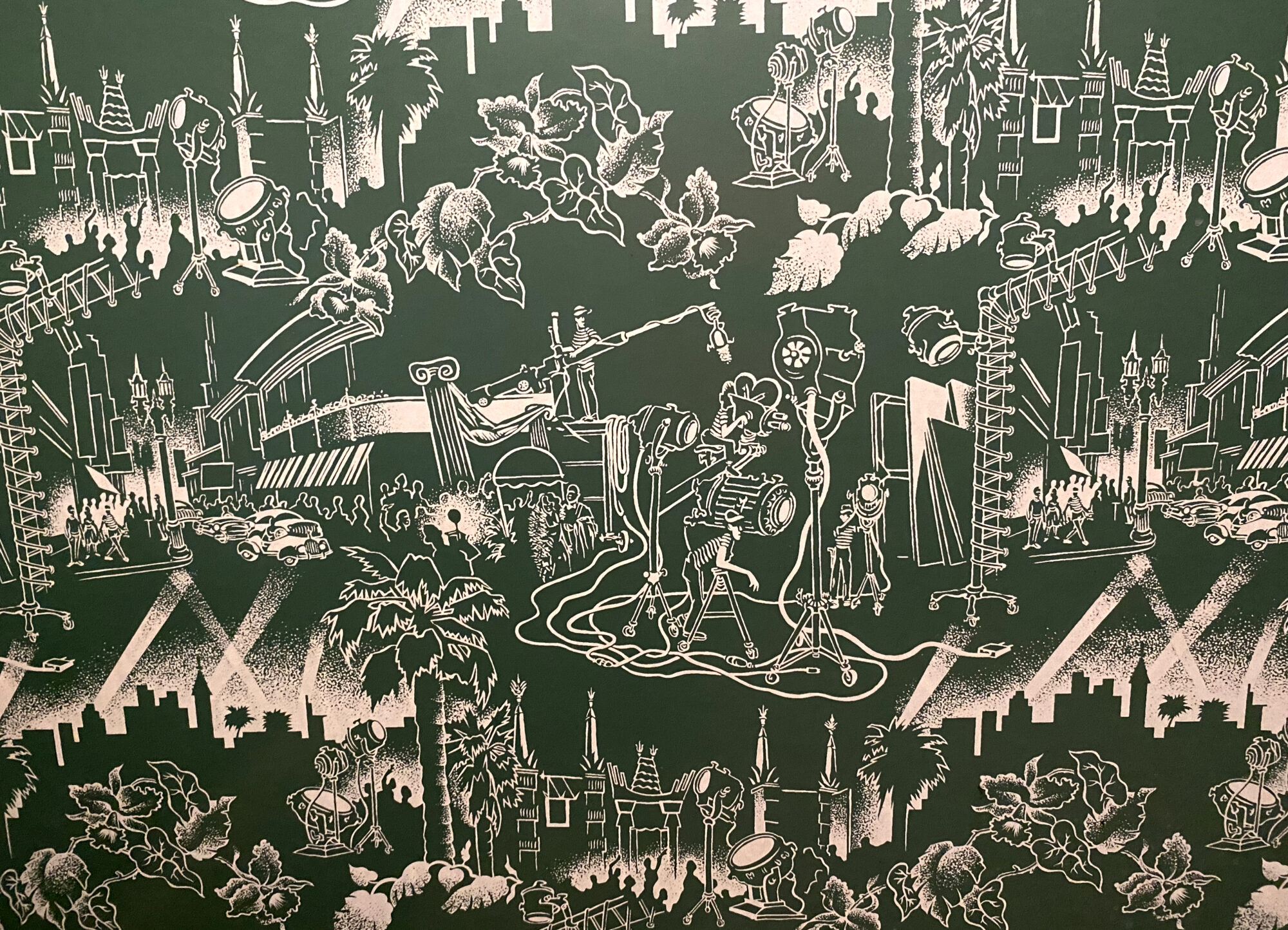
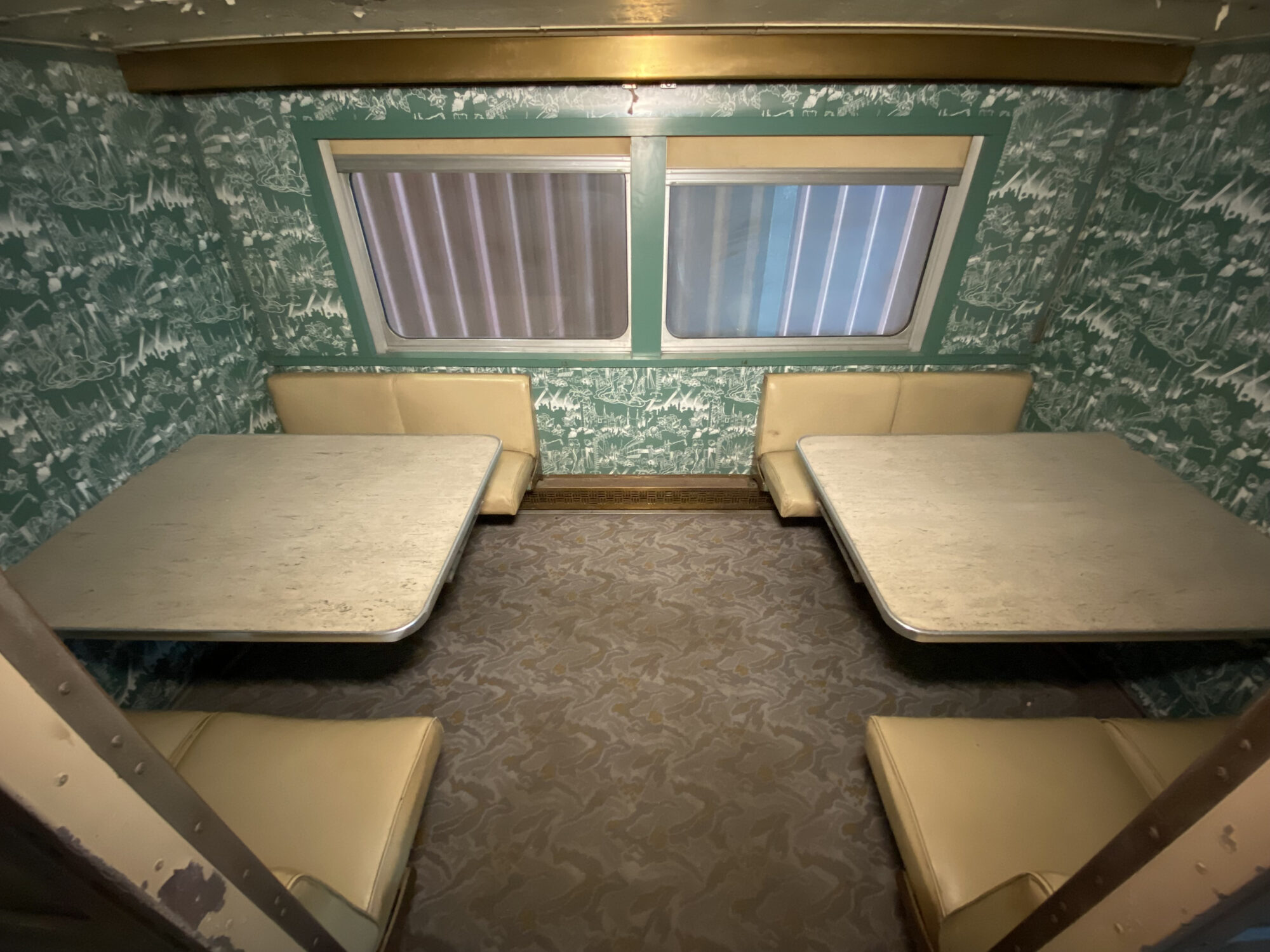
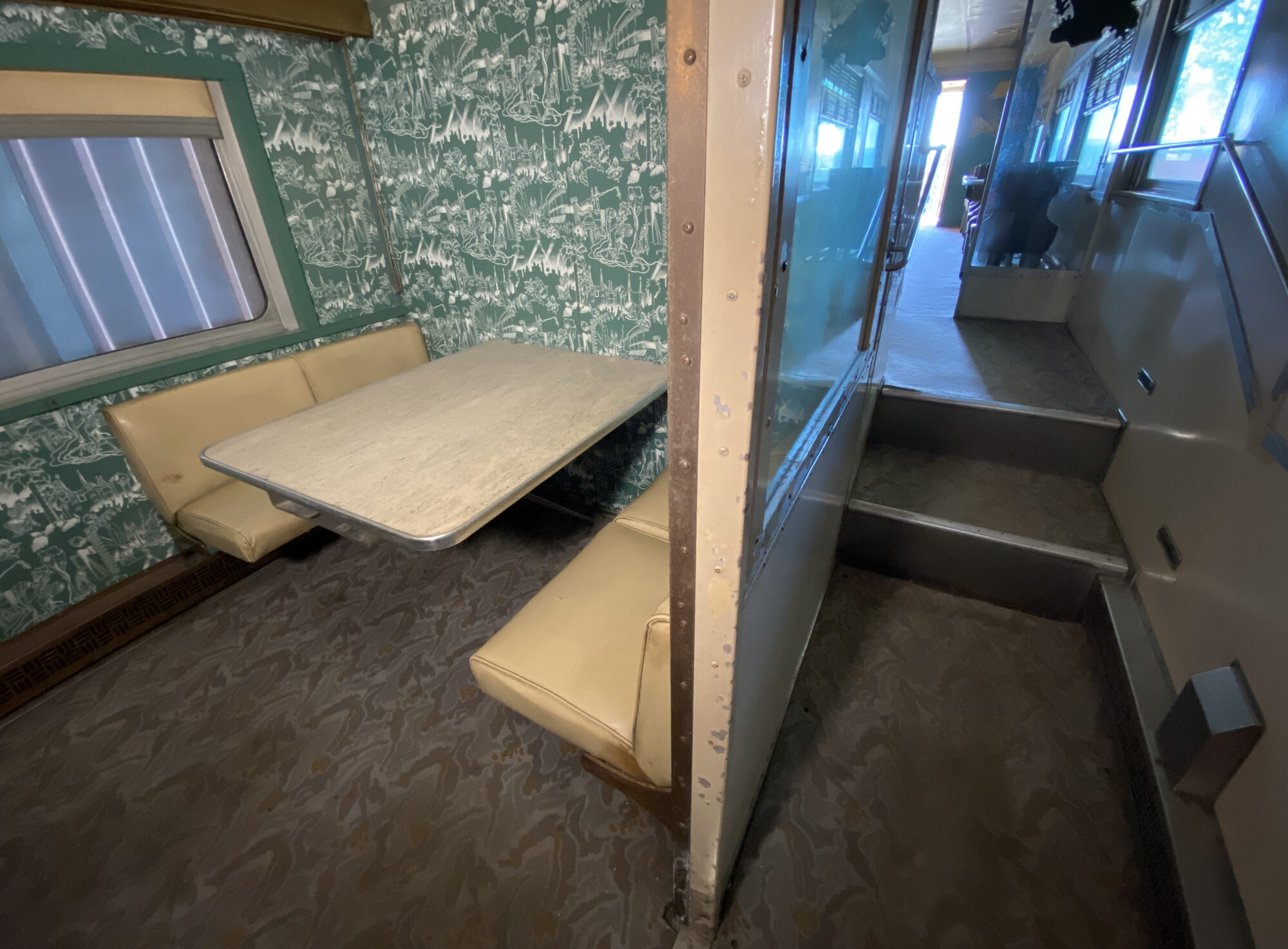
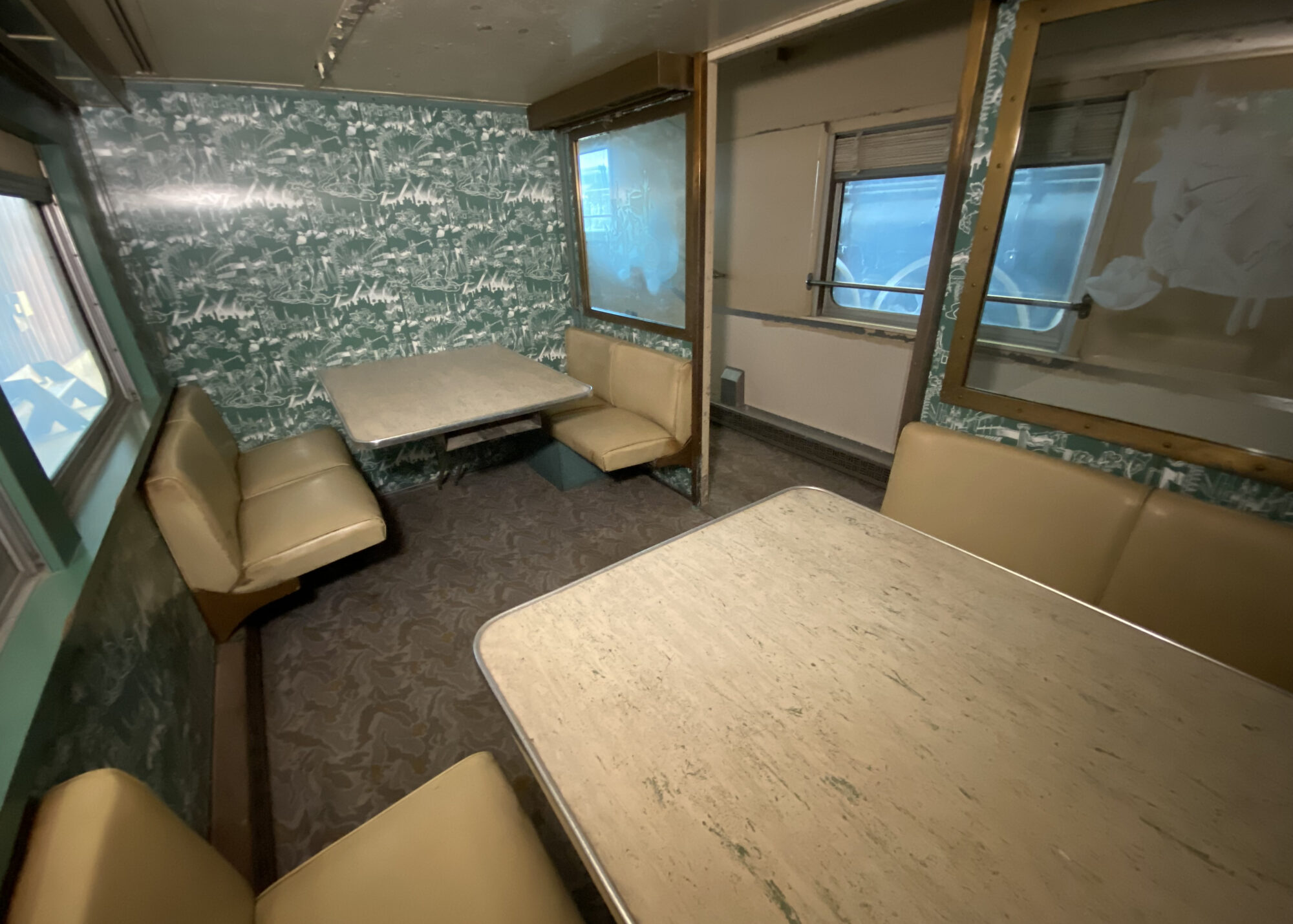
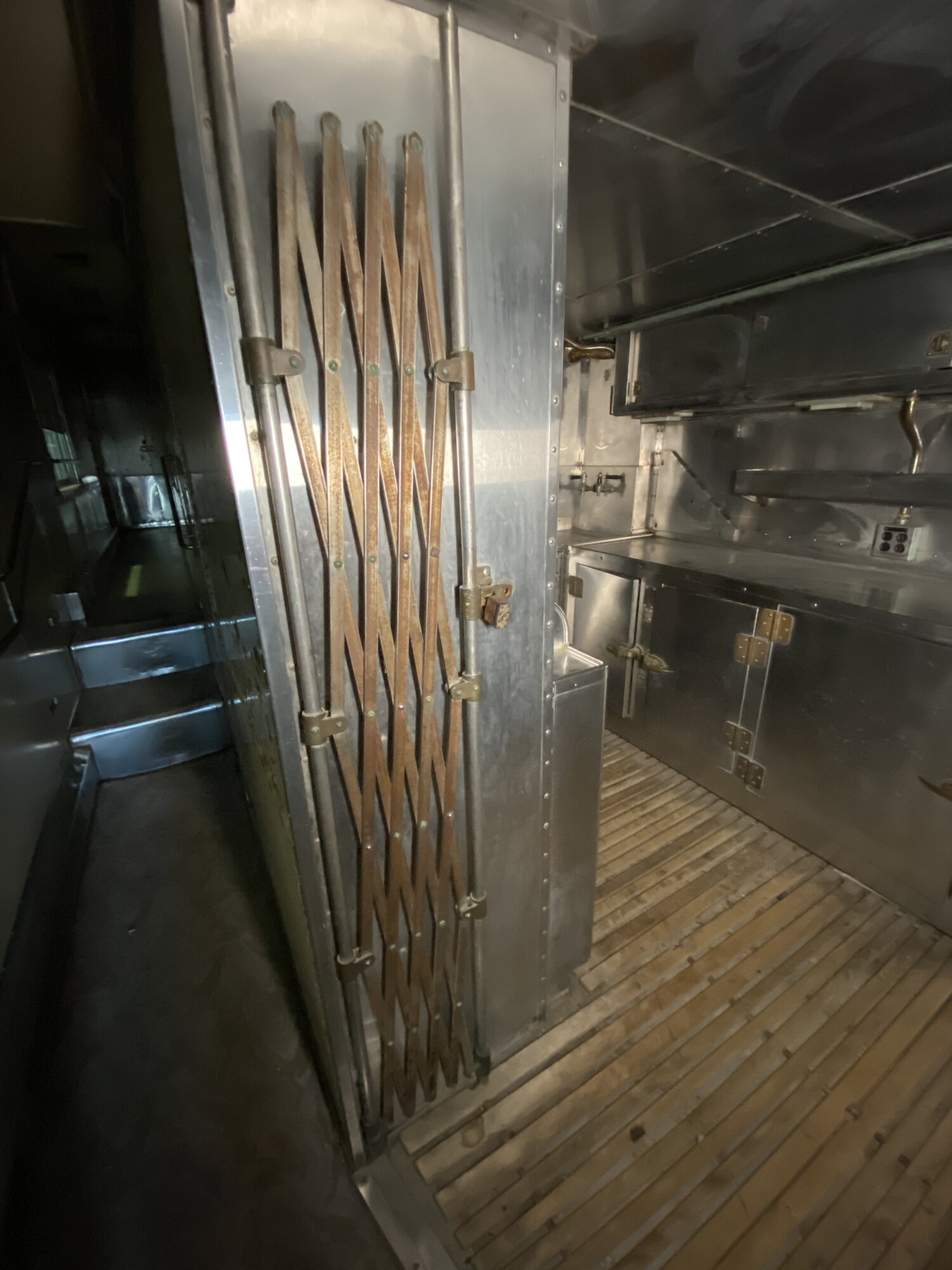
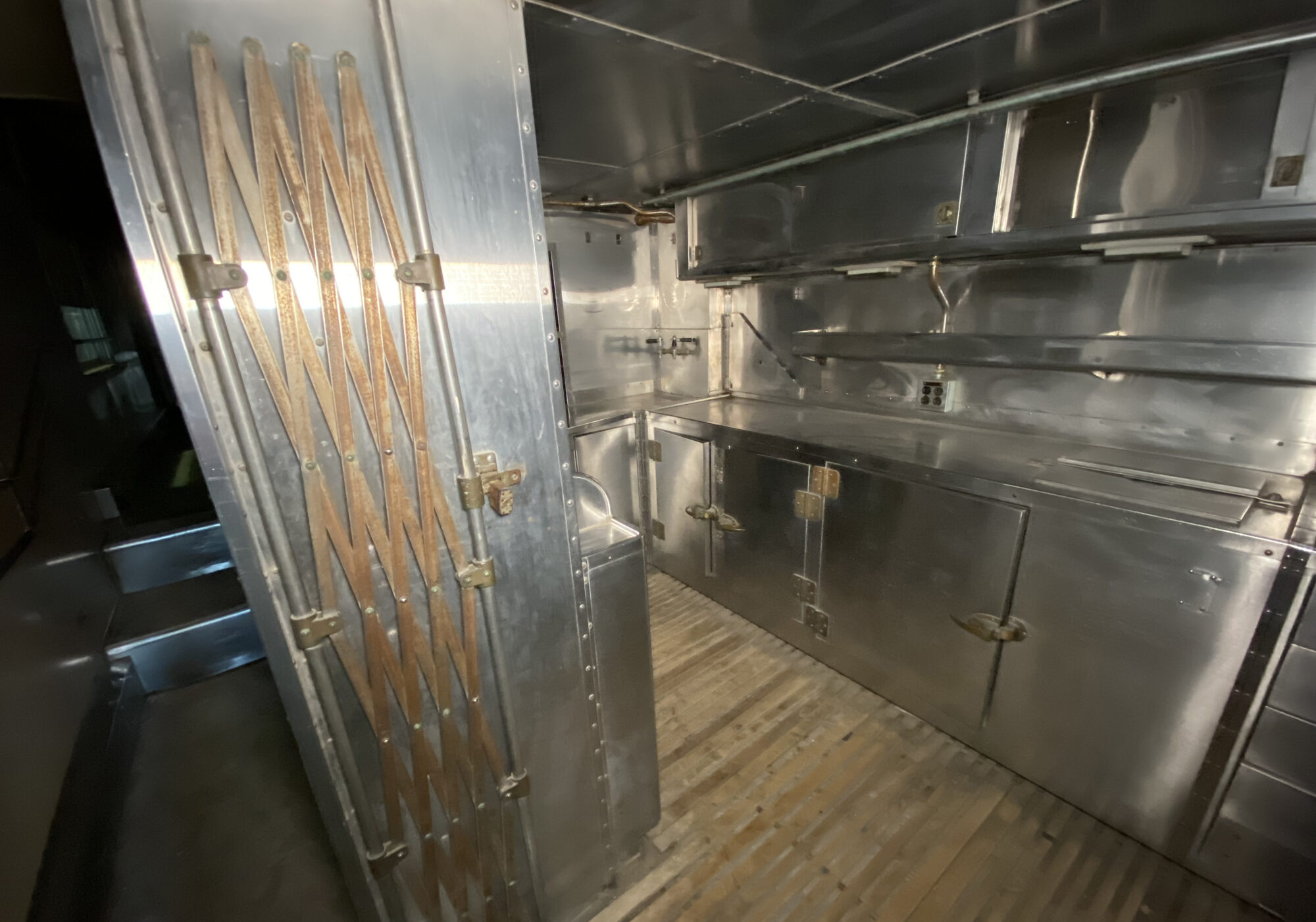
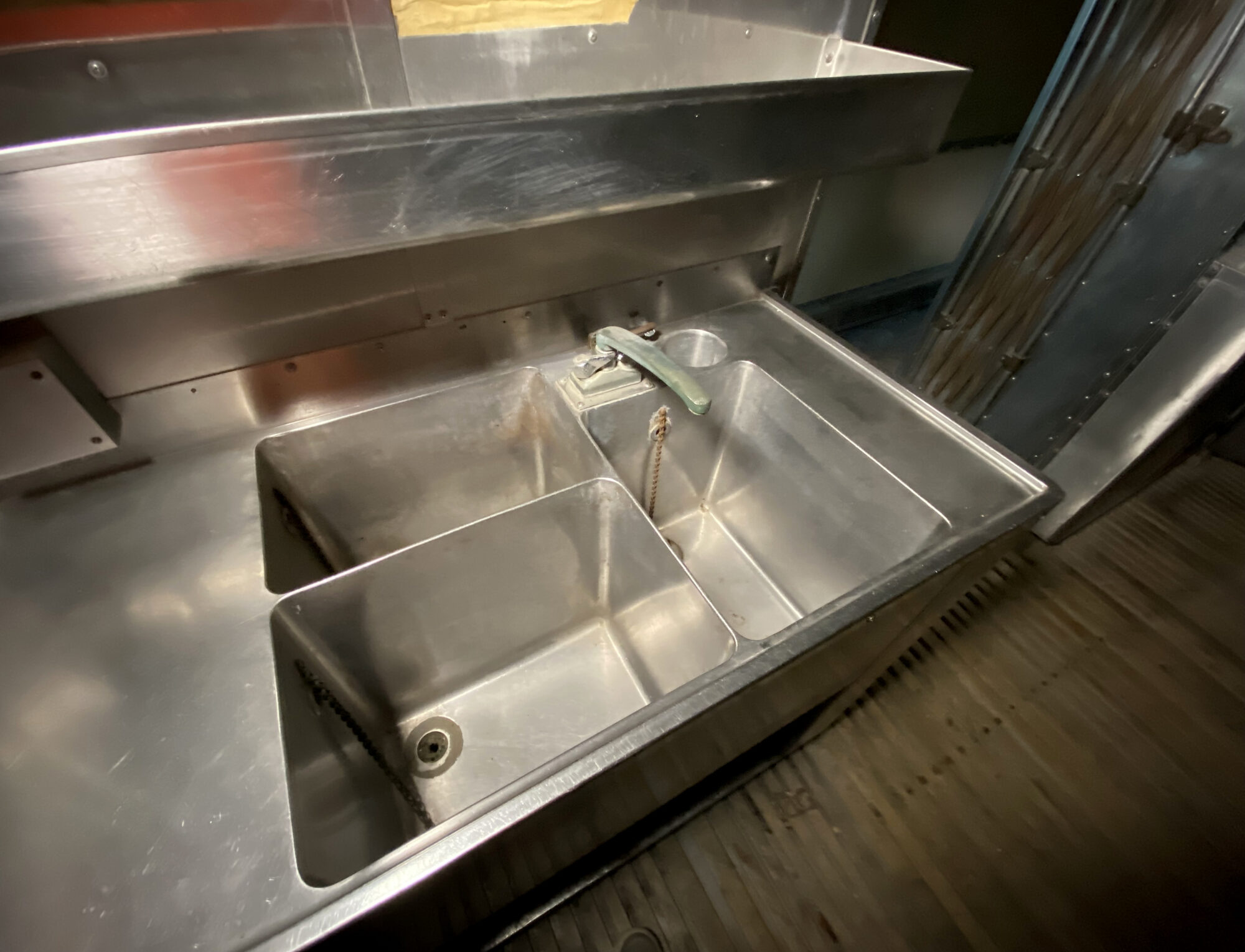
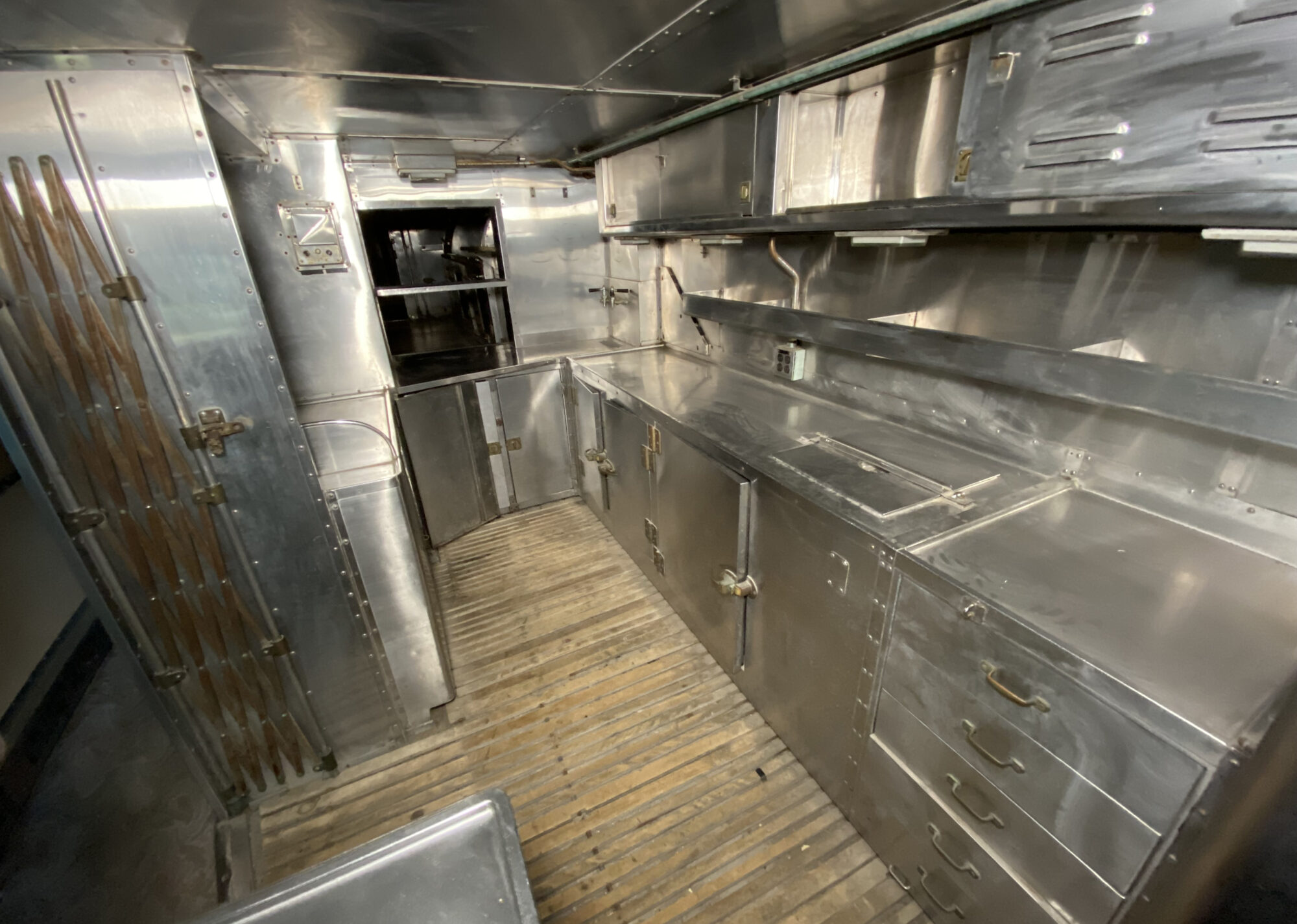
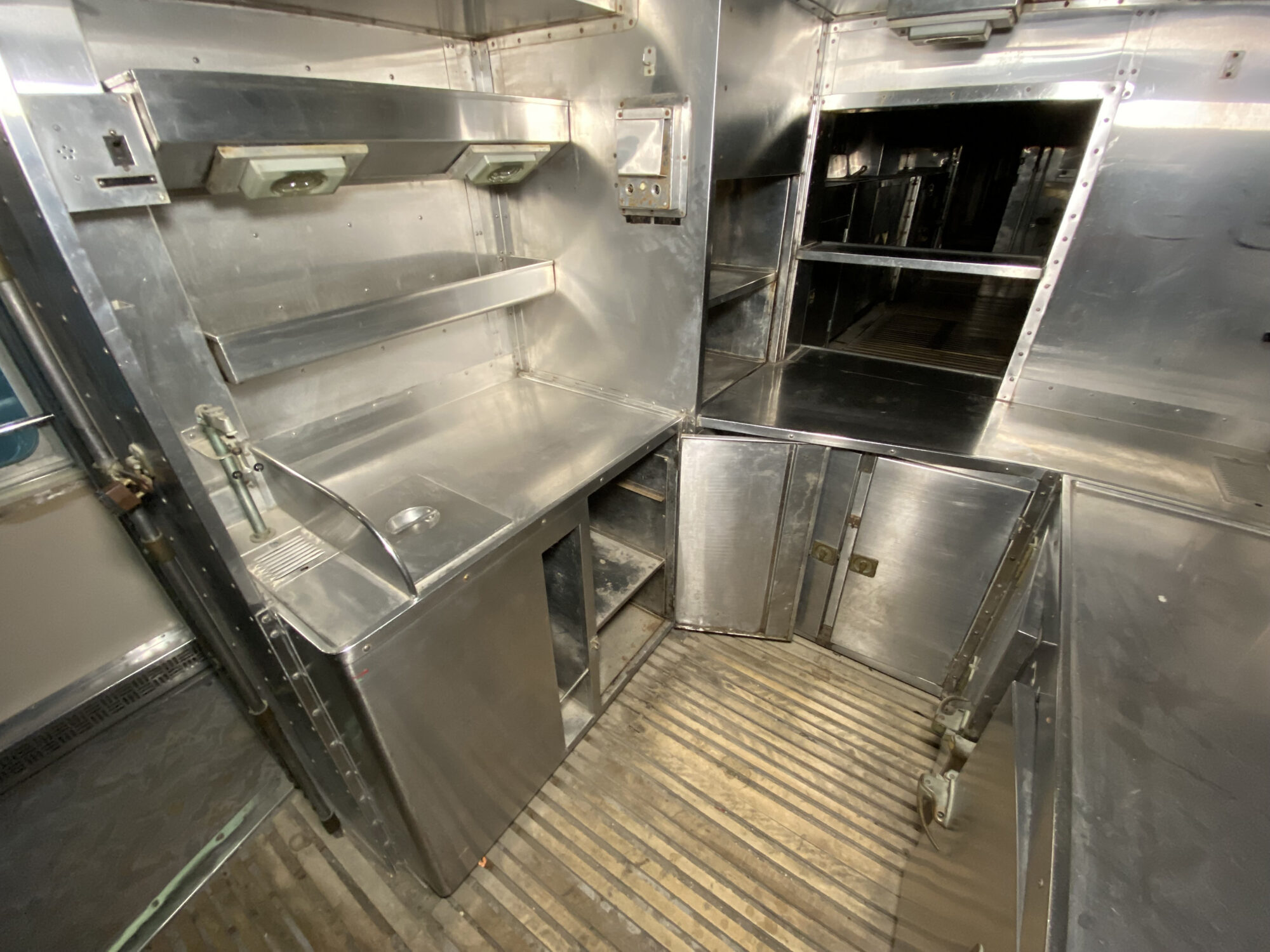
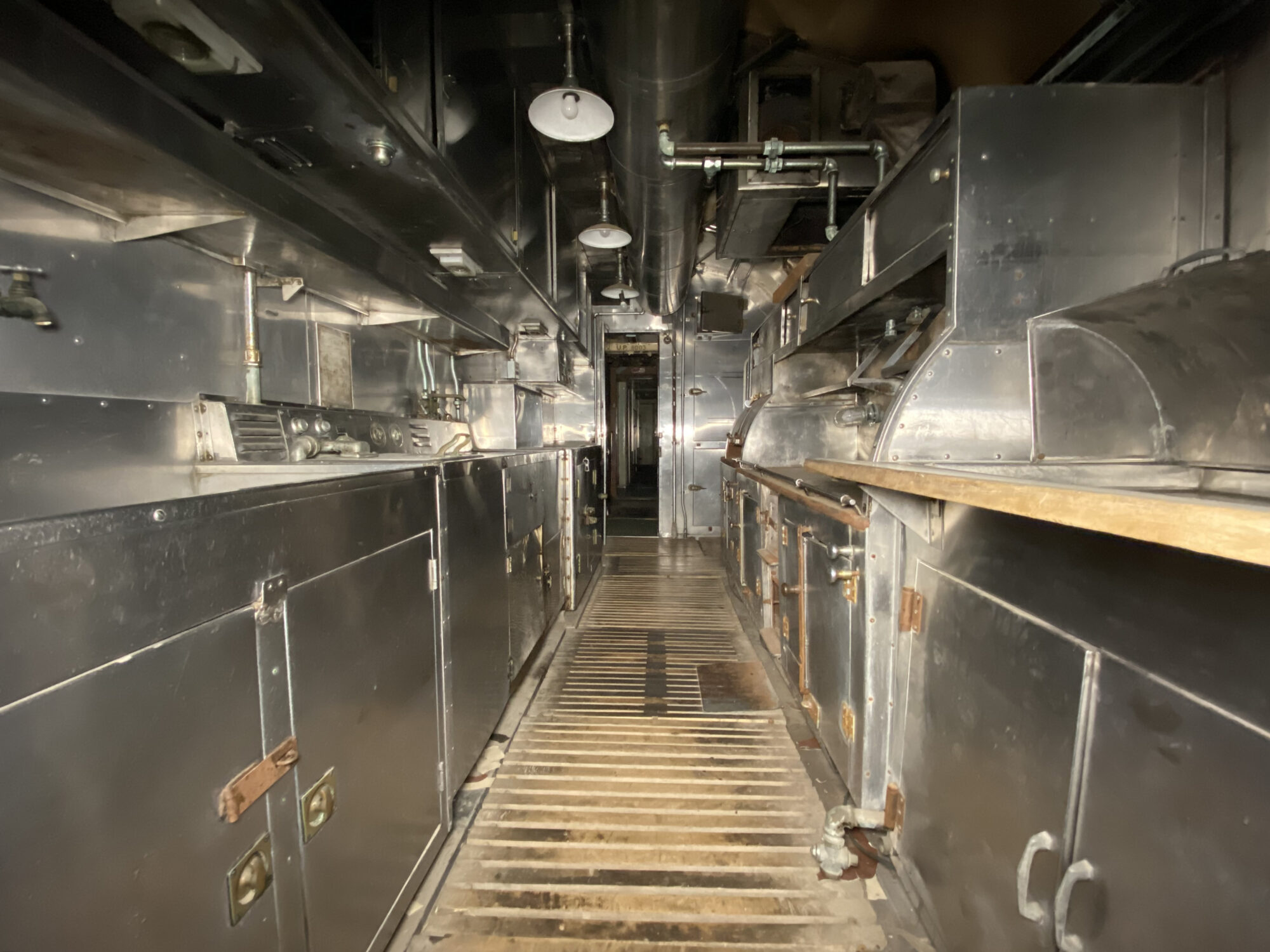
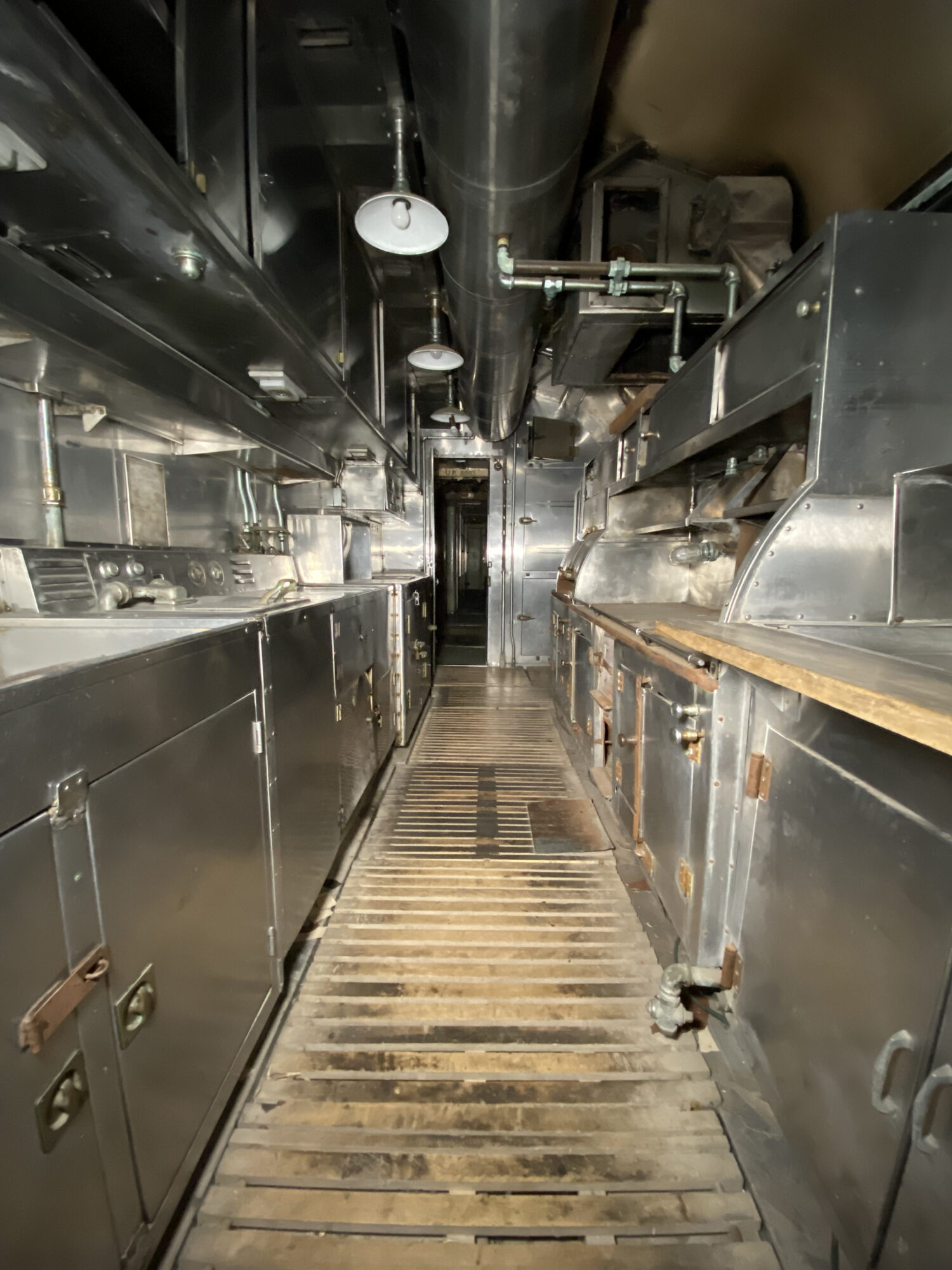
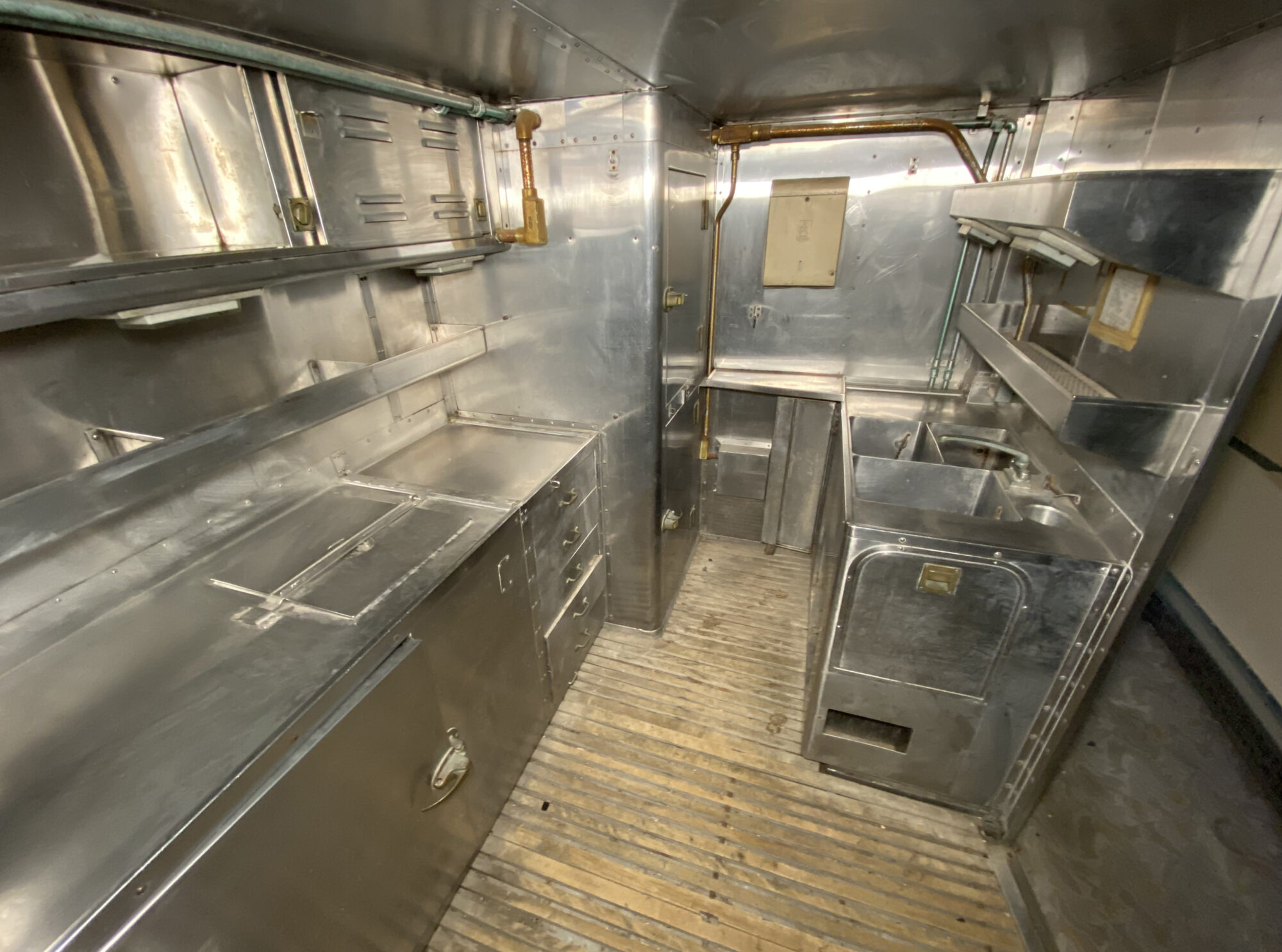
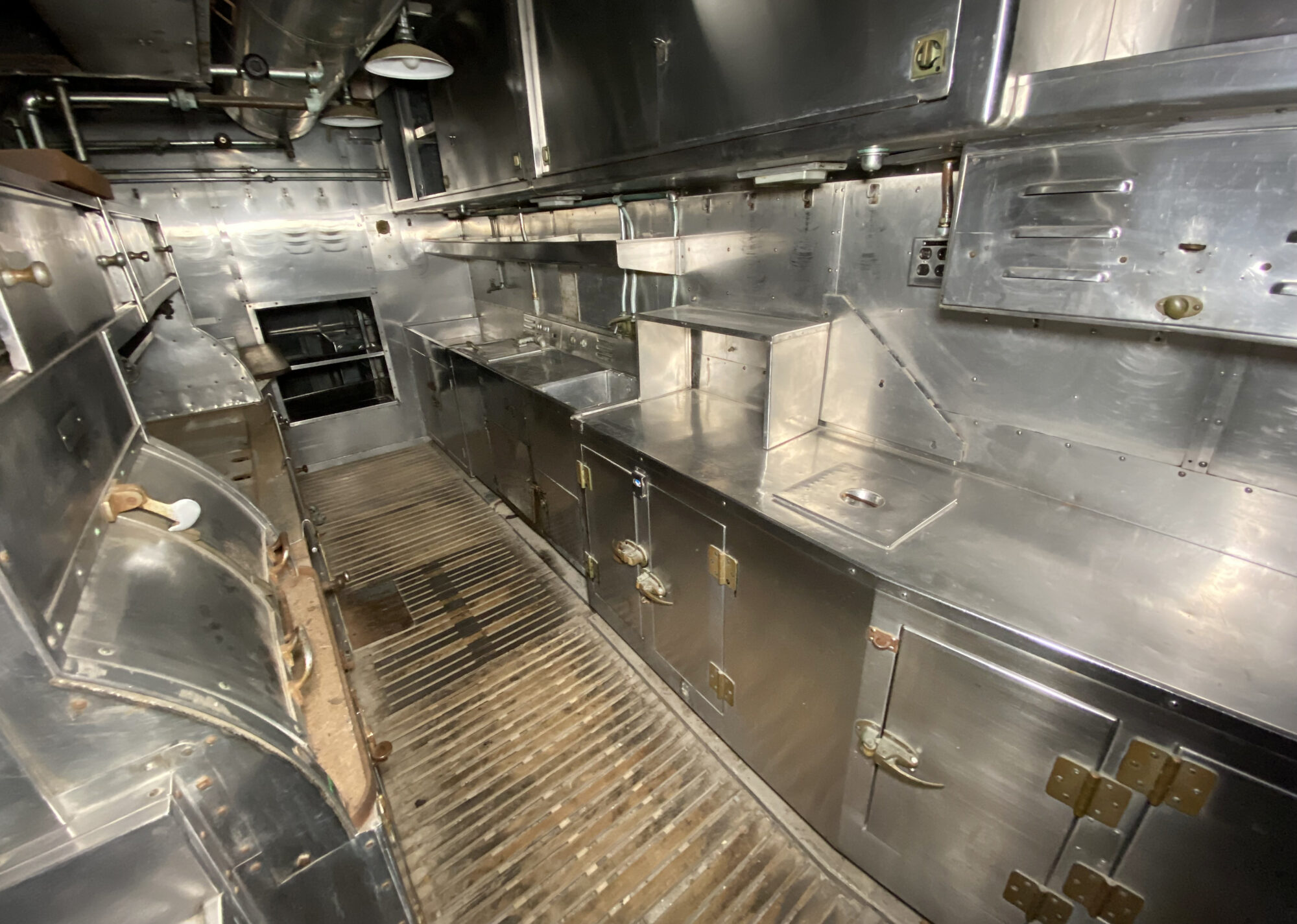
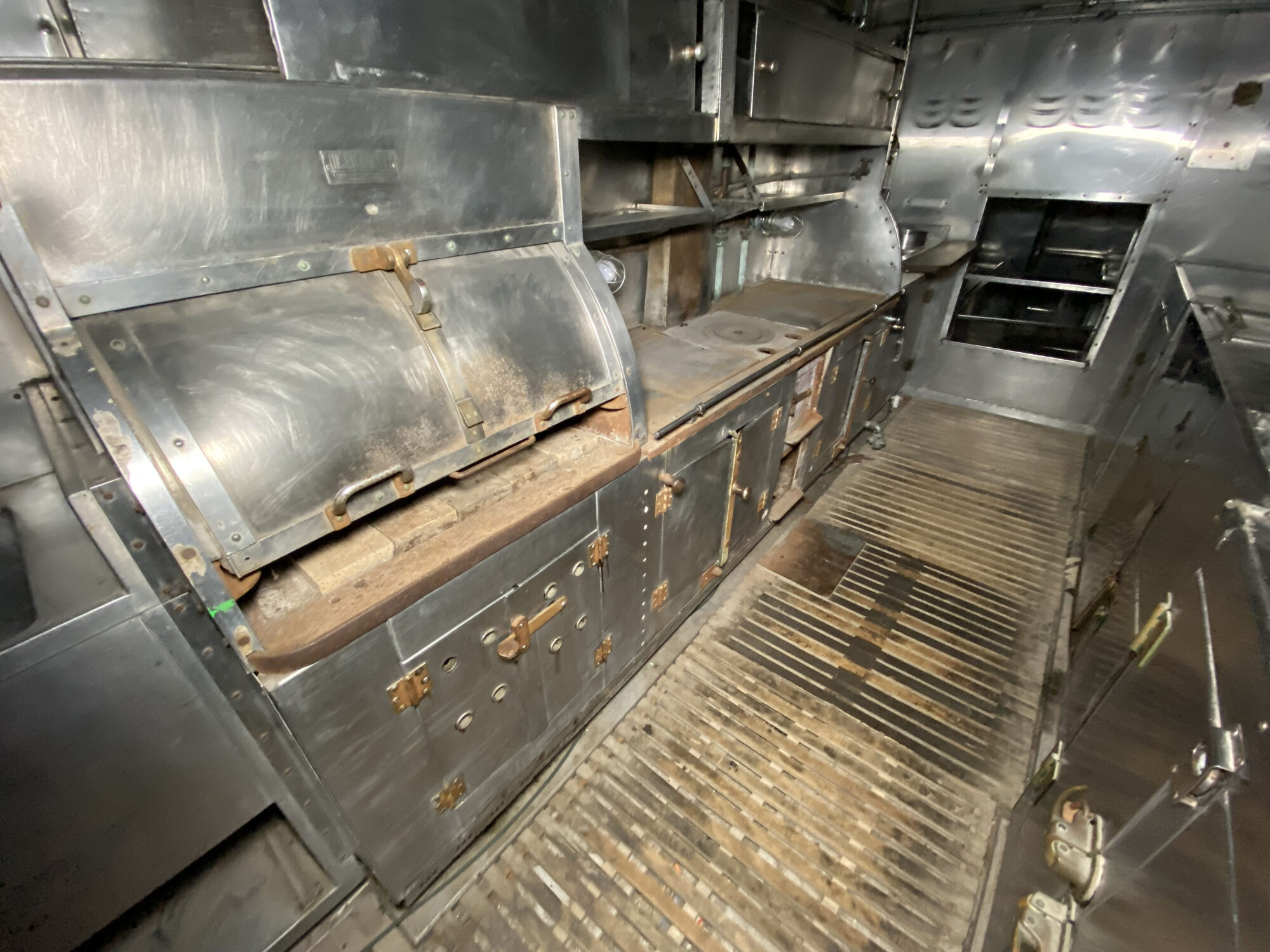
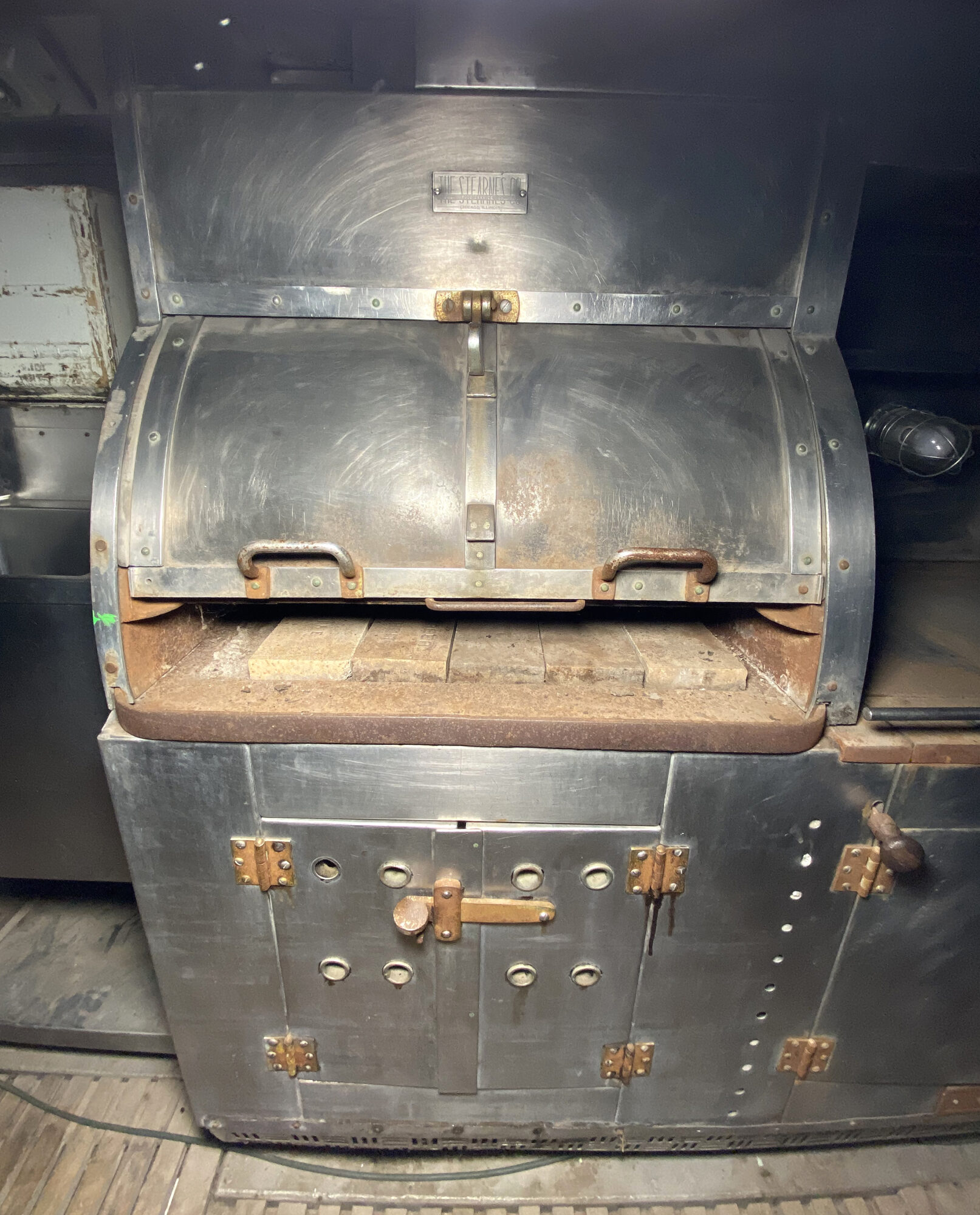
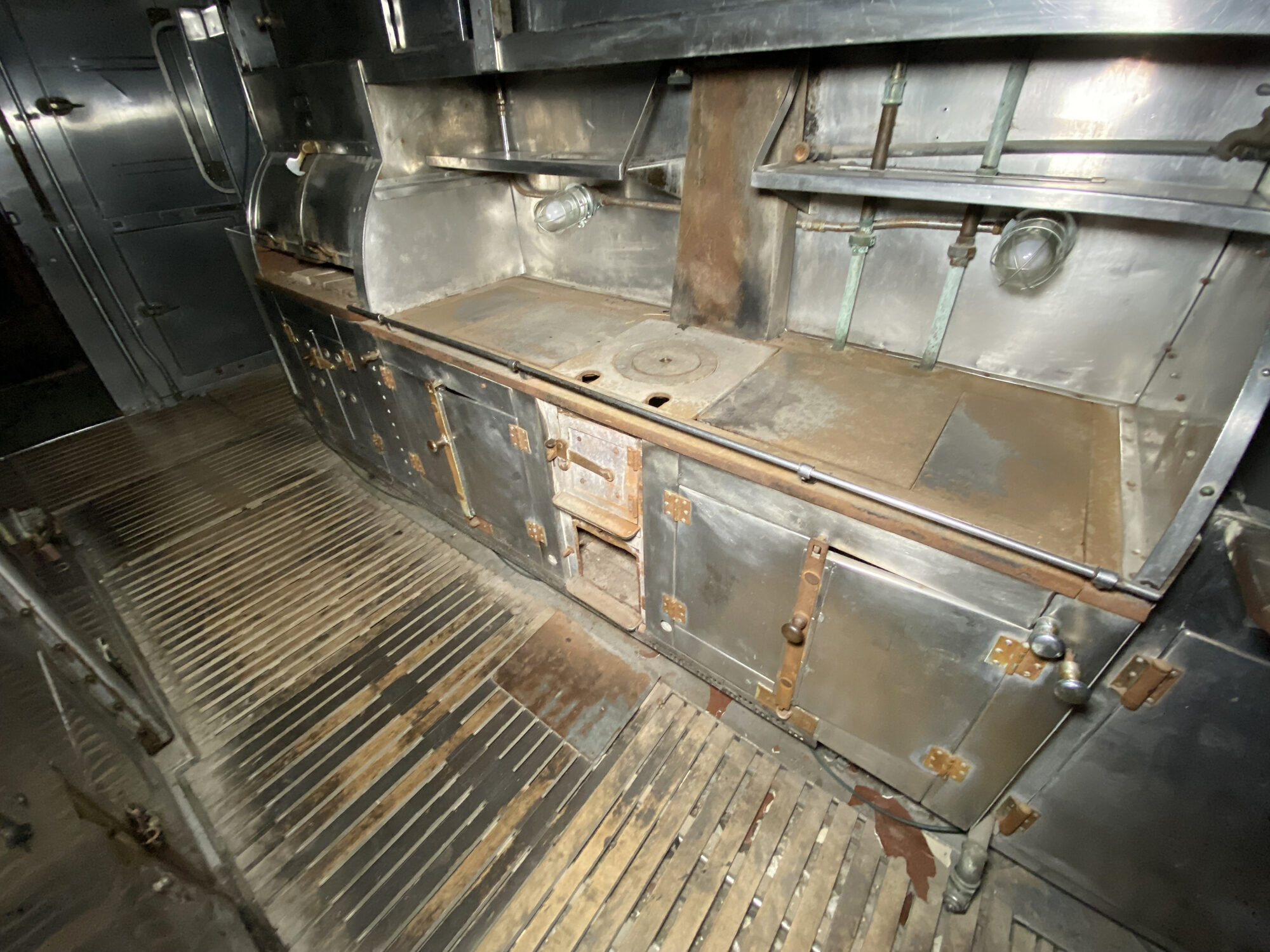
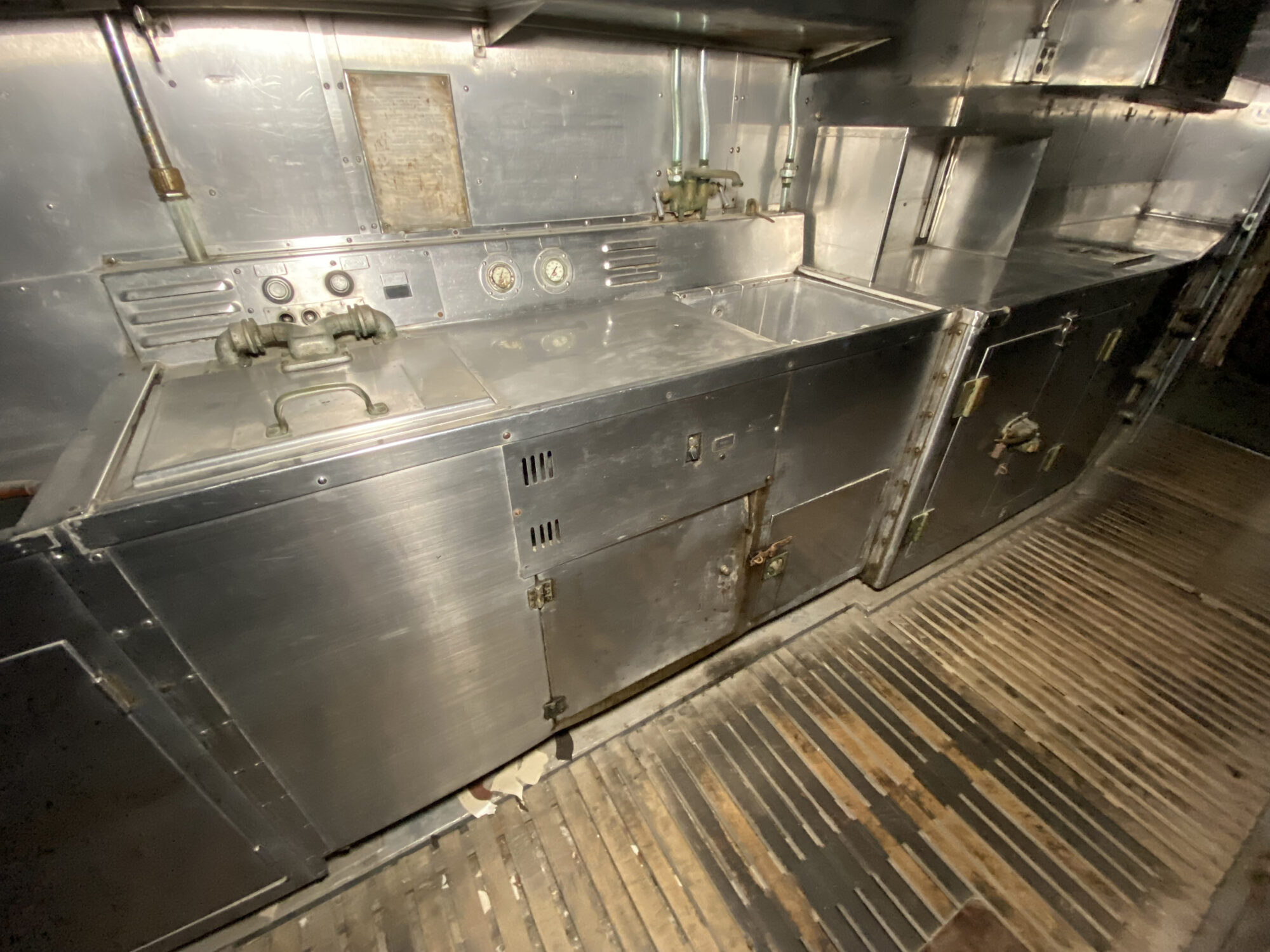
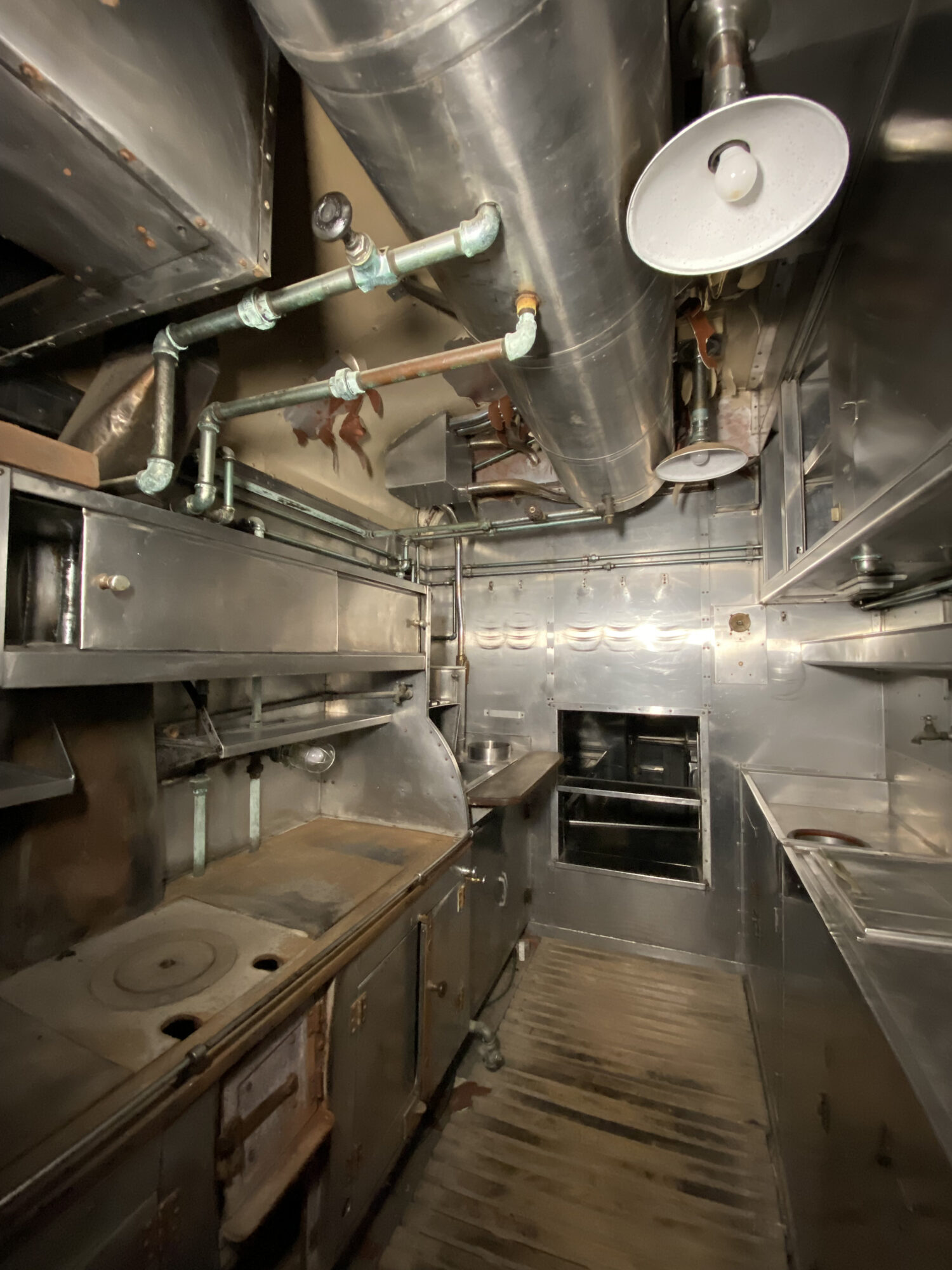
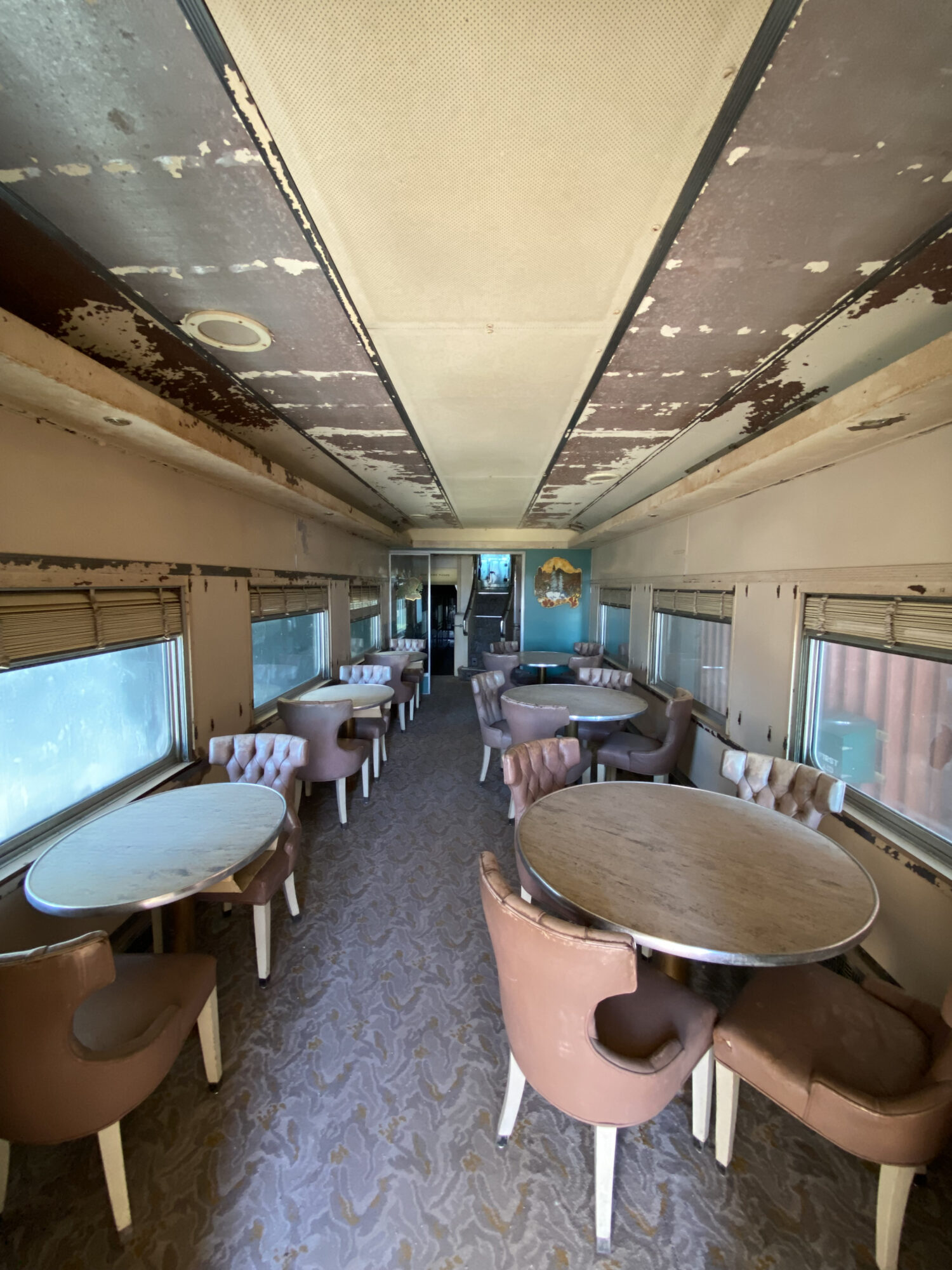
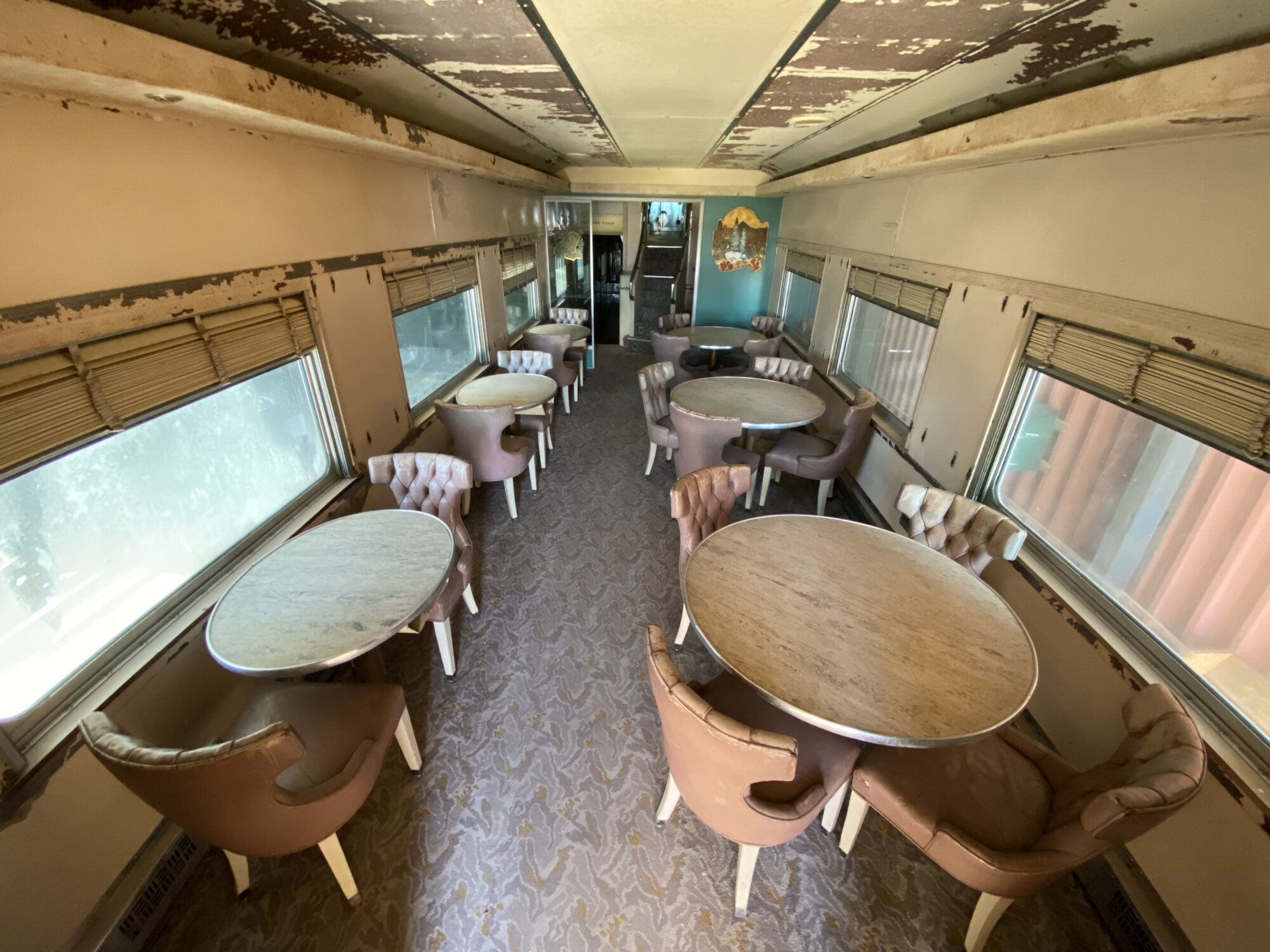
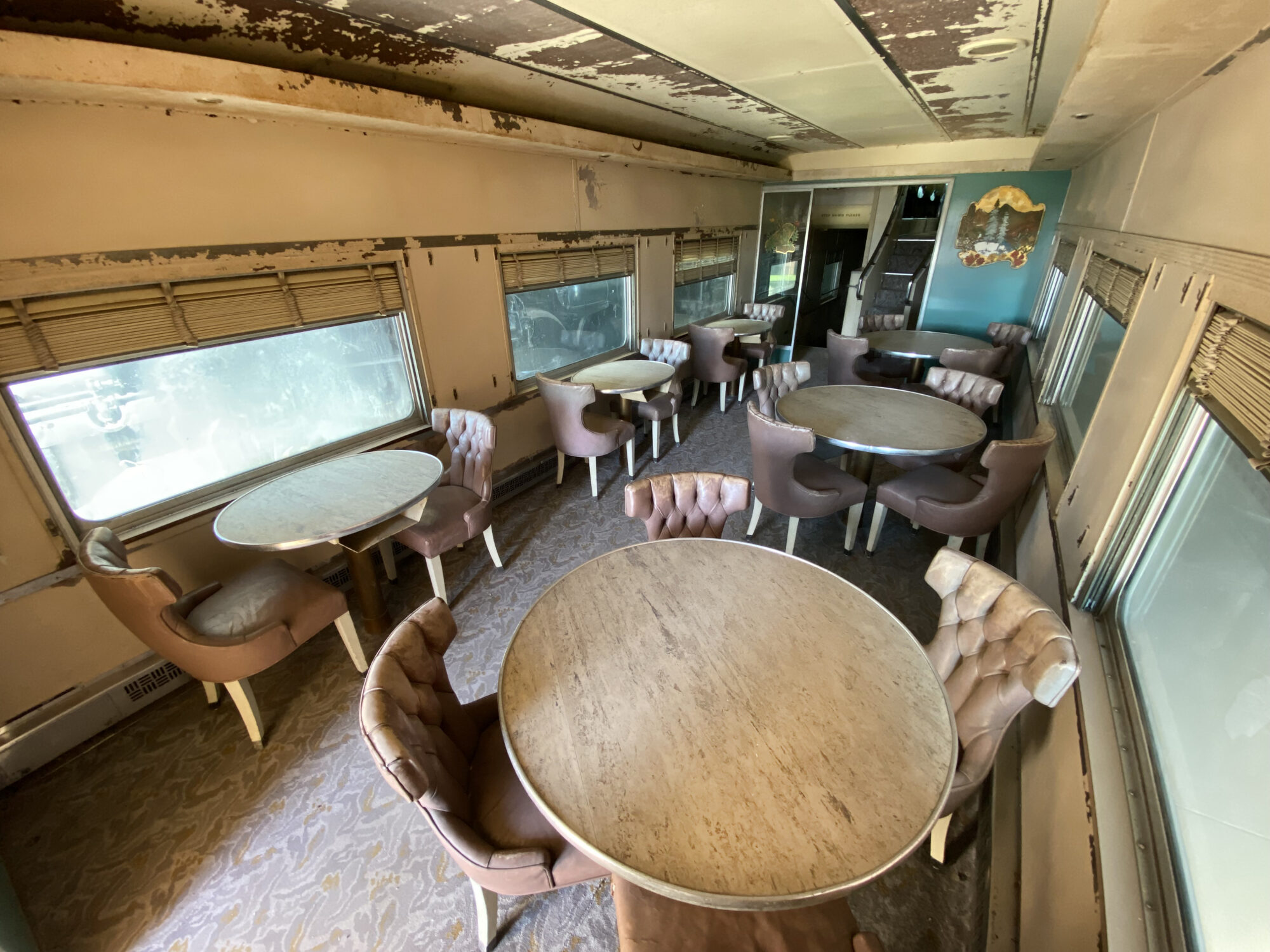
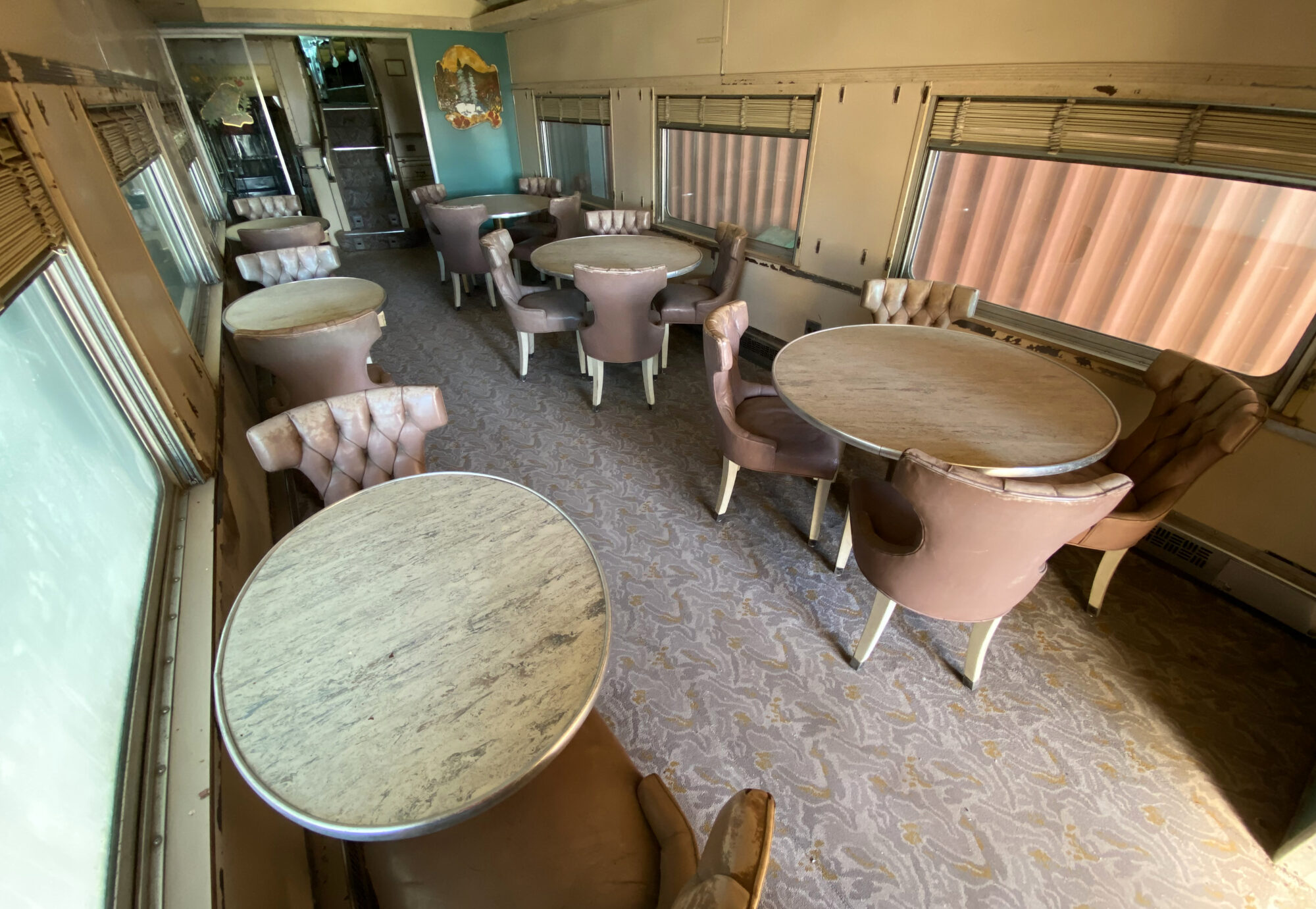
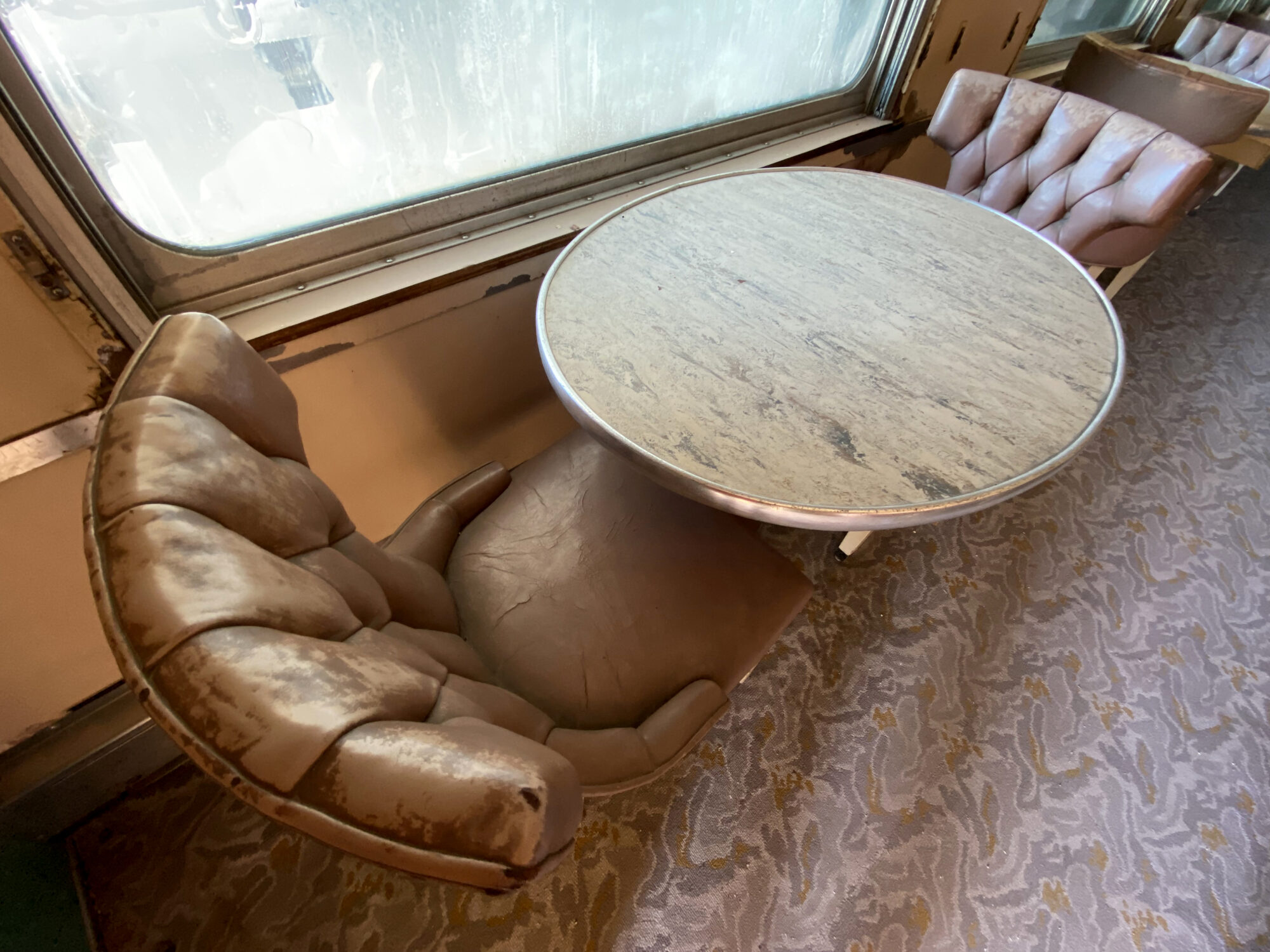
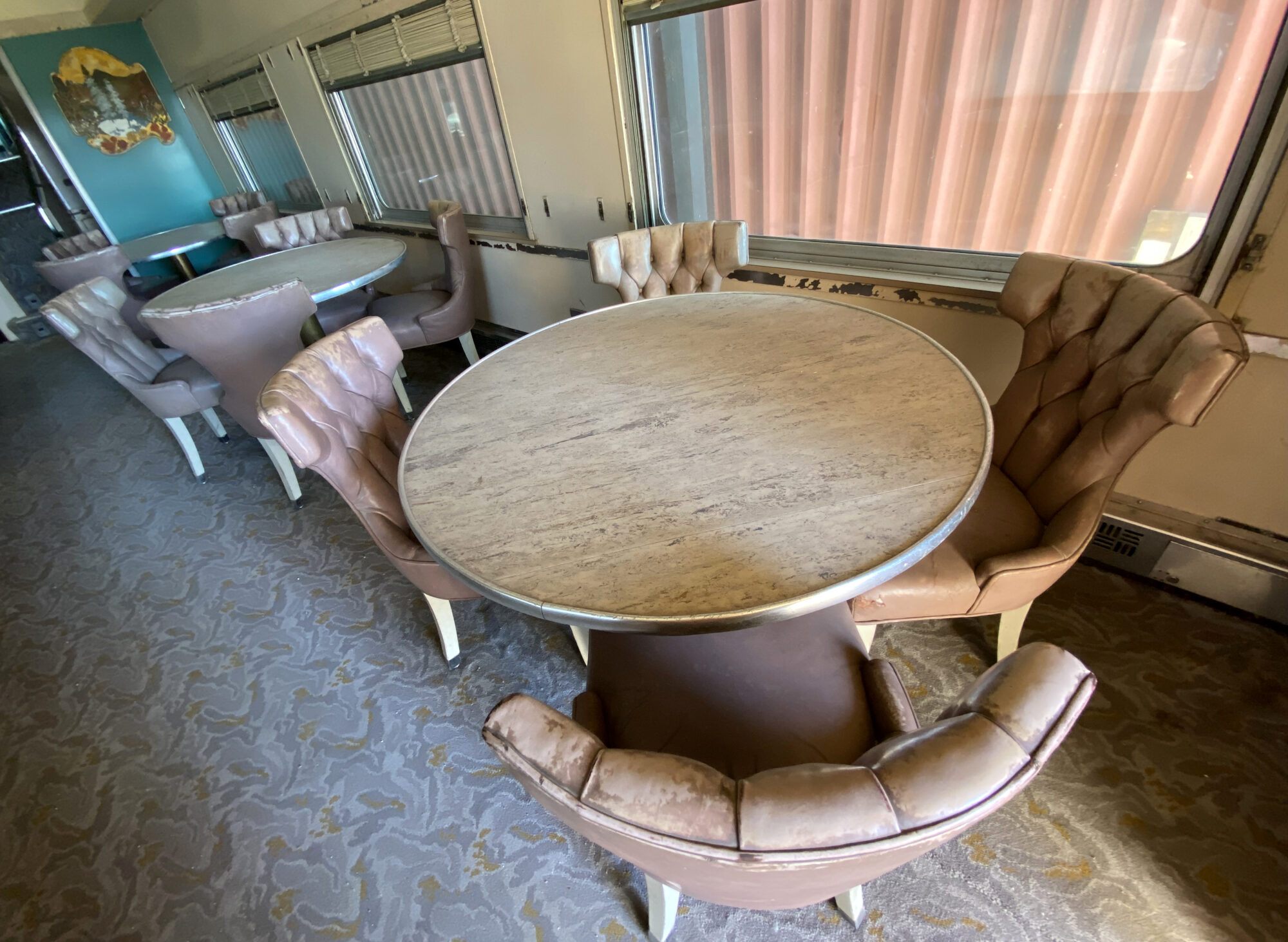
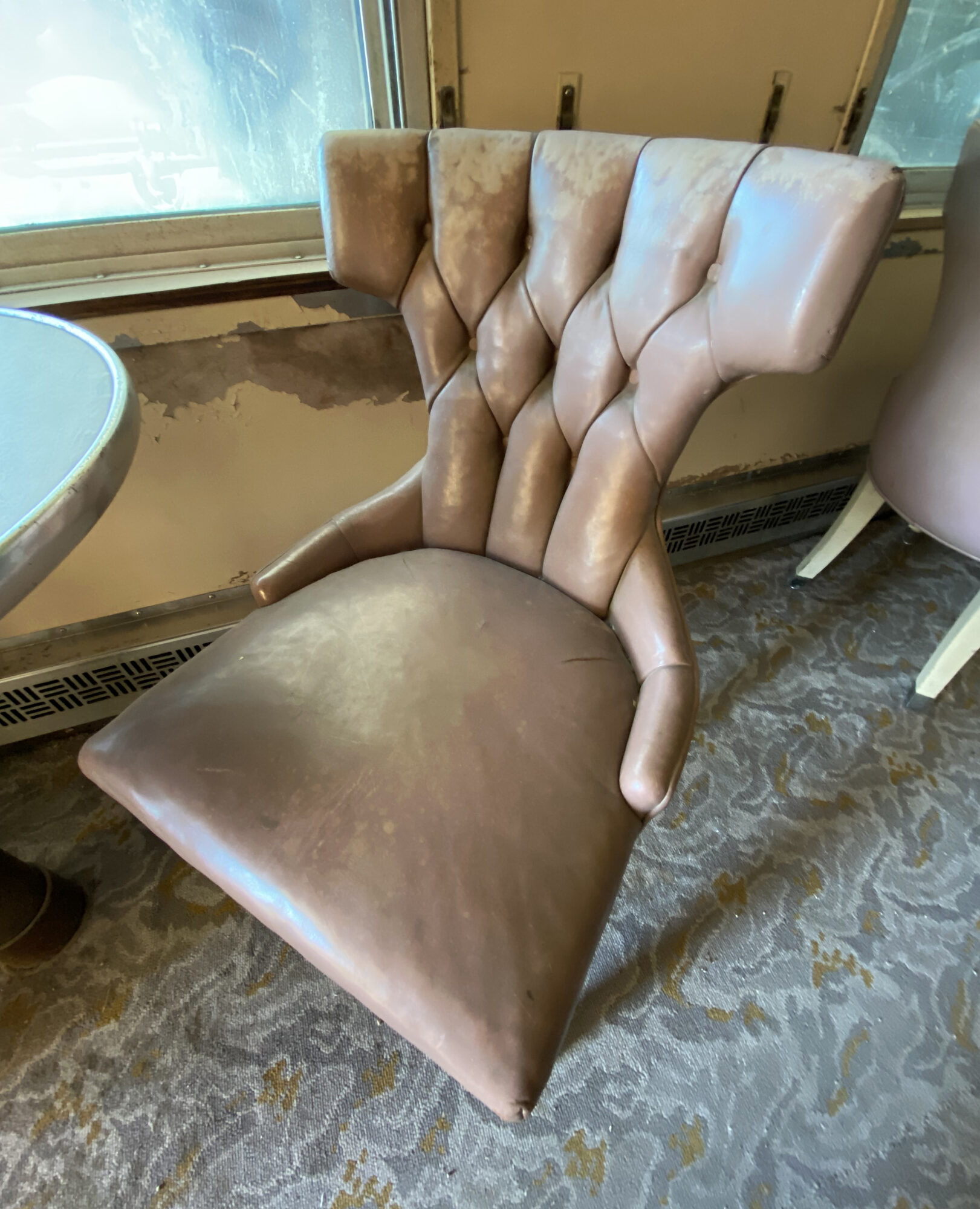
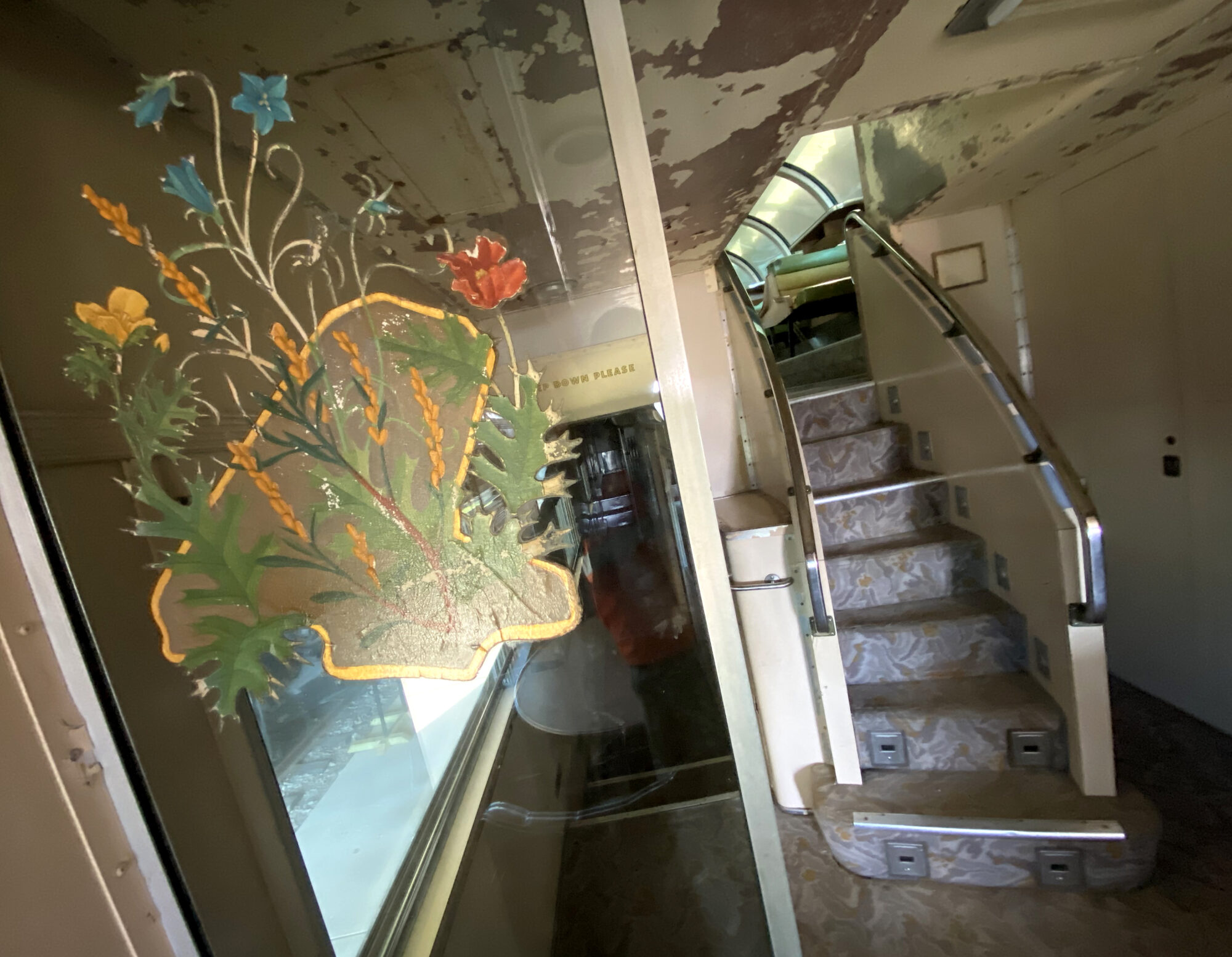
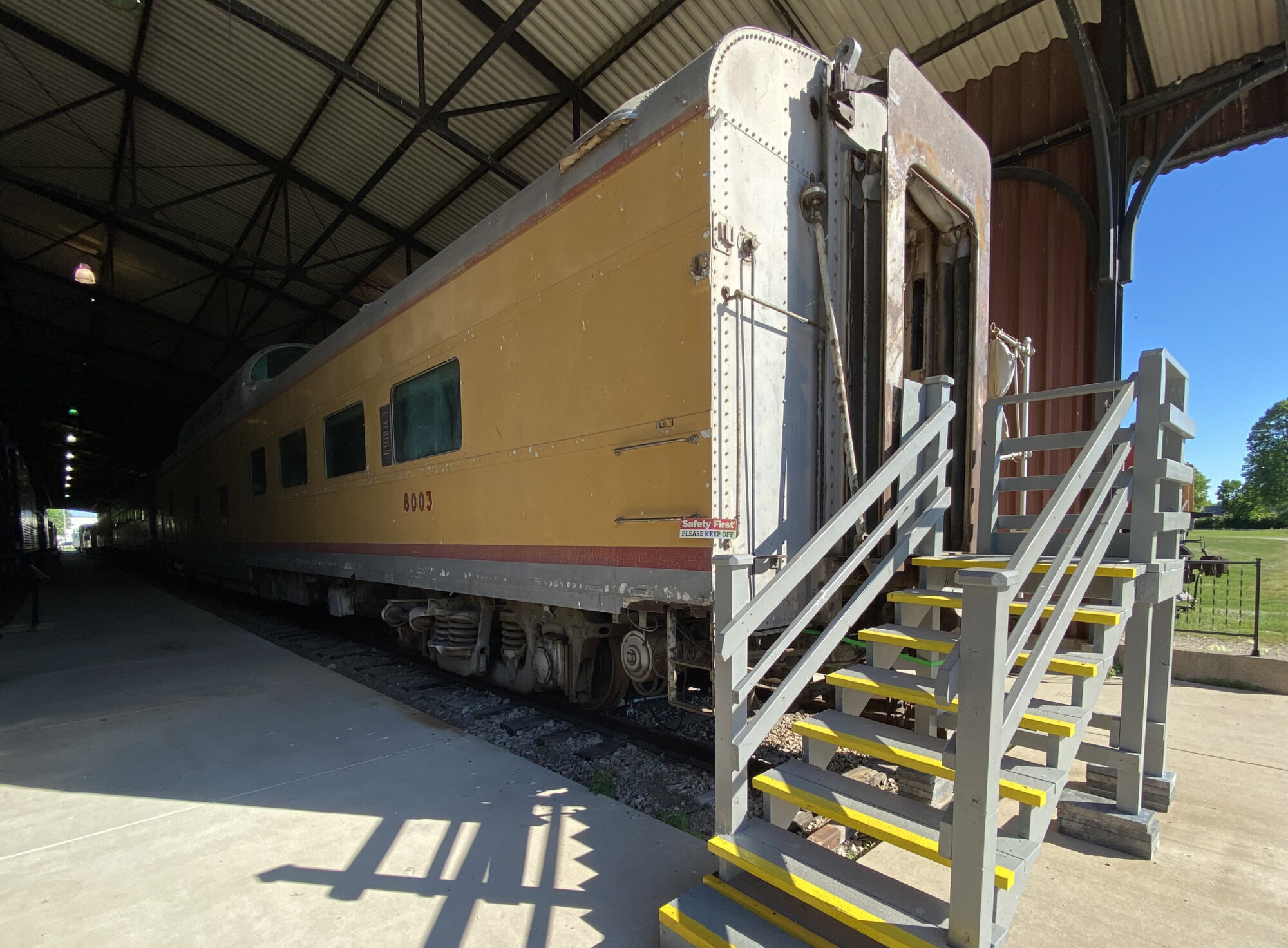
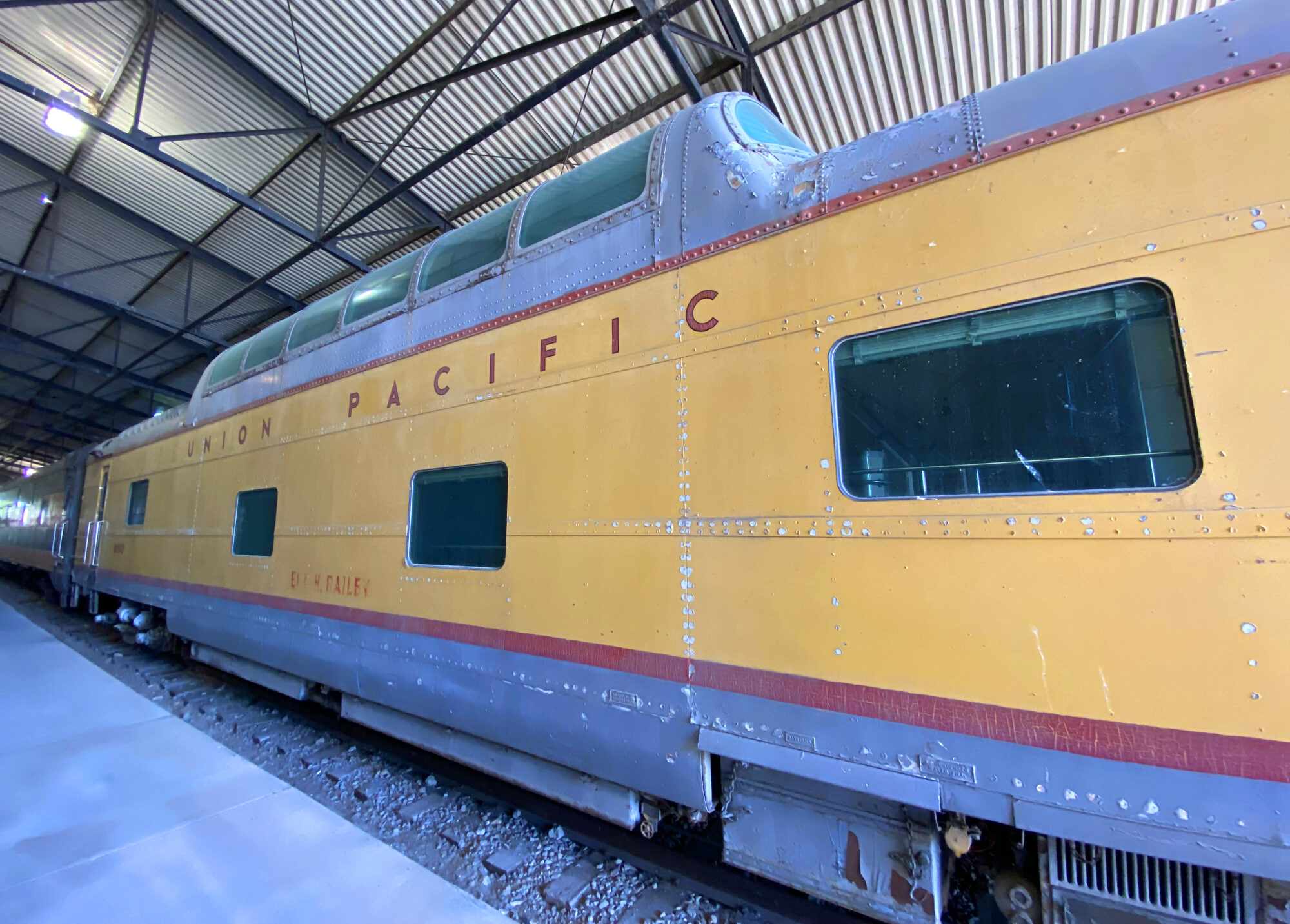
The Union Pacific Dome Diner No. 8003 was manufactured by the American Car & Foundry Company in 1955 and donated to the National Railroad Museum by the Union Pacific Railroad in 1971. The dining car was originally assigned to the “City of Los Angeles” passenger train. The Union Pacific Dome Diner No. 8003 was one of ten cars ordered in 1952 and delivered to Union Pacific in 1955. It has two kitchens with seating for eighteen in its main dining area, seating for ten in a private dining area, and seating for twenty-four in the dome section. No restoration had been done to the car’s exterior or interior, including upholstery of seats and preservation of artwork, since its donation.
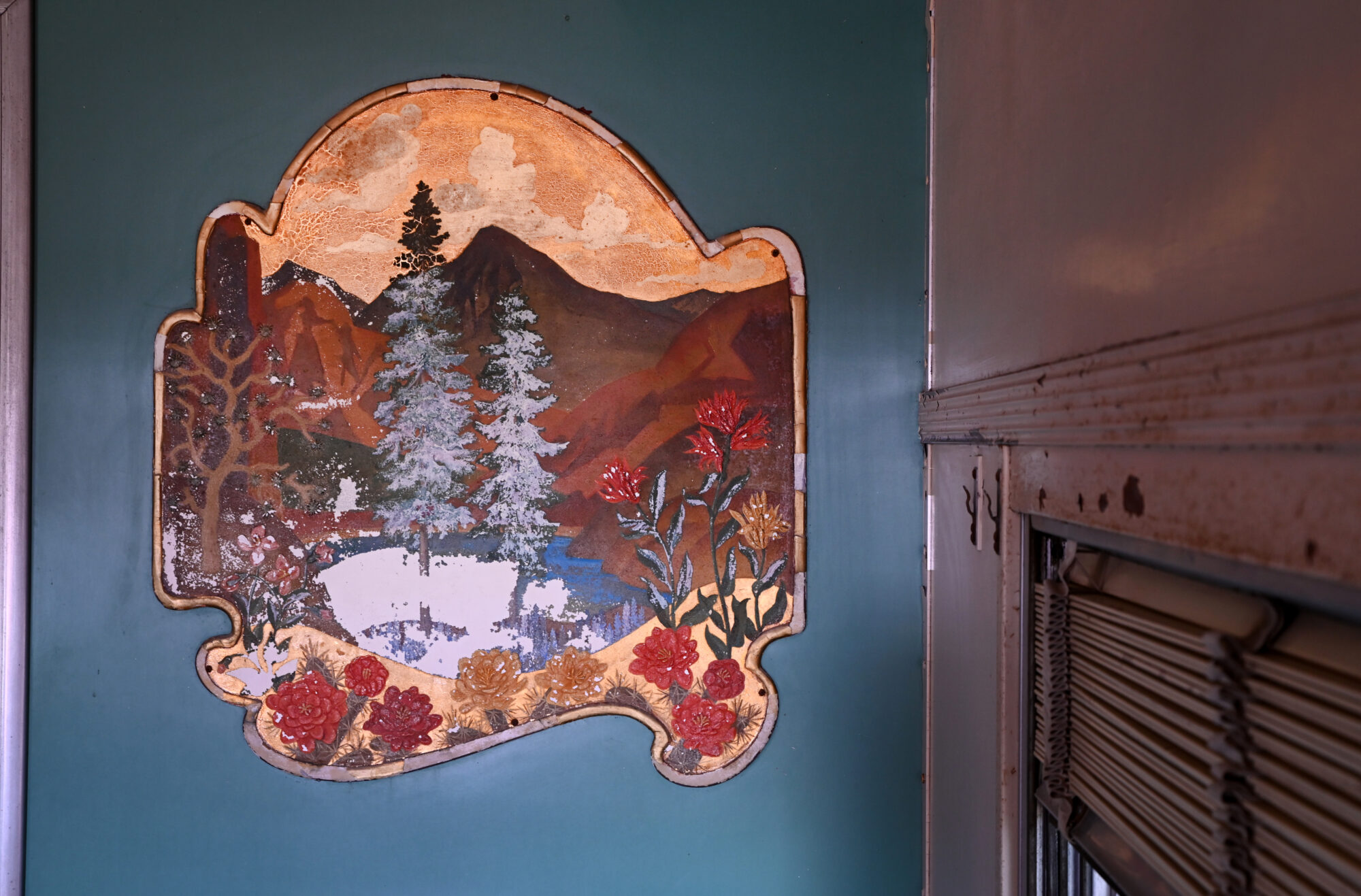
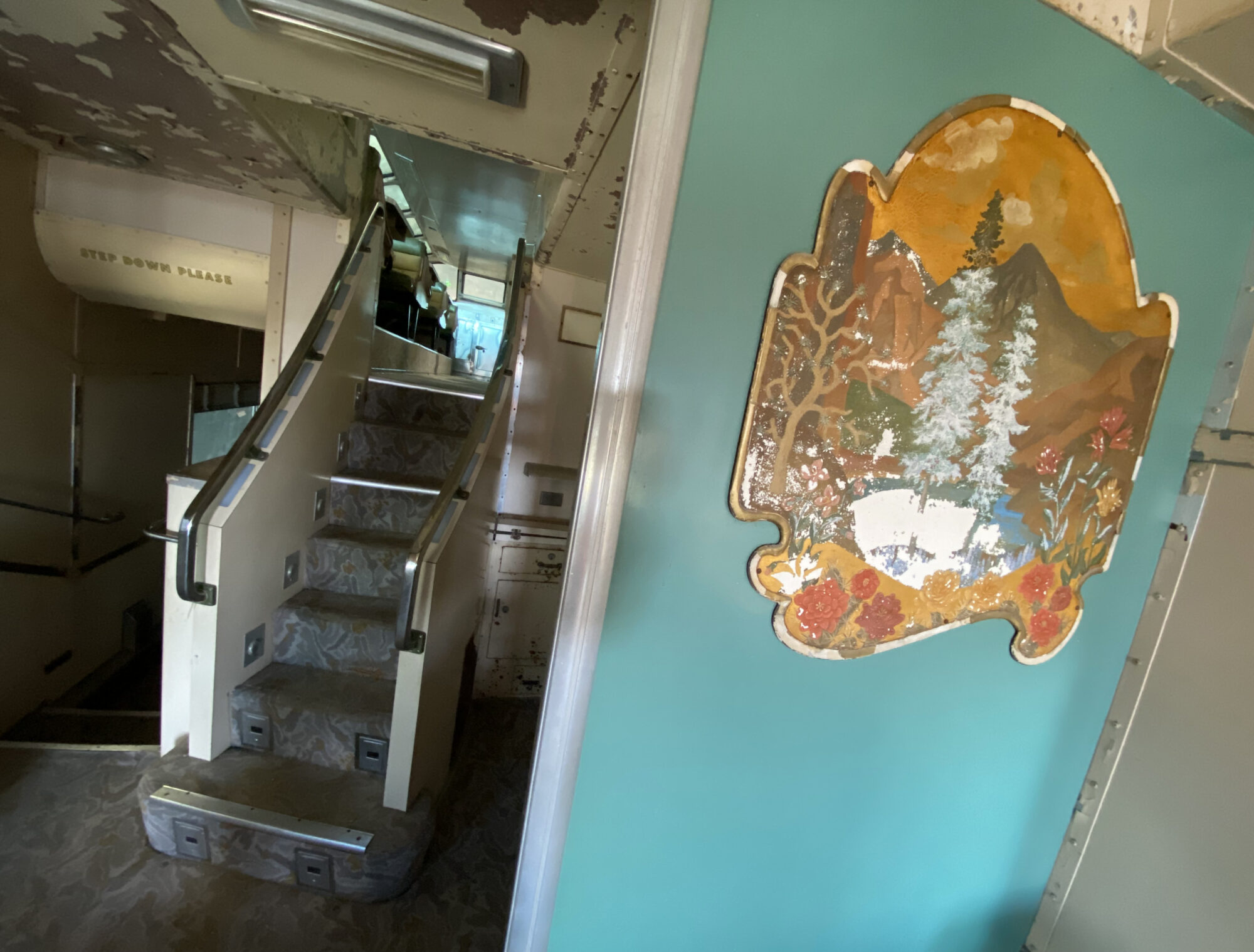
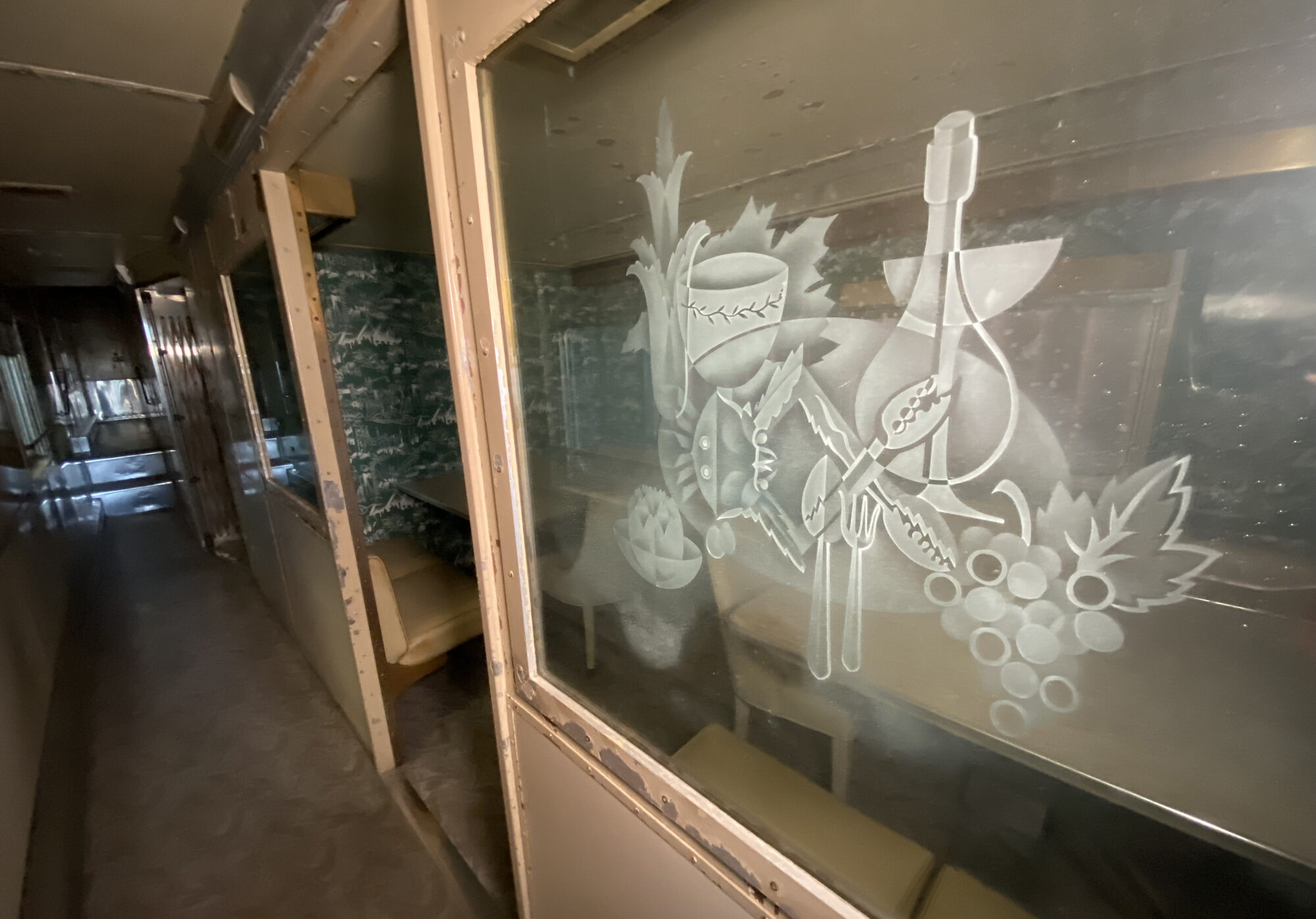
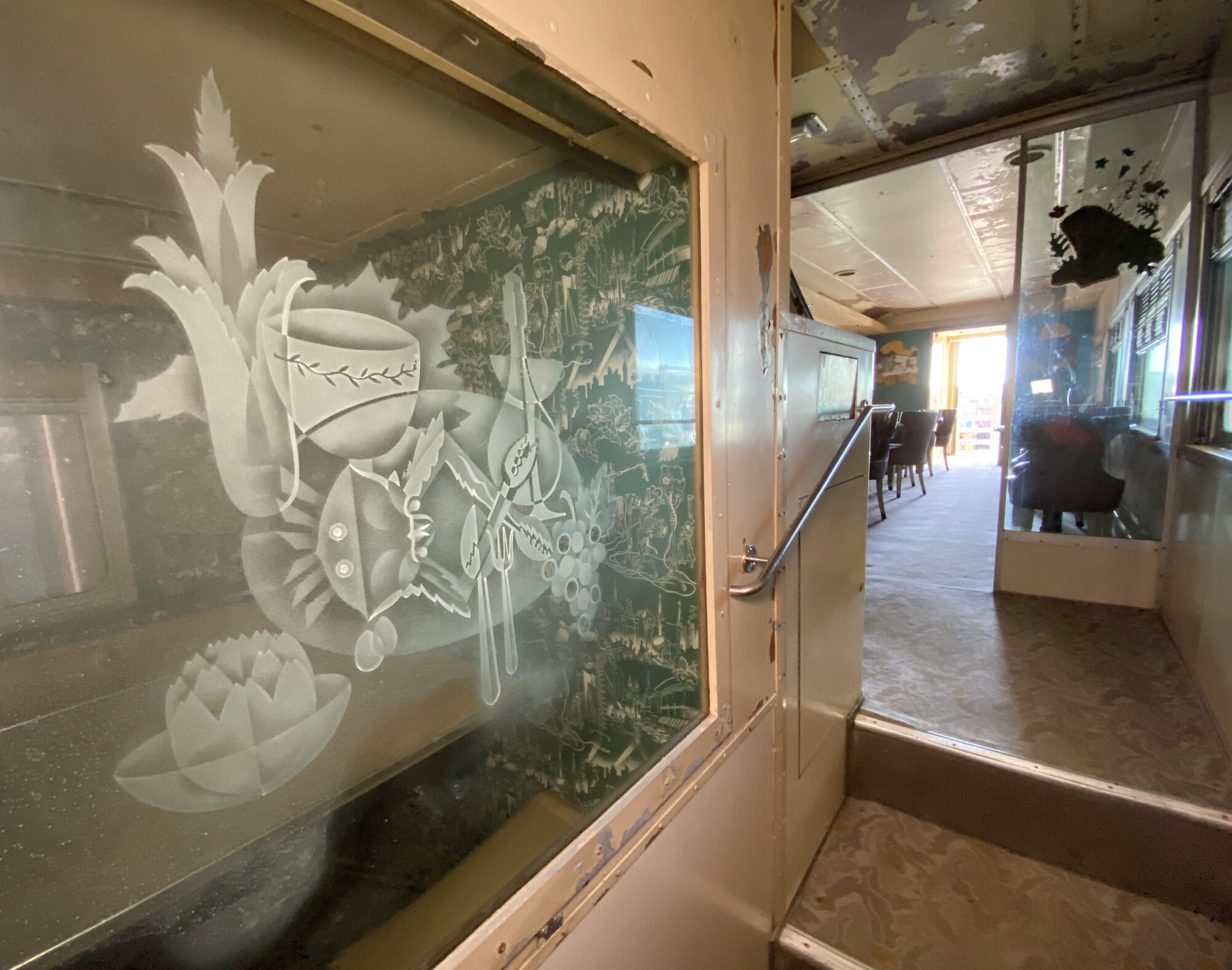
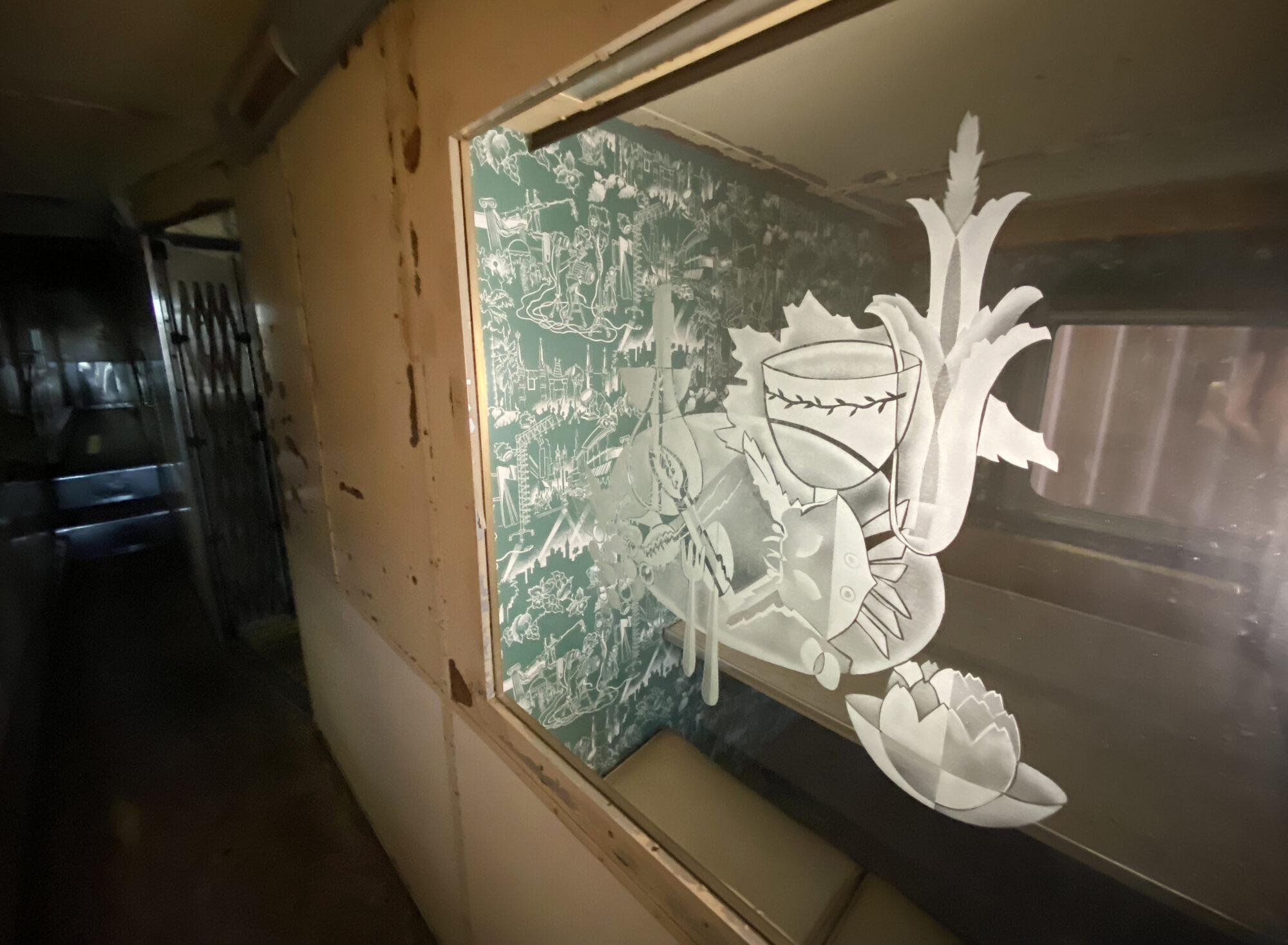
As with all restoration projects, background research on the original construction and maintenance of the car was completed. Restoration to date has included identification of missing components, removal of asbestos wrapping from pipes under the car and in the kitchens, removal of artwork in the main dining section for restoration, and removal of paint from the car’s interior and exterior.
In the next two years, seats will be reupholstered, artwork conserved, new windows installed, new electrical run, window shades repaired, bodywork done, and the interior and exterior painted. Restoration projects of this size always seem daunting. Thankfully, the museum has a talented group of maintenance/restoration staff and volunteers.
The goal of the project is to bring the dining car to the cosmetic condition it had when it was first put into service in 1955. Upon completion of the restoration, the Dome Diner will be displayed in the Fox River Expansion section. Periodic updates will be shared on our social media and in our Rail Lines publication, and monthly updates will be posted below.
Volunteers Needed!
Put your skills to work preserving history! The National Railroad Museum is seeking volunteers to assist with historic railroad equipment restoration. We welcome individuals with backgrounds in bodywork, automotive maintenance and refinishing, welding, fabrication, painting, mechanical repair, and more. Whether you’re bringing years of experience or looking to learn a new trade, you’ll have the opportunity to make a lasting impact while helping preserve our railroad heritage for future generations.
Ready to climb aboard? Contact us at volunteers@nationalrrmuseum.org!
Restoration Updates
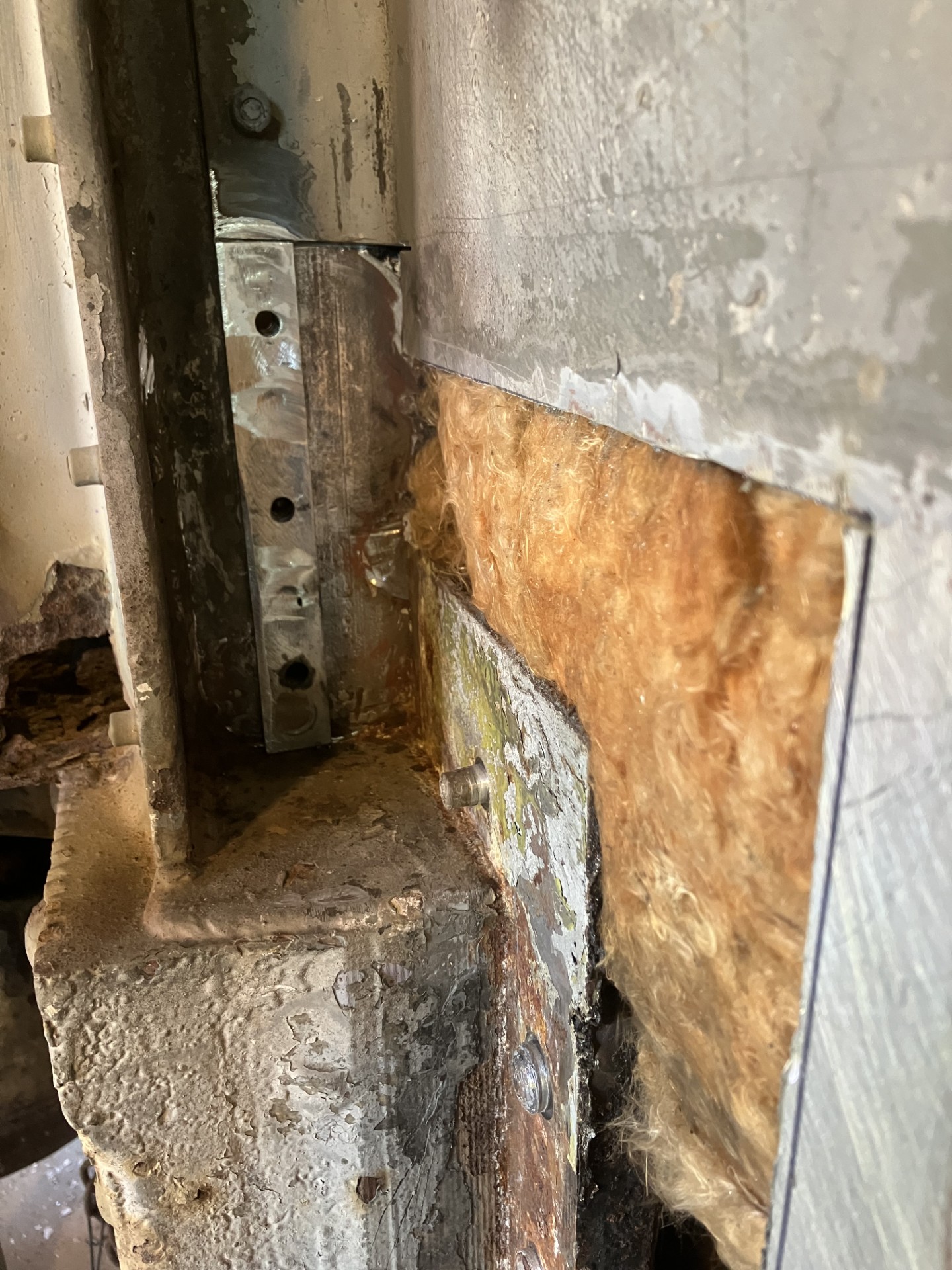
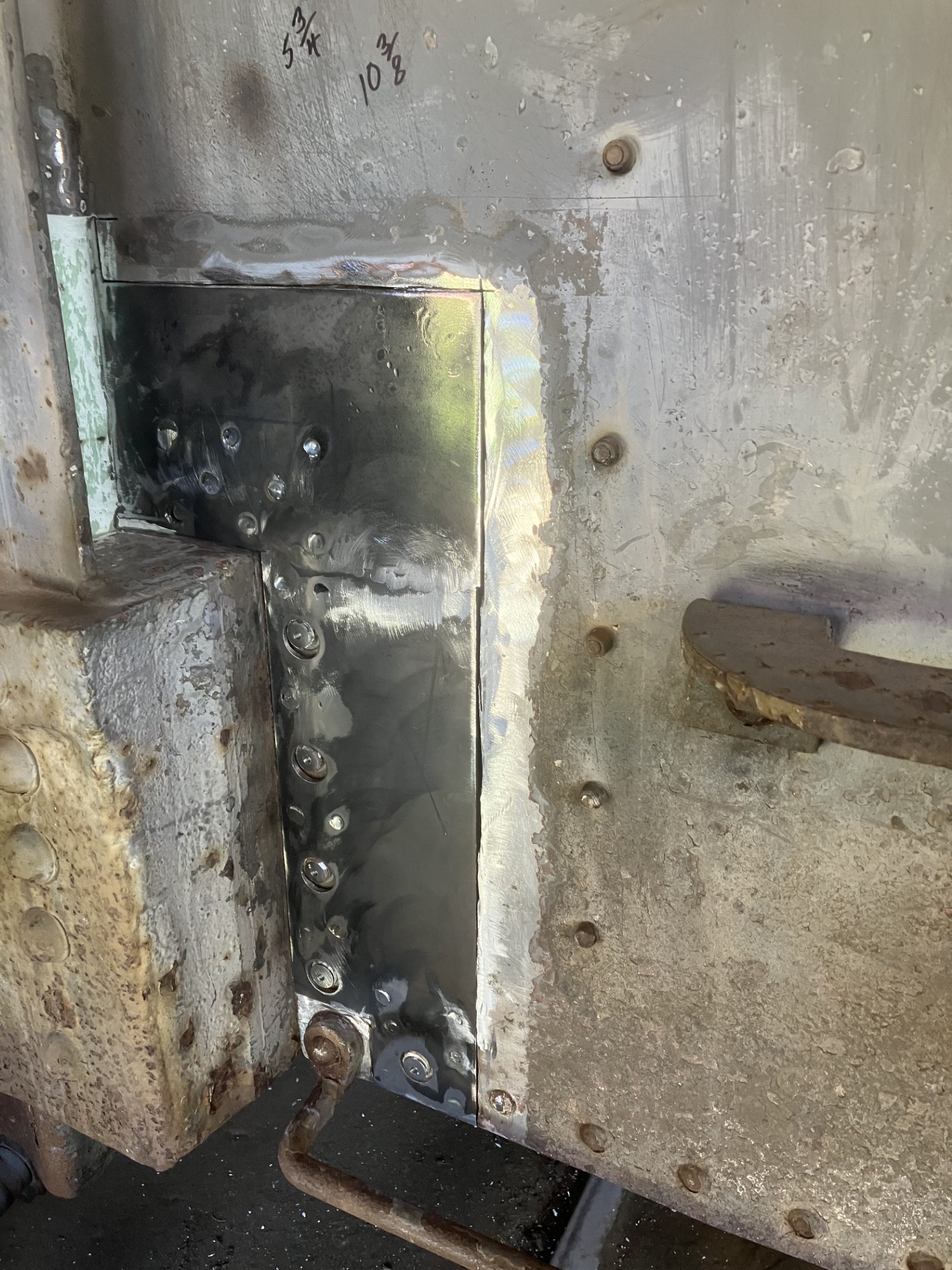
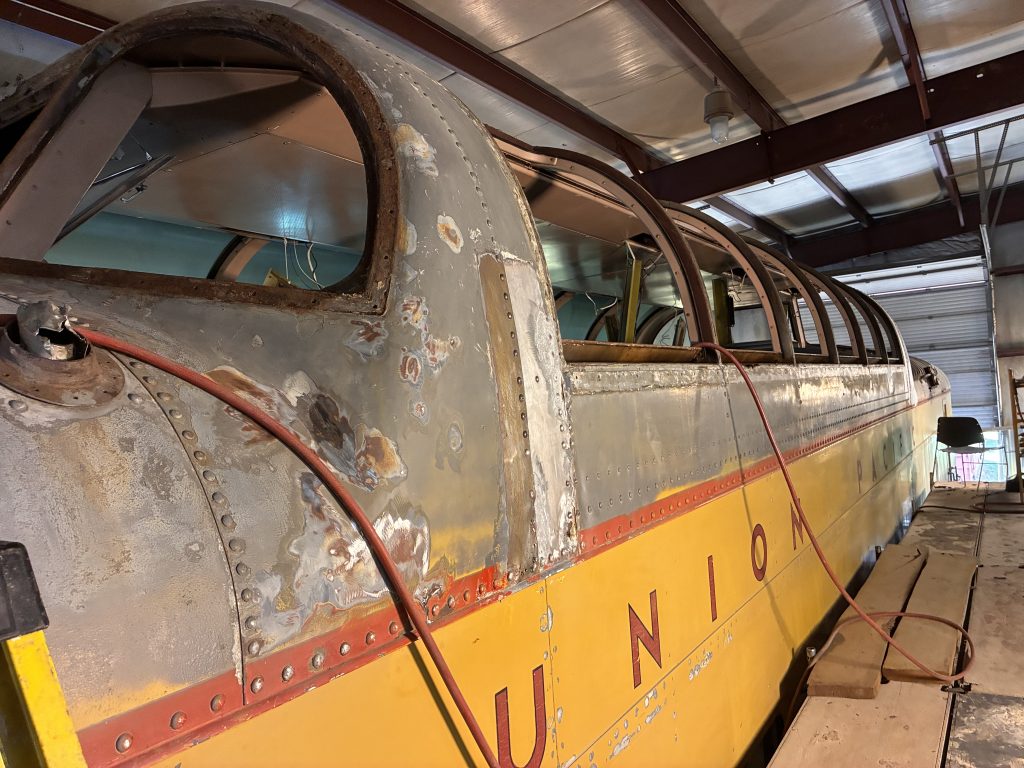
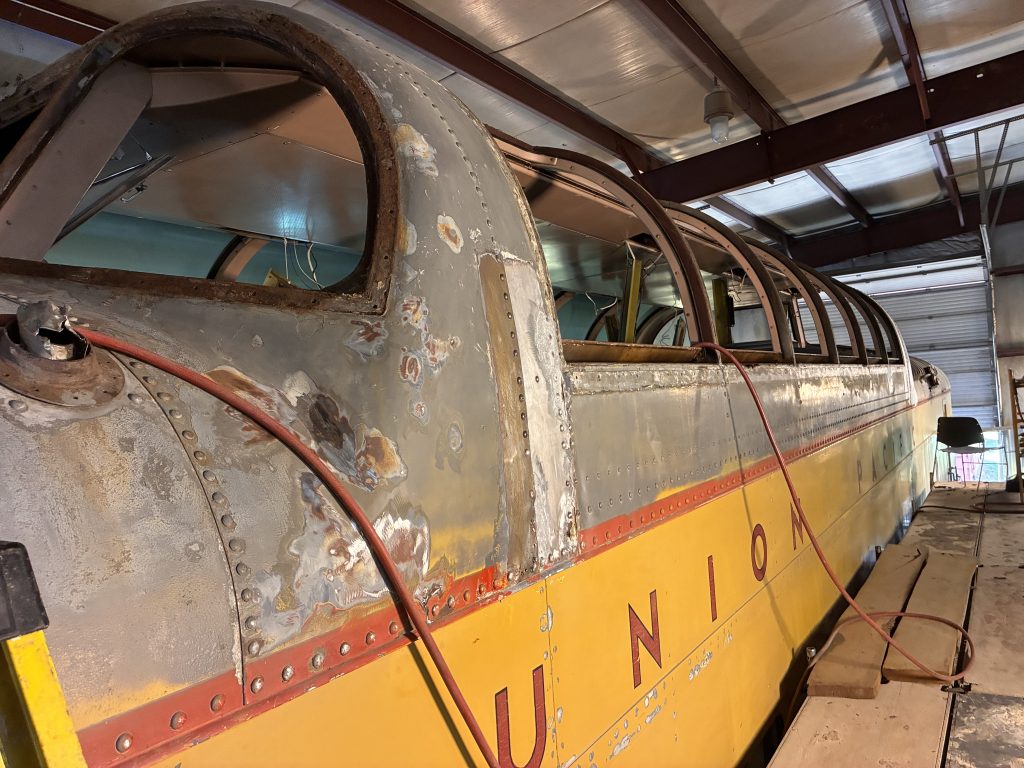
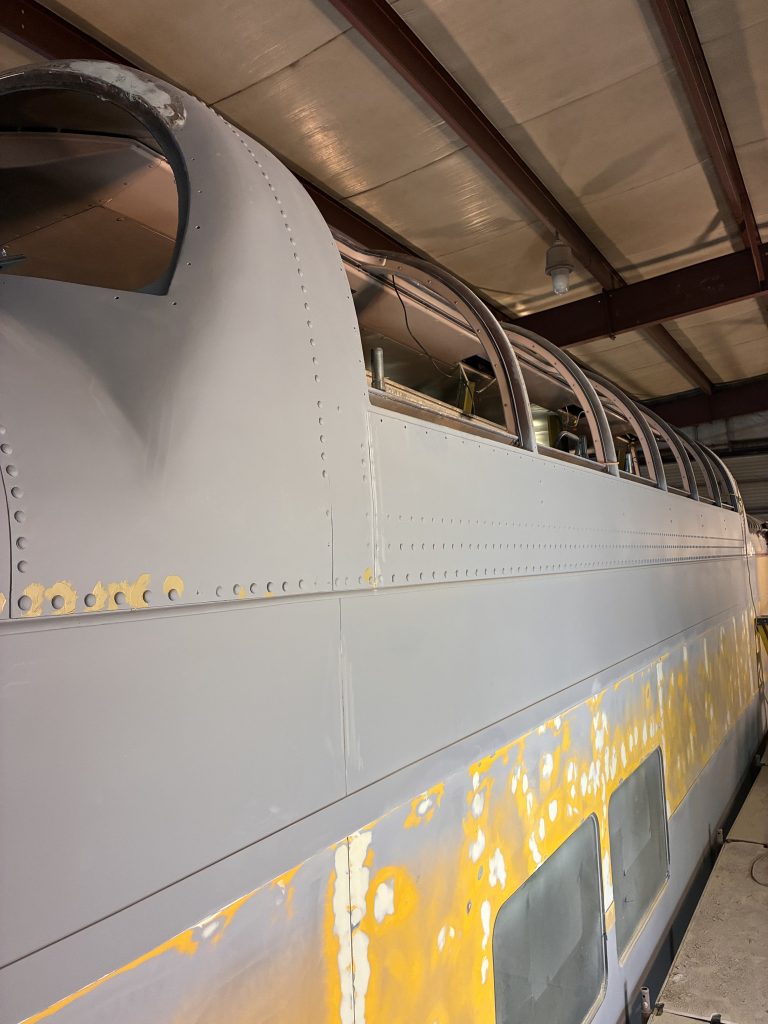
The asbestos and lead paint abatement was completed in January, so the crew immediately started on the bodywork. The body of 8003 was originally constructed of 3/16” aluminum alloy riveted to a steel and aluminum sub-structure. After years of service and exposure to the elements, some of the body panels had delaminated from moisture and had to be cut out and replaced with new 3/16” patch panels, followed by body filler to blend in the seams. In addition to the cut-outs, thousands of dents, chips, and blemishes need to be filled and sanded before primer can be applied. The exterior bodywork is expected to take eight to twelve months to complete.
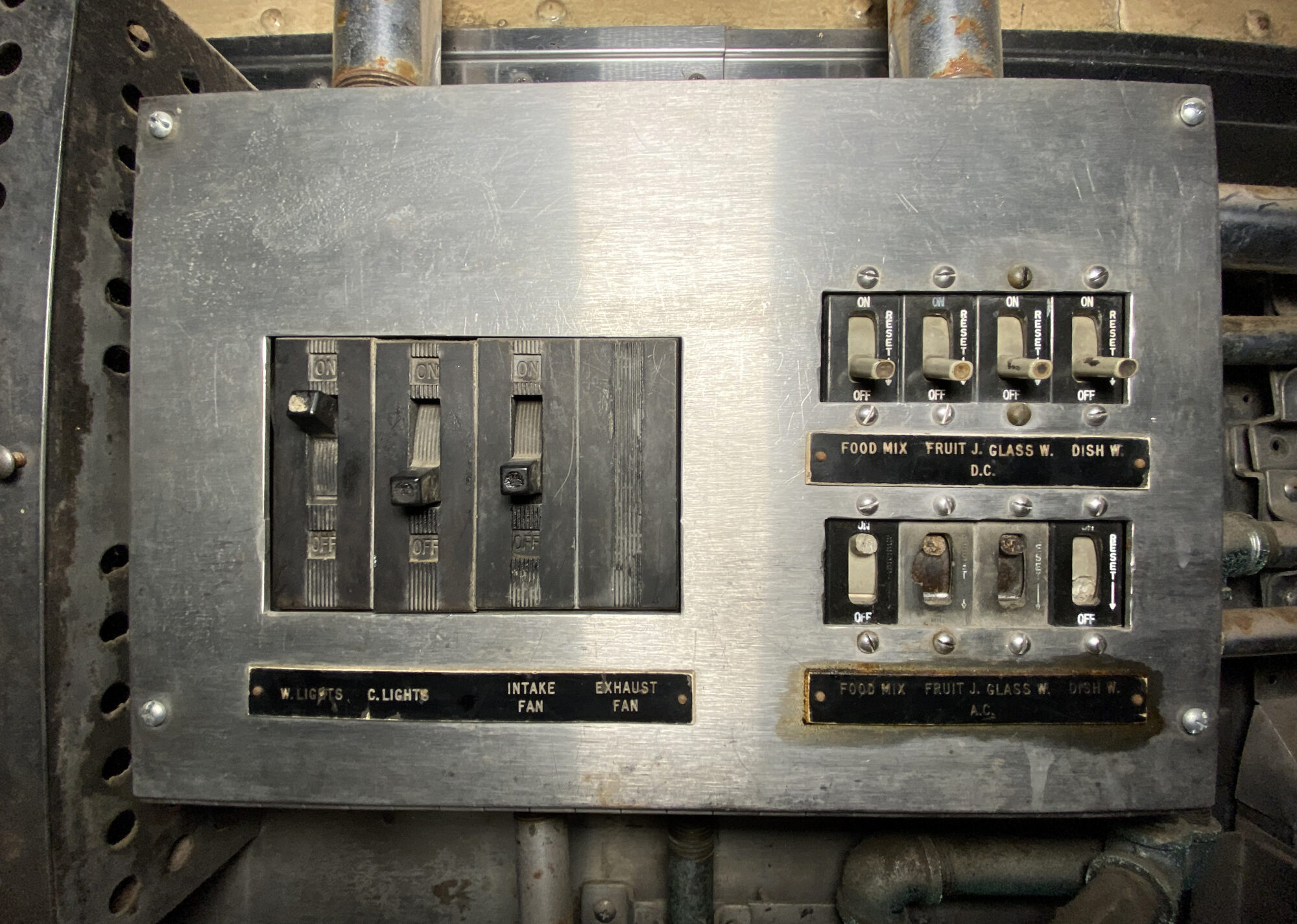
For the interior, the upholstery and artwork were removed and then our electrical guru “Pete” was able to work on the wiring. The first obstacle was to map the hundreds of feet of electrical wiring and confirm that it is properly terminated. Once that is completed, wall refinishing and cabinetry work will begin. The interior is expected to take two years to complete.
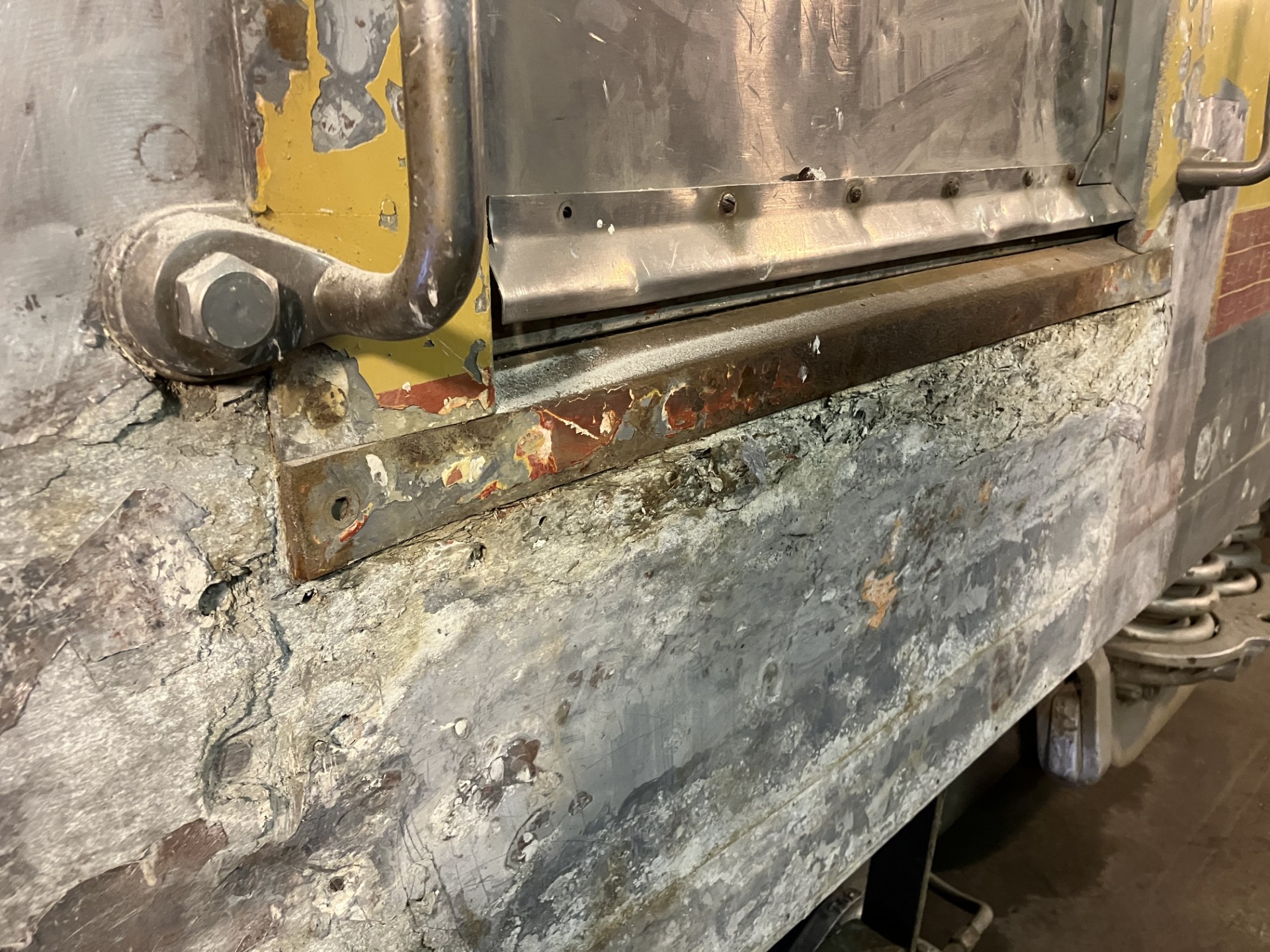
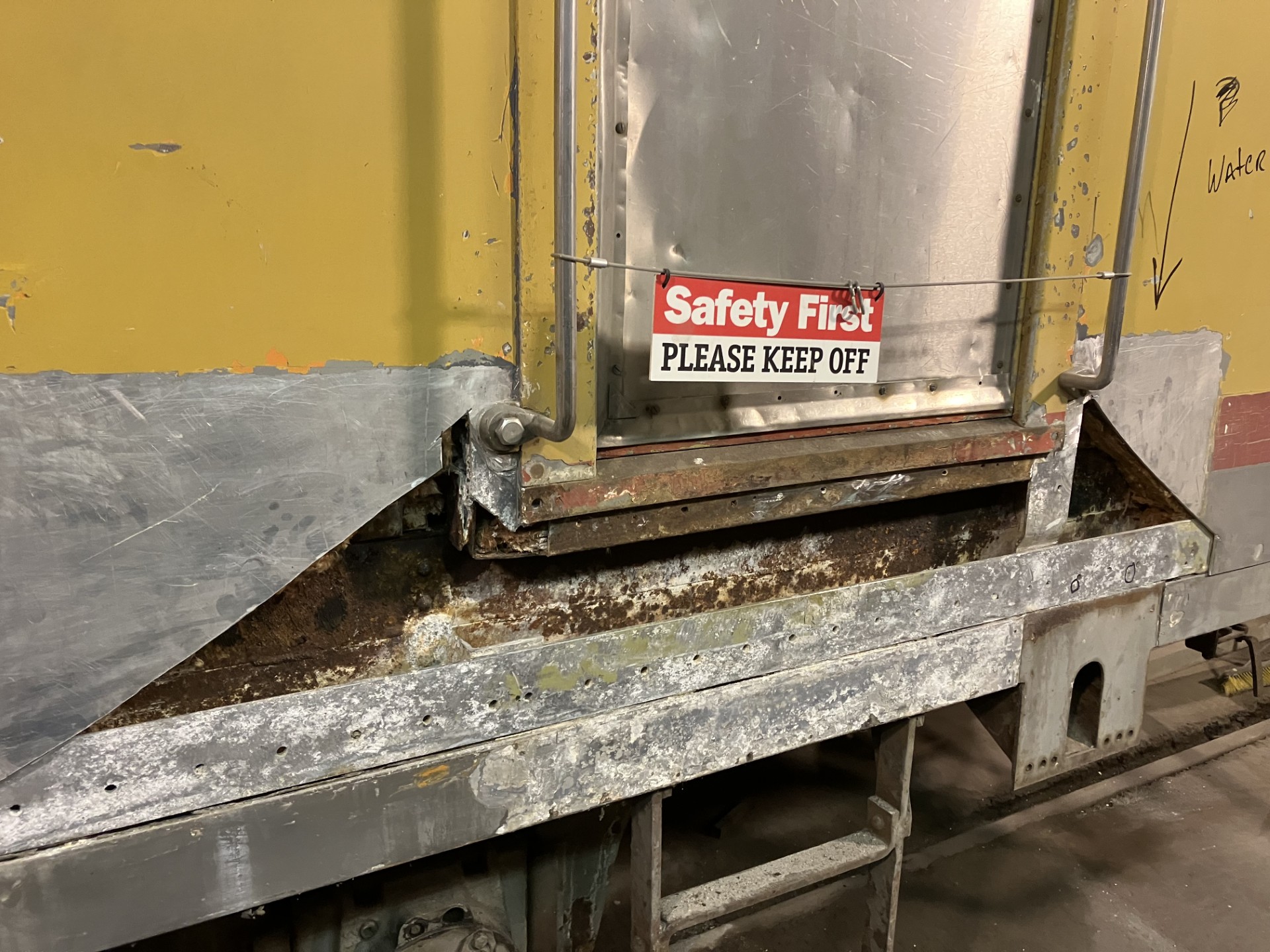
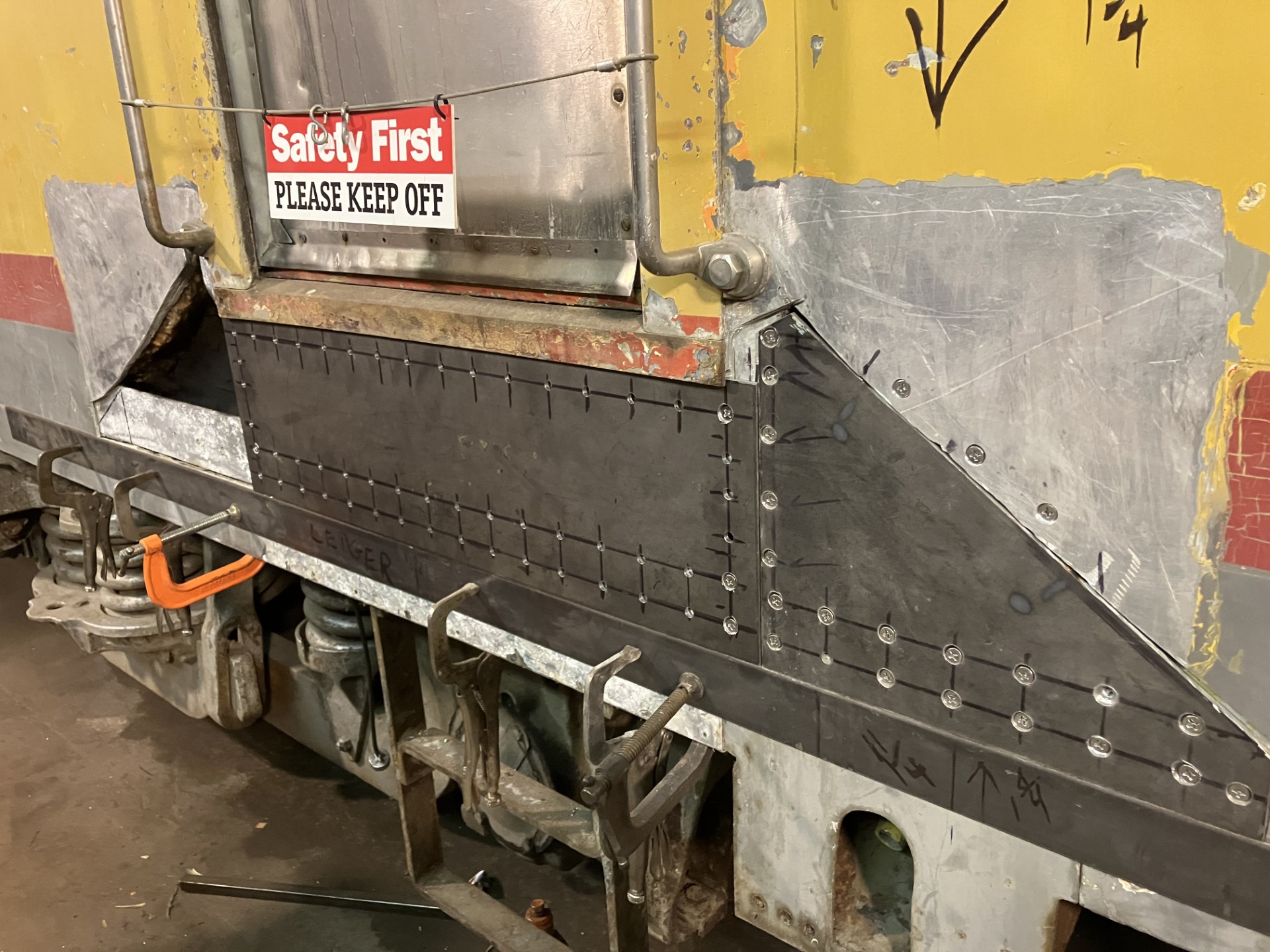
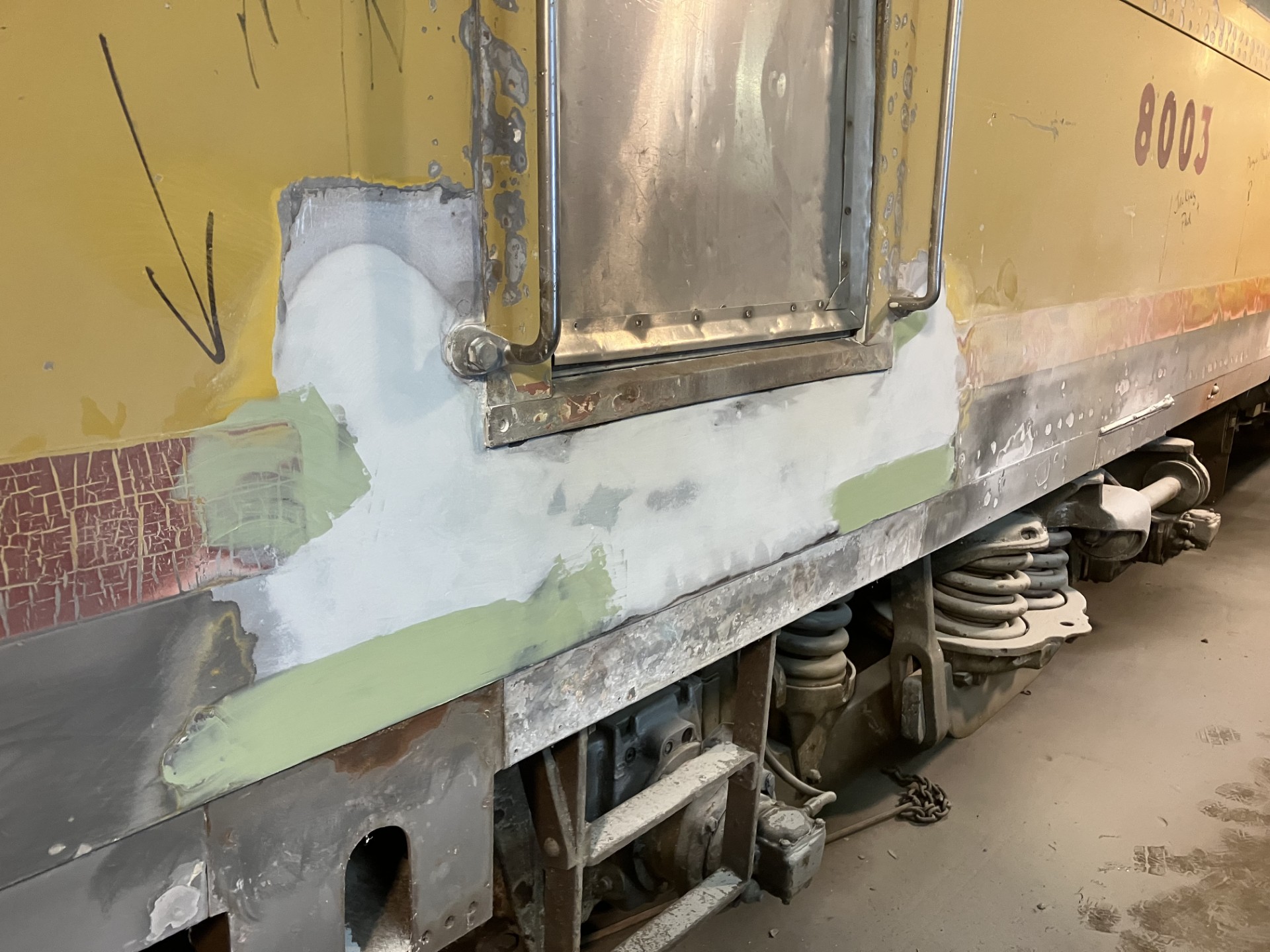
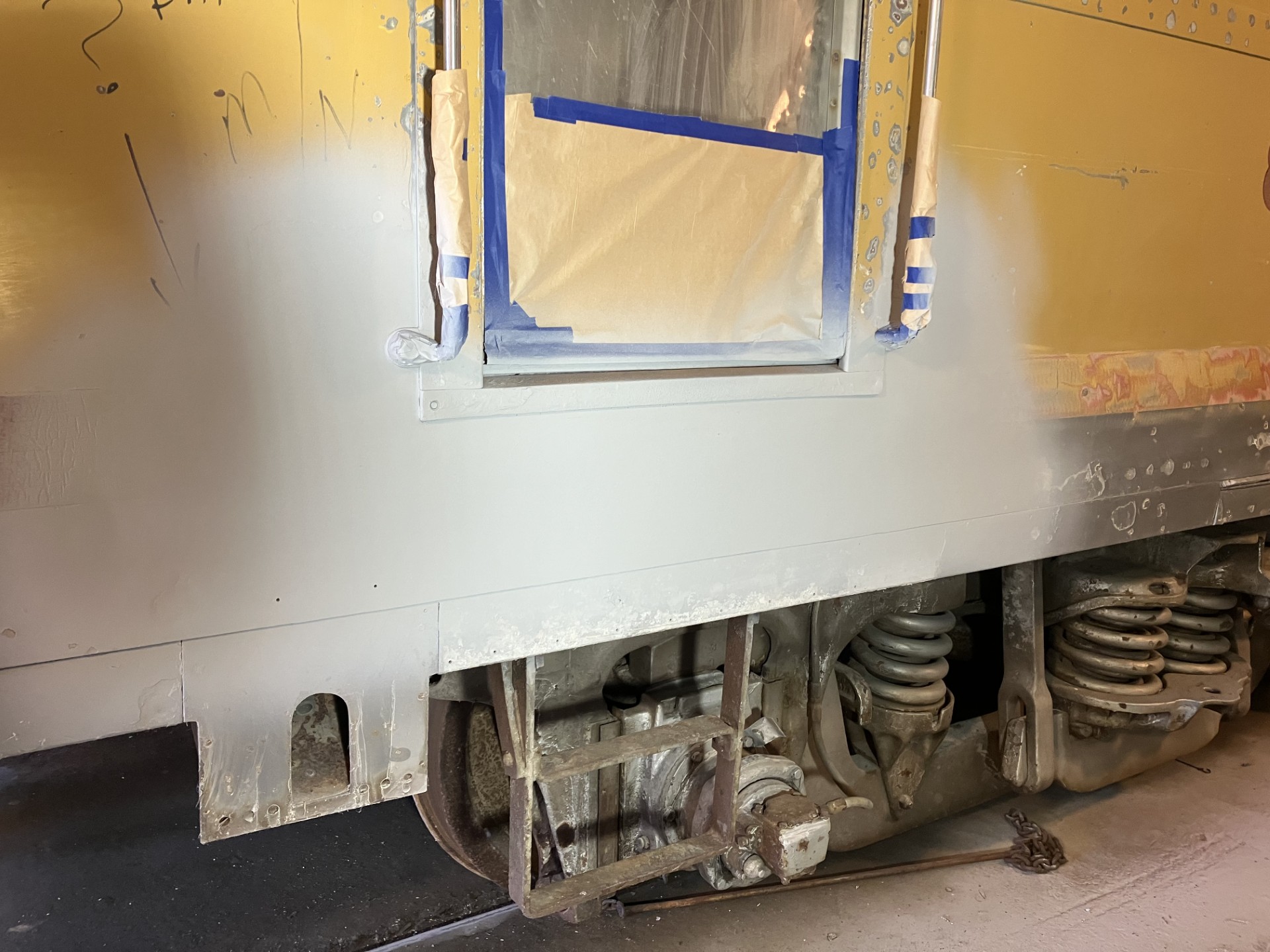
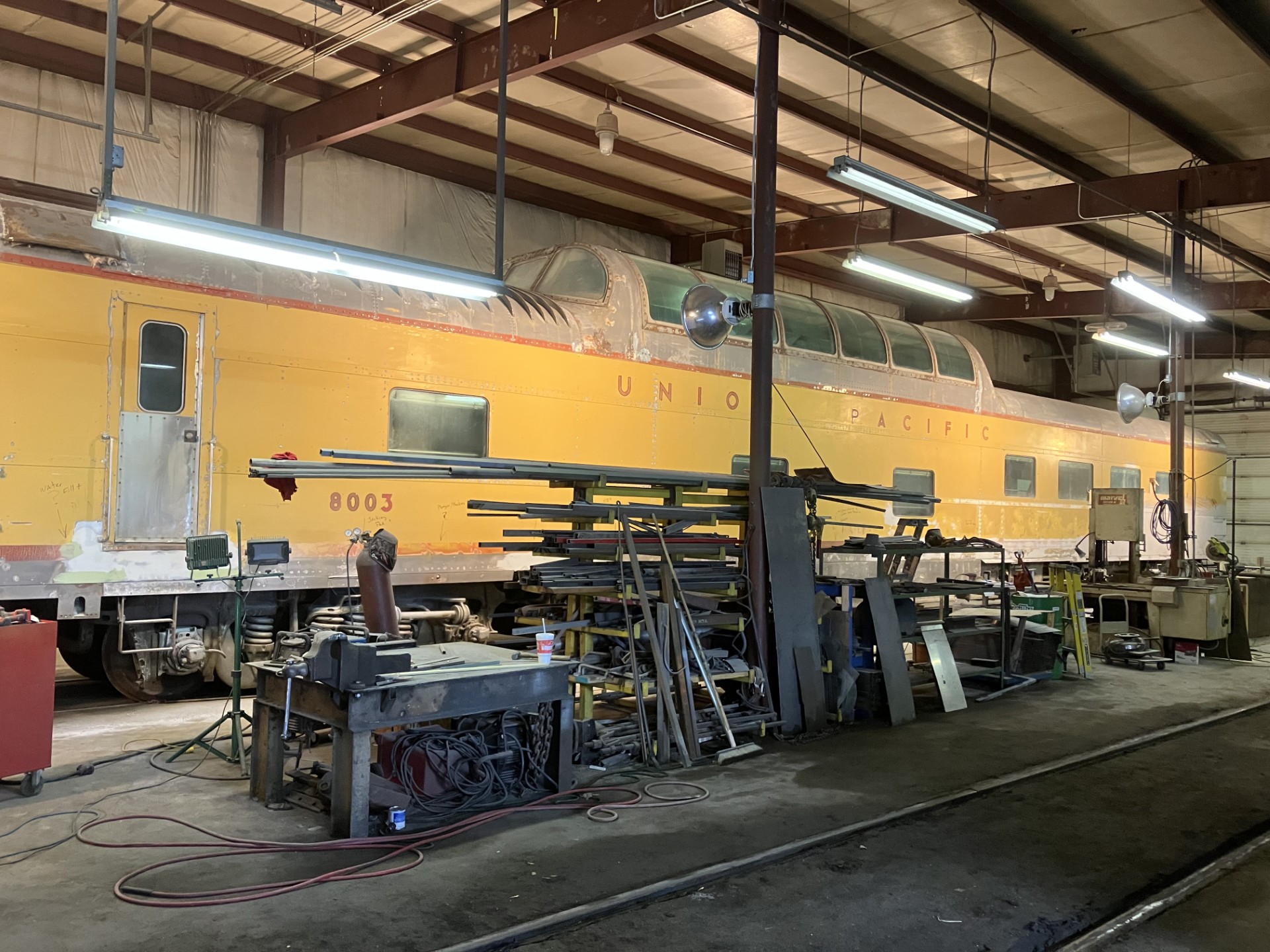
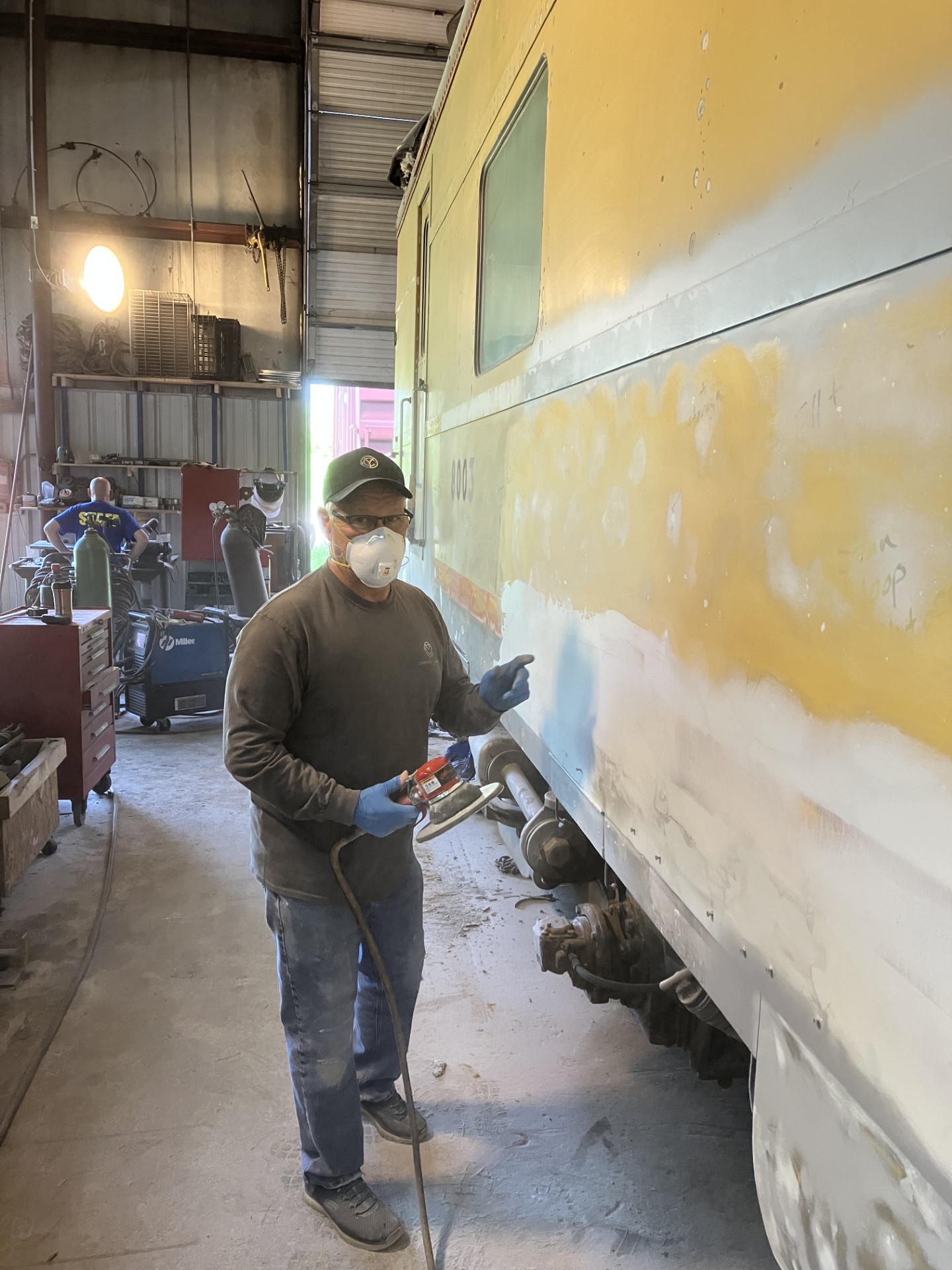
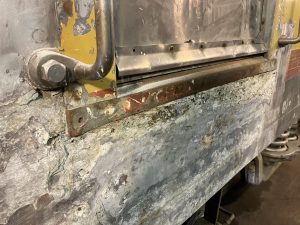
As outlined last month, volunteers and staff are making substantial progress on the restoration of the Dome Diner 8003, with bodywork taking a very methodical approach. As you can see from the photos, several patch areas had to be cut around non-replaceable hardware and rivets. Most often, it would be easier to remove all these obstacles when making repairs, but hardware does not always go back on the same as it comes off, and/or pieces get lost or ruined in the process. For that reason, our strategy is to keep as much intact as possible and maintain historical accuracy.
Working on the body is Jim Blom, world-renowned auto body technician!
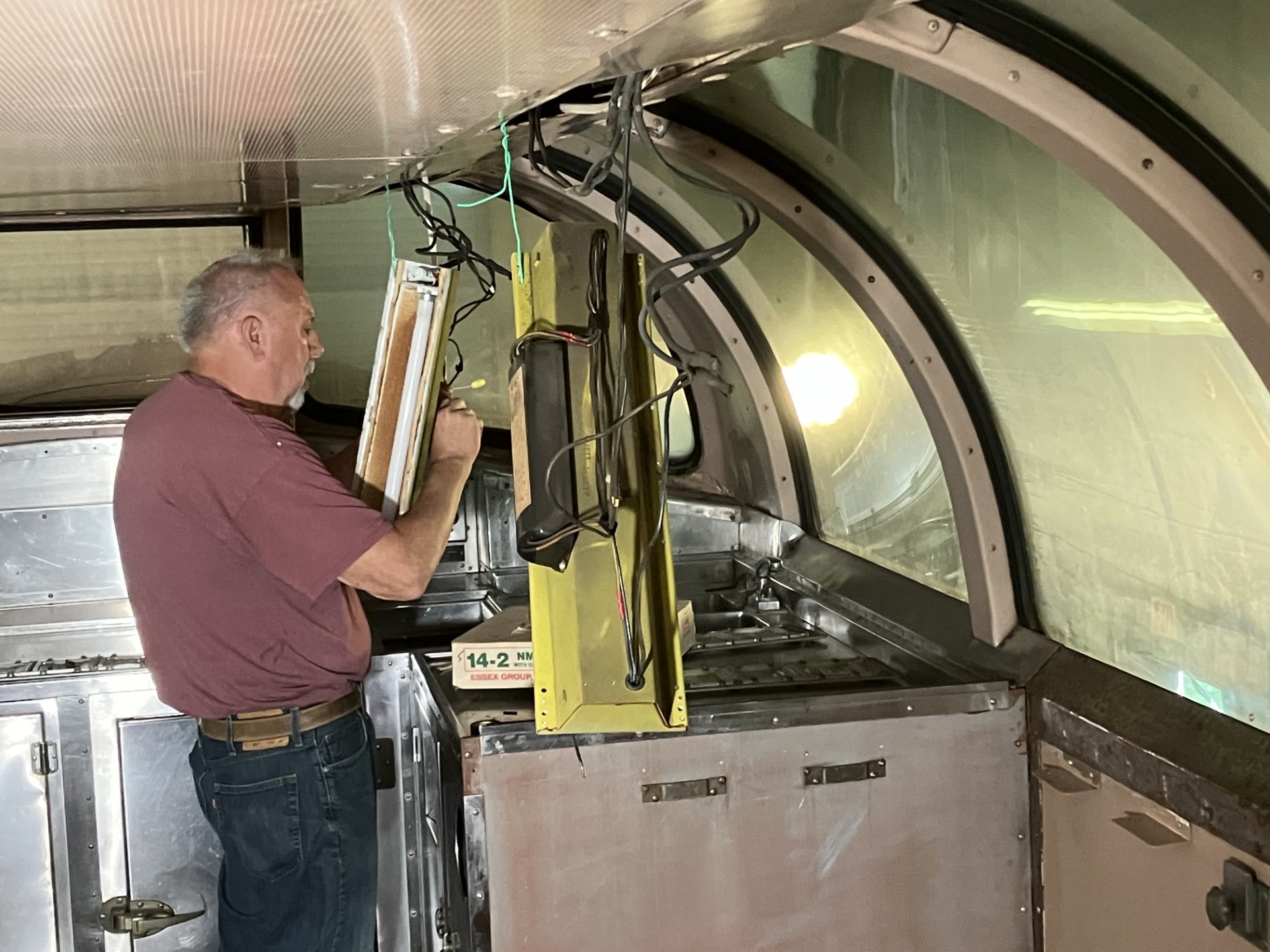
Pete Angeli, resident expert on electrical work, is now in the phase of wiring accent lighting and retrofitting incandescent bulbs with LED bulbs. Restoring or upgrading electrical wiring on historic rail cars requires balancing authentic preservation with safety and energy efficiency. Once this car is put into the museum, the lighting will be used more than 12 hours per day. This is the reason for going with LED bulbs.
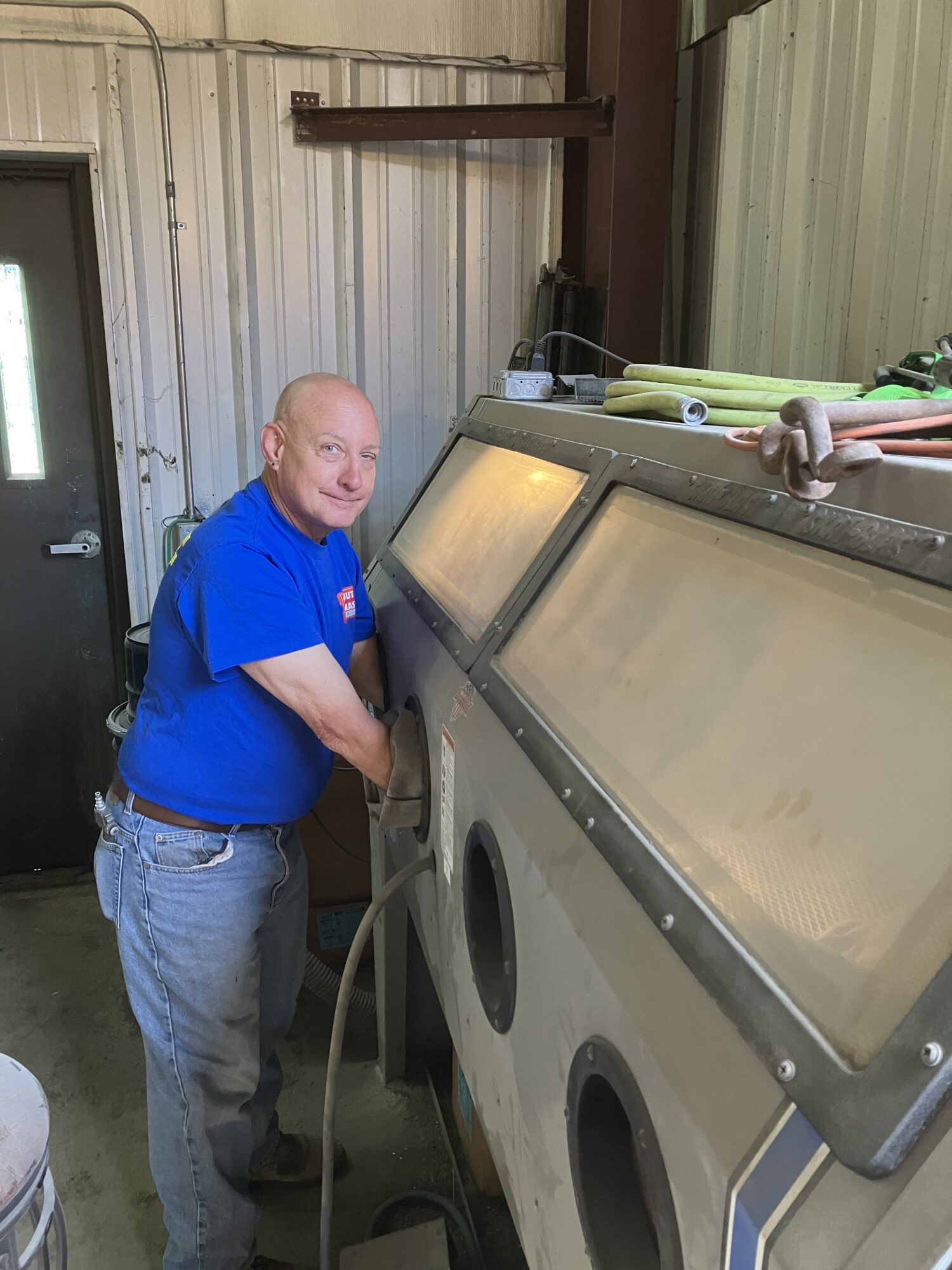
On the sandblaster is Gary Gierczak, cleaning hundreds of small parts that will eventually be reinstalled once painted.
Let’s look at the unique history of this remarkable car and its innovative use of aluminum.
A Legacy of Lightweight Streamlining
Built between 1952 and 1955 by the American Car & Foundry Co. for the Union Pacific Railroad, Dome Diner 8003 was designed to be lightweight and streamlined. Manufacturing techniques developed during World War II for aircraft construction heavily influenced passenger rail design in the early 1950s, particularly in the use of aluminum.
The skeleton of 8003 consists of a solid steel frame covered by large aluminum panels riveted together to form the shell. These panels feature an aluminum alloy core (roughly 1/8-inch thick) sandwiched between two thin aluminum skin veneers. Totaling 3/16 of an inch in thickness, they were supplied in roughly 5-by-10-foot sheets before being riveted to the frame.
The Challenge: Weathering and Repair
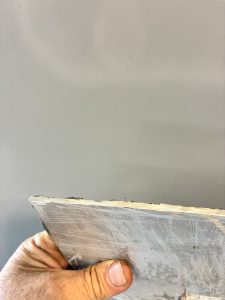
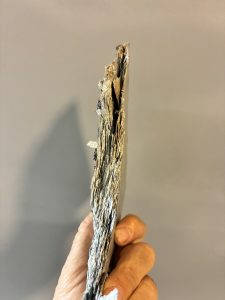
Unfortunately, years of outdoor storage allowed moisture to penetrate the aluminum panels—mostly around the doors and windows—causing the alloy core to swell and degrade. (See the photos below comparing a healthy panel with a section swelled by moisture).
Because the skin on the veneer panel is so thin, welding new panels was out of the question. To fix the damaged areas, our team had to cut out the deteriorated sections, fabricate precise new patch panels, and rivet them into place.
The Blending Process
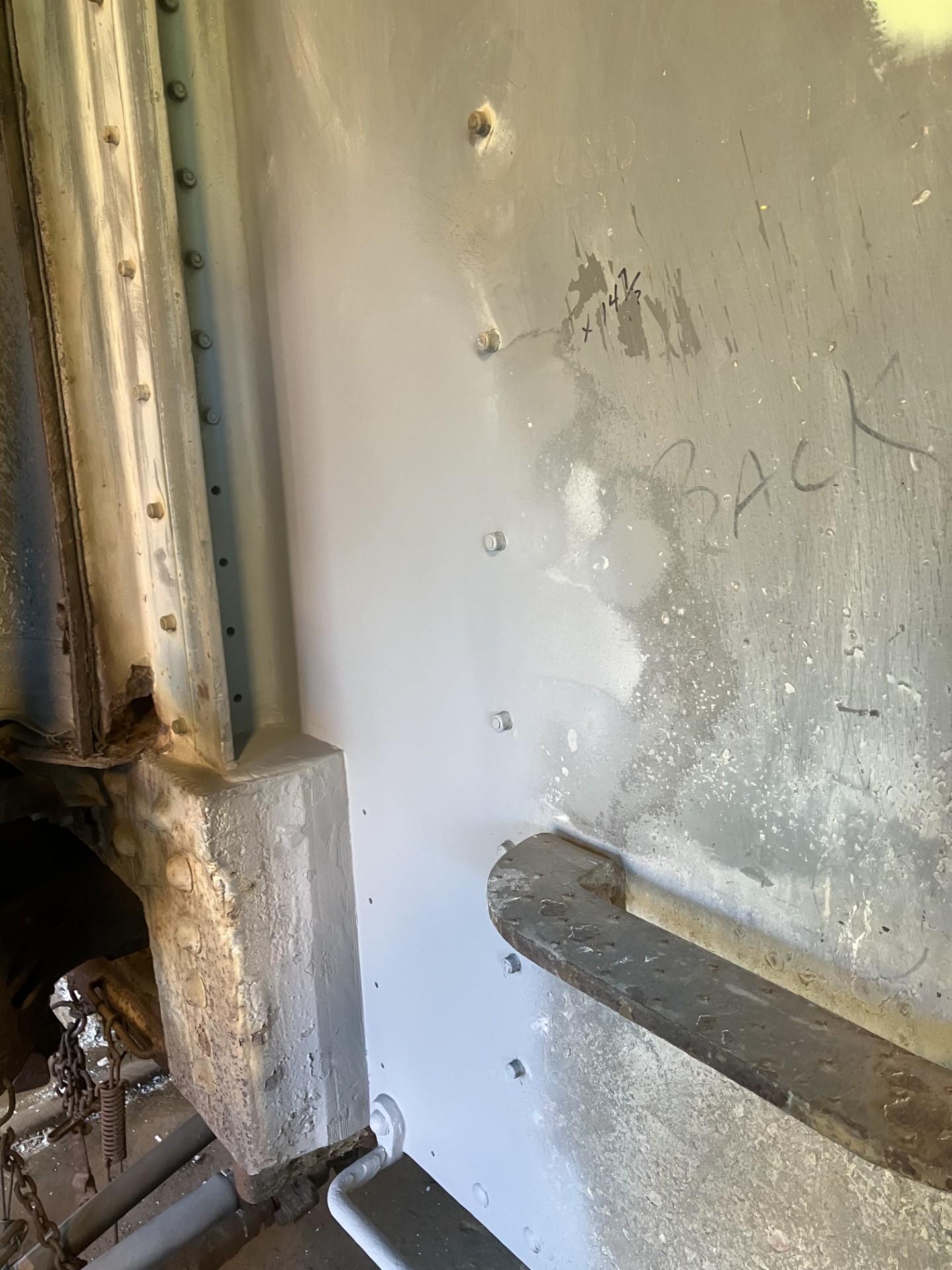
Once the patch panels are secured, the intensive process of blending begins. We use body filler, followed by countless hours of meticulous hand- and power-sanding.
At 85 feet long and nearly 12 feet high, the car demands a massive effort. Progress is measured in inches; it can take several weeks of labor just to move a few feet forward. Once the bodywork meets our standards, primer is applied to protect the metal until the final paint phase at the end of the project.
The Dome Diner restoration project is officially scaling new heights, literally! We’ve had to bring in scaffolding just to reach the next phase of the project. We are currently removing the dome windows, which have easily earned the title of our biggest challenge to date.
Every single window along the dome needs to come out because they have completely fogged up over the years. When Dome Diner 8003 was originally built, the manufacturer used two panes of glass with a very narrow air gap between them. Over the decades, moisture managed to sneak into that gap, turning a once clear view into a cloudy cast.
To seal the window frames to the body, it was standard procedure back in the 1950s to use a wax gasket—surprisingly similar to the wax ring you’d find under a standard toilet. While it did a great job of preventing leaks, we now have the glamorous job of scraping away 1-inch-thick, hardened old wax.
These large, curved windows are incredibly heavy. Both panes of glass combined are ¾-inch thick and roughly 4 x 5 feet in dimension. Each individual window frame is anchored to the car by more than 100 bolts, along with another 100 machine screws holding the glass in the window frame. While the windows are out, we are taking the opportunity to do some much-needed bodywork around the window openings, including drilling and re-tapping any bolts that broke off during the removal process.
We breathed a huge sigh of relief that none of the curved glass was broken during removal. Replacing custom curved glass would have been a massive budget-buster and delayed us for months. We expect this phase to take about two months per side to complete.
Thanks for following along!
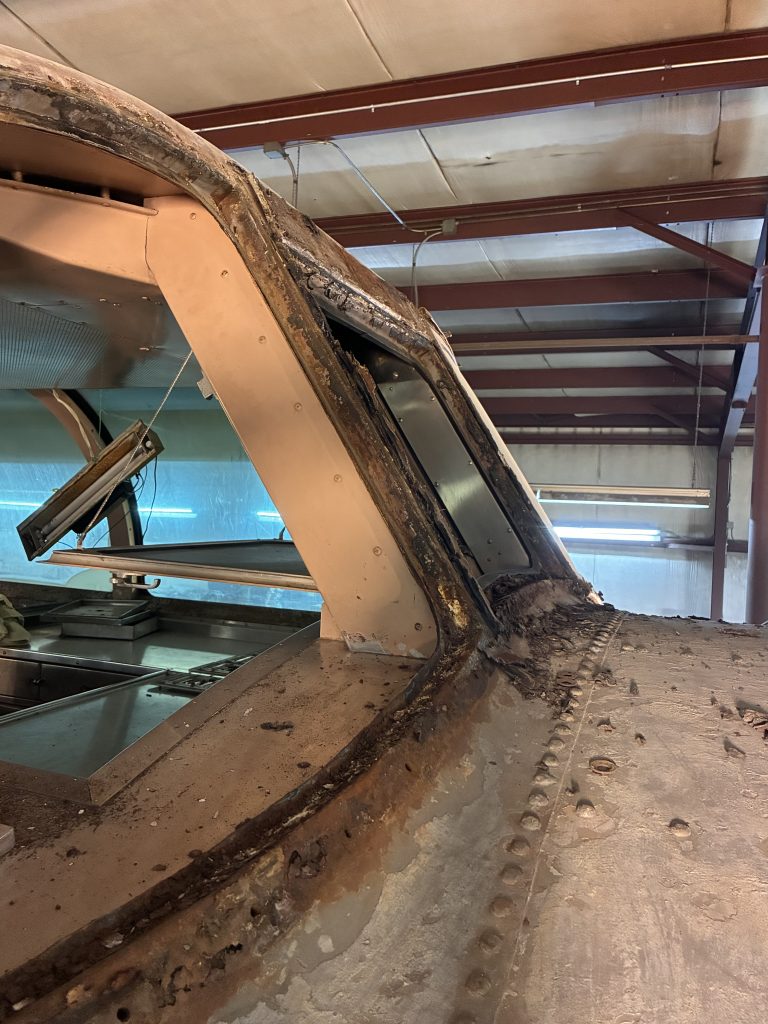
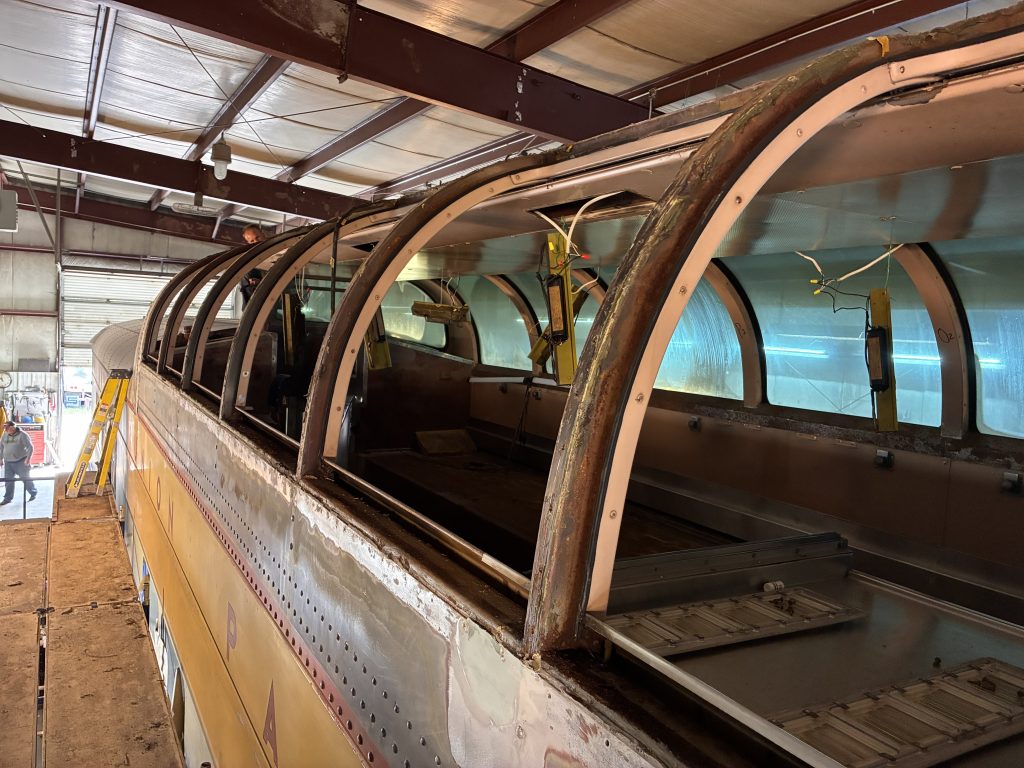
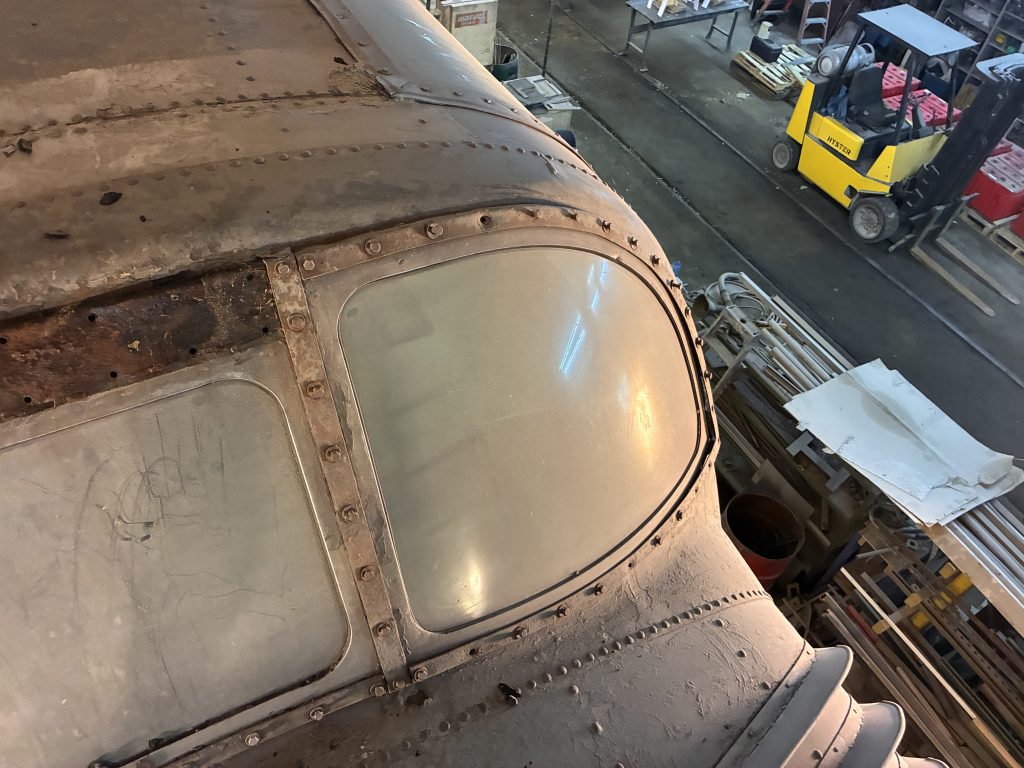
Last month, I discussed removing the large domed glass windows from our restoration project, Dome Diner 8003, and the extensive repairs required around the window openings. True to form, our work since the removal has focused primarily on patching holes that had completely rusted through the window frames.
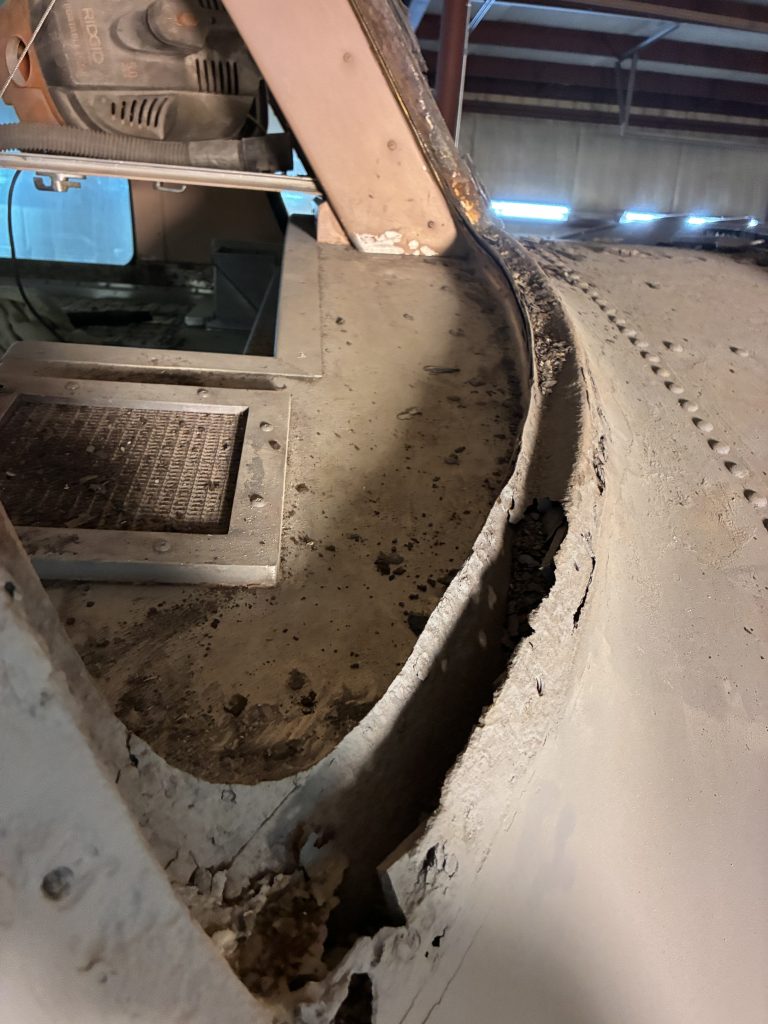
The repair stages involved applying new steel and body filler, followed by a rust inhibitor to slow down future corrosion. Unlike the aluminum panels used on the rest of the car, the formed metal around the window openings and dome cowling consists of 16-gauge steel. Engineers in the 1950s likely chose steel because it was easier to form and finish than aluminum. Back then, lead was used as a body filler to feather out curved shapes; discovering several lead spots on the dome cowling reminded us of a different era, long before polyester fillers.
We also hired a local metal fabrication shop to manufacture new exterior metal trim to hold the windows in place once they are reinstalled. The original trim was severely rusted and bent, making the decision to replace it an easy one. These new metal pieces will be painted in the final finish color before installation, saving us valuable masking time later. Additionally, we have decided to leave out one pane of glass to permanently prevent future moisture issues between the double-pane glass as originally installed. New weatherstripping has also been ordered to replace the old gaskets that sealed each window, which will be needed when the glass goes back in.
Much like the exterior, the interior metal trim abutting the dome windows will be sanded and repainted before the glass goes back in. This allows for easy taping before the final interior coat and eliminates the need to sand tight against the glass, which could cause accidental scratches.
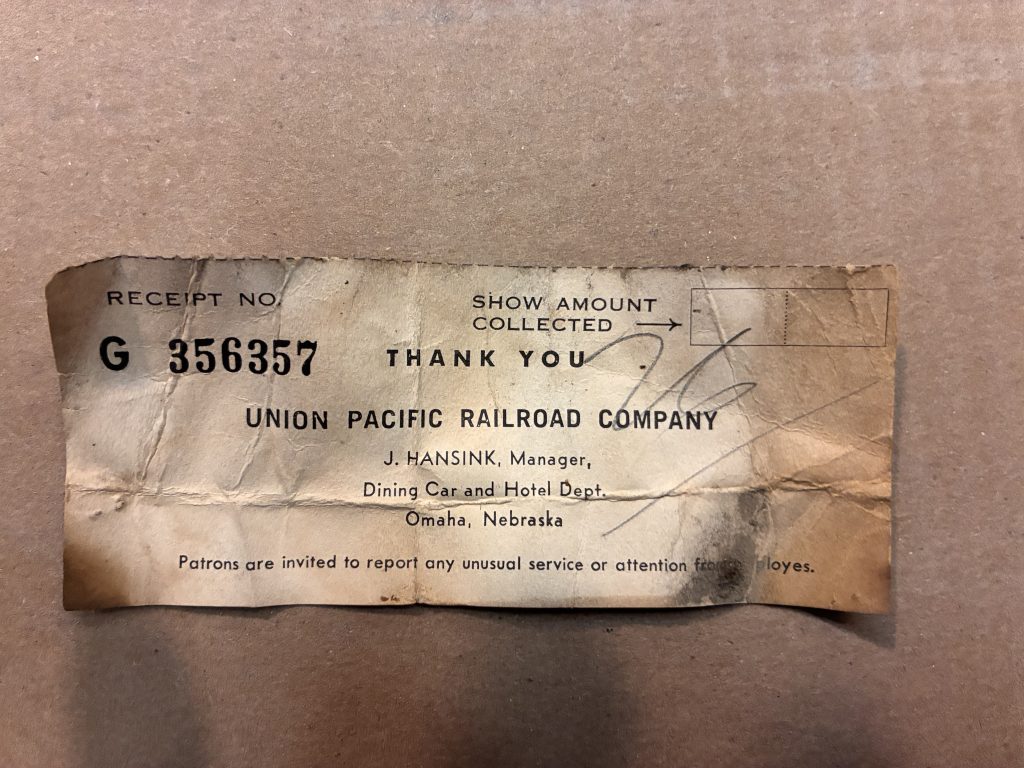
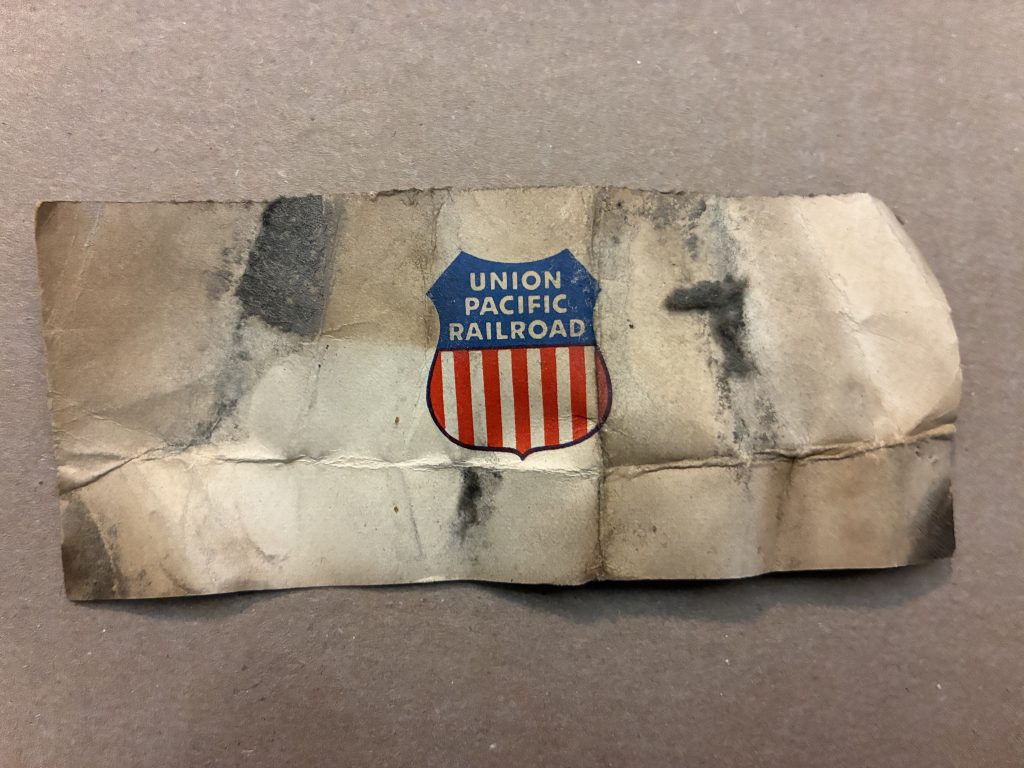
On an exciting note unrelated to the structural repairs, while cleaning out the air vents around the windows, we discovered old ticket stubs and a spoon featuring the Union Pacific logo. Fortunately for us, the passengers who once used the air vent as a trash can left behind some wonderful historic memorabilia!
A big thank you to the family of David L. and Rita E. Nelson for their generous contribution to preserving this car for future generations.
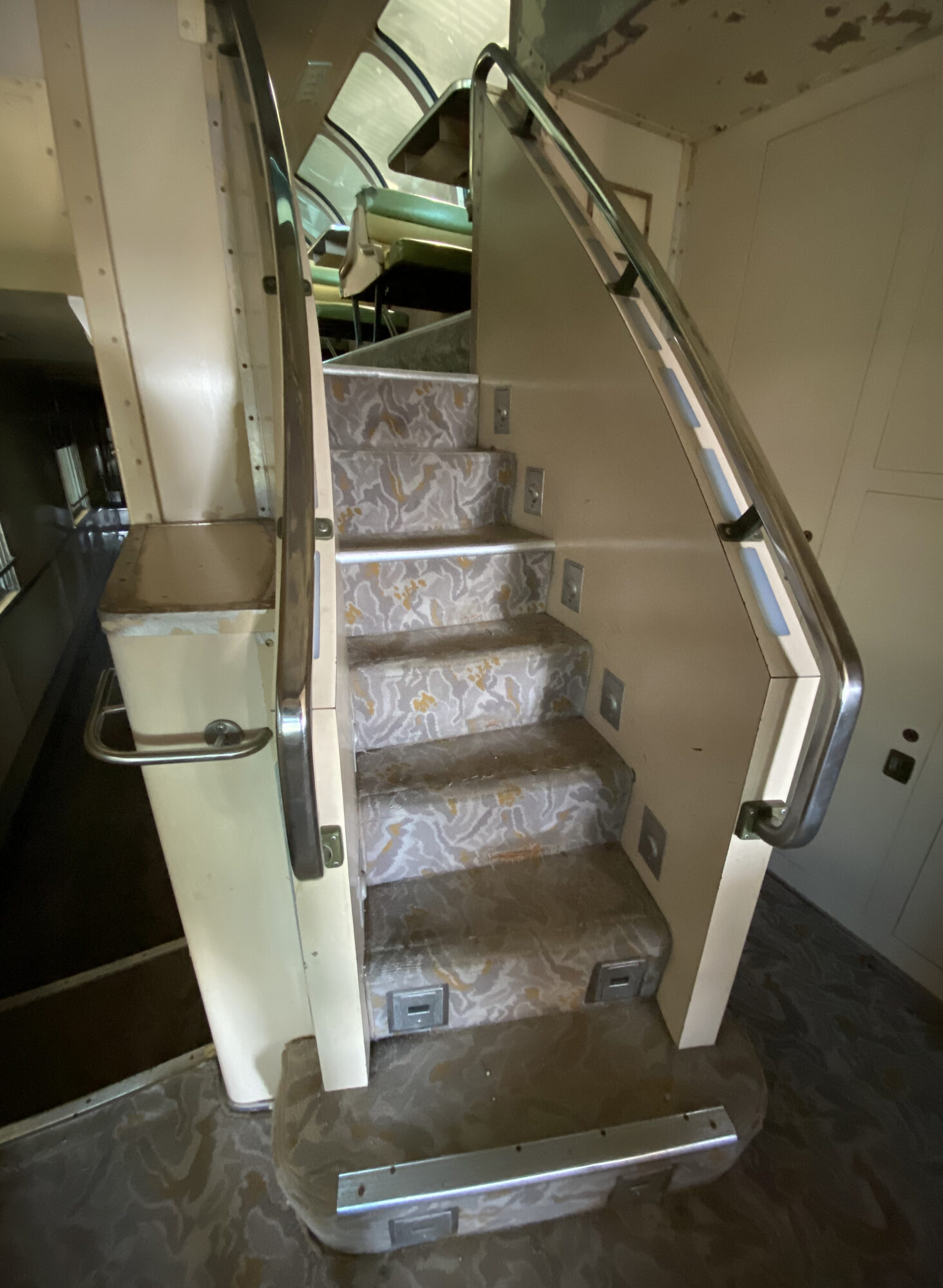
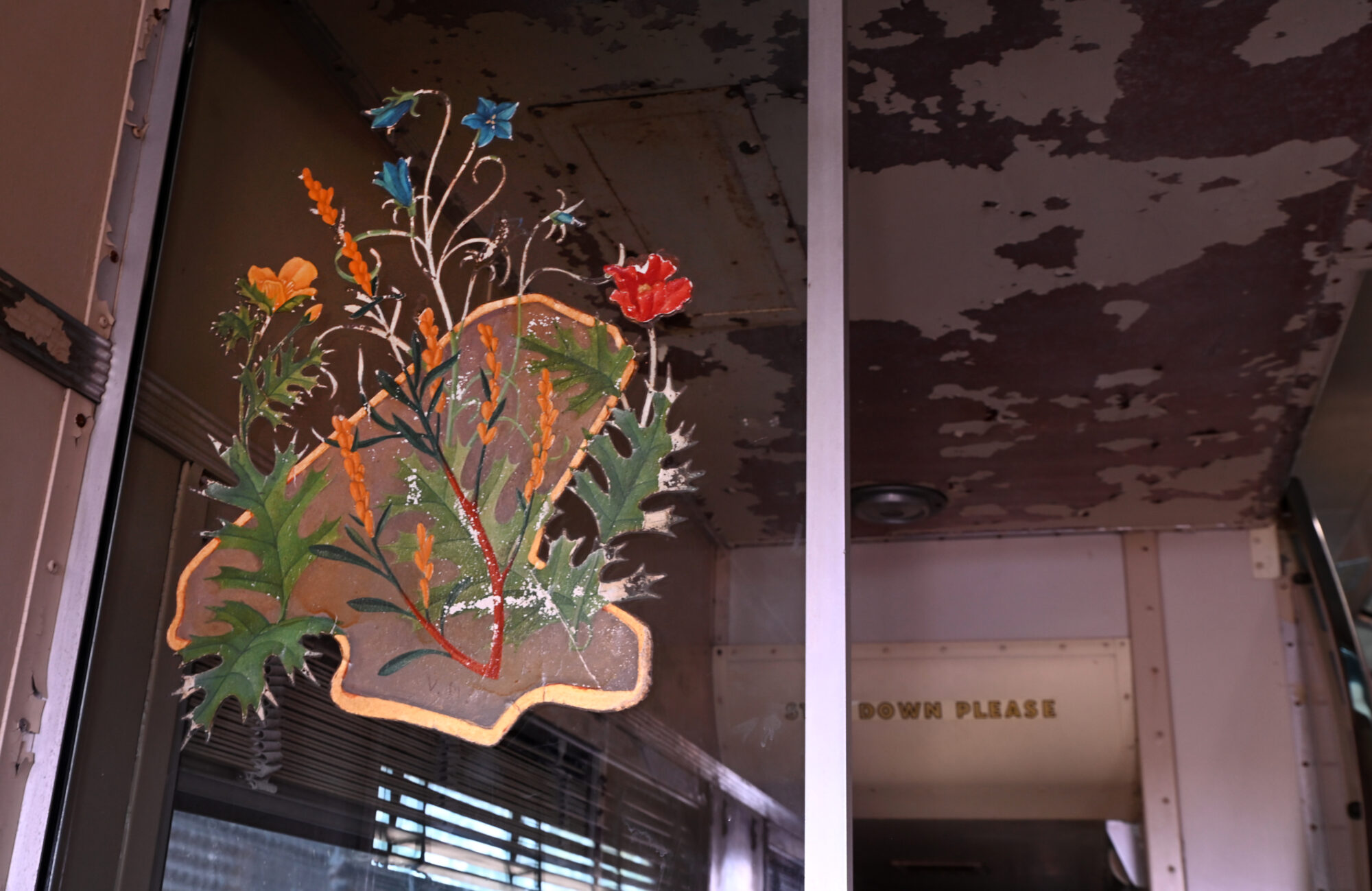
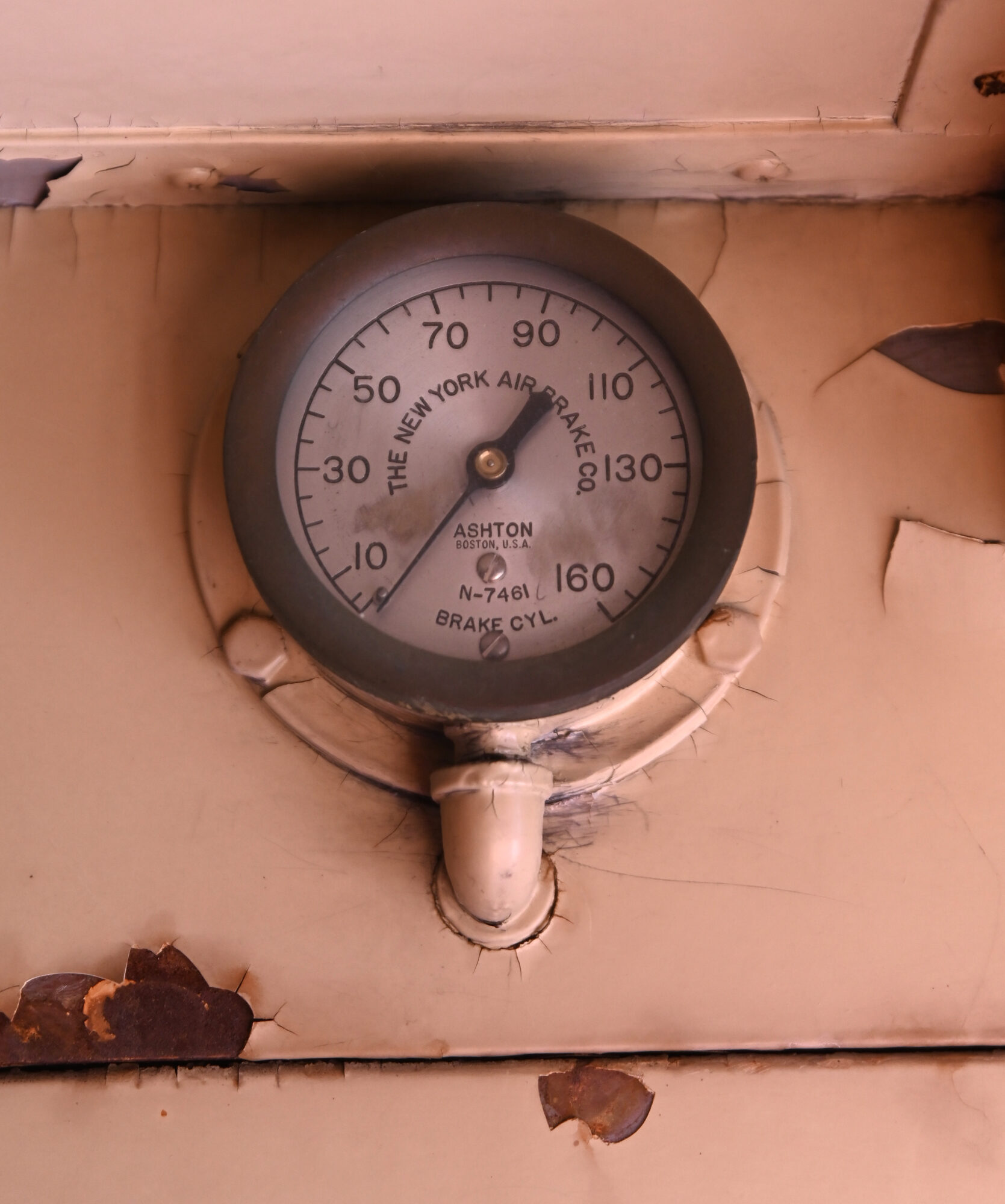
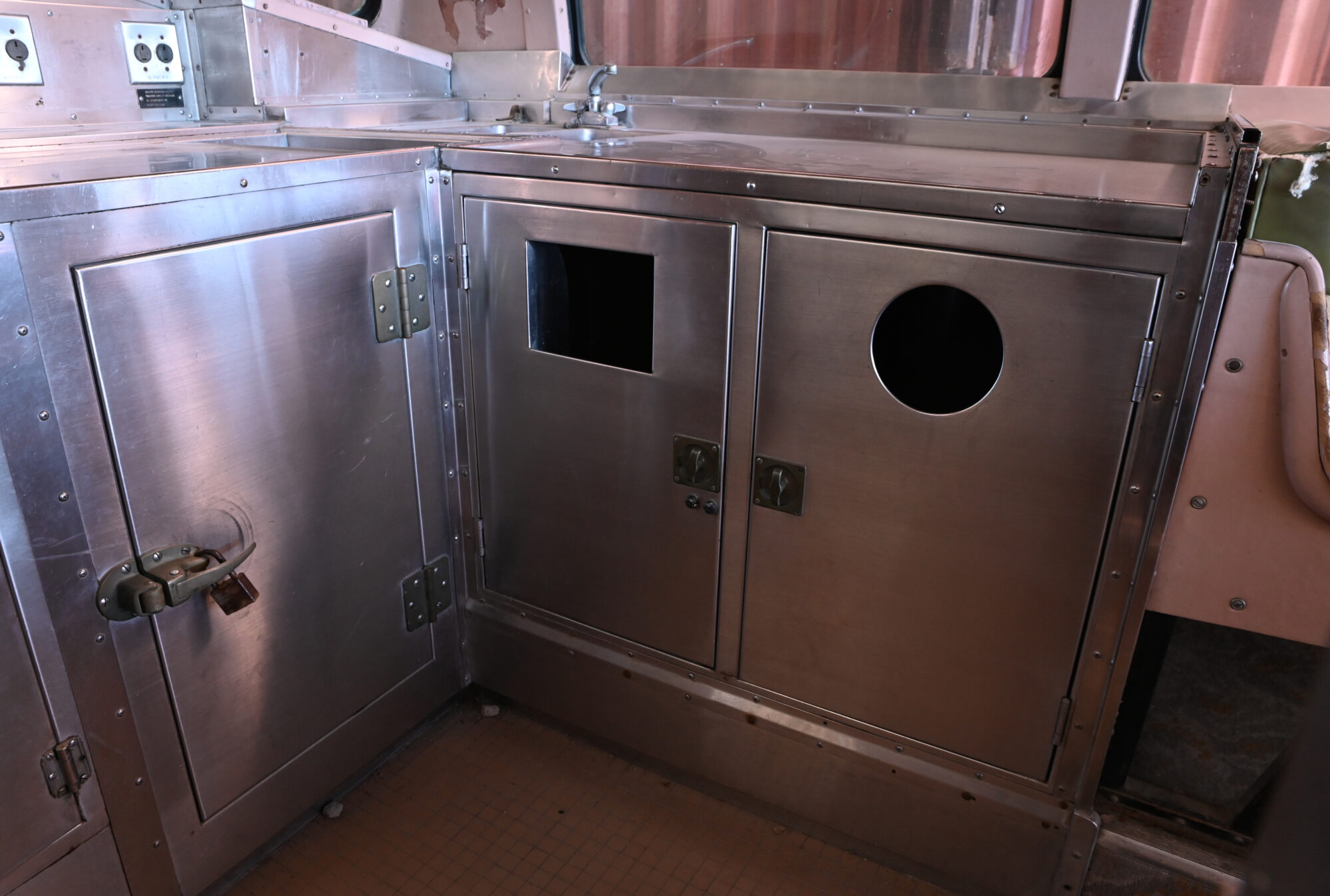
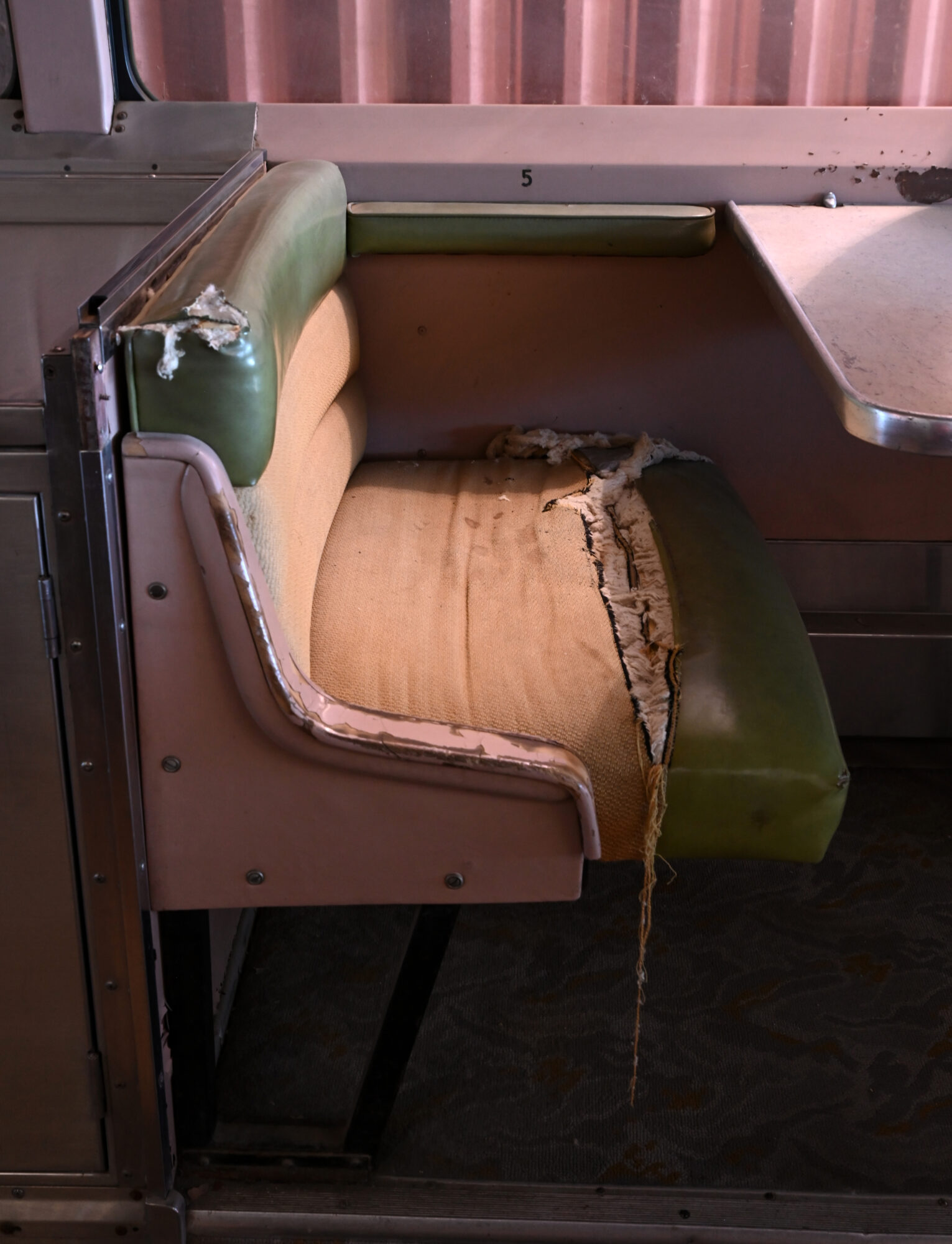
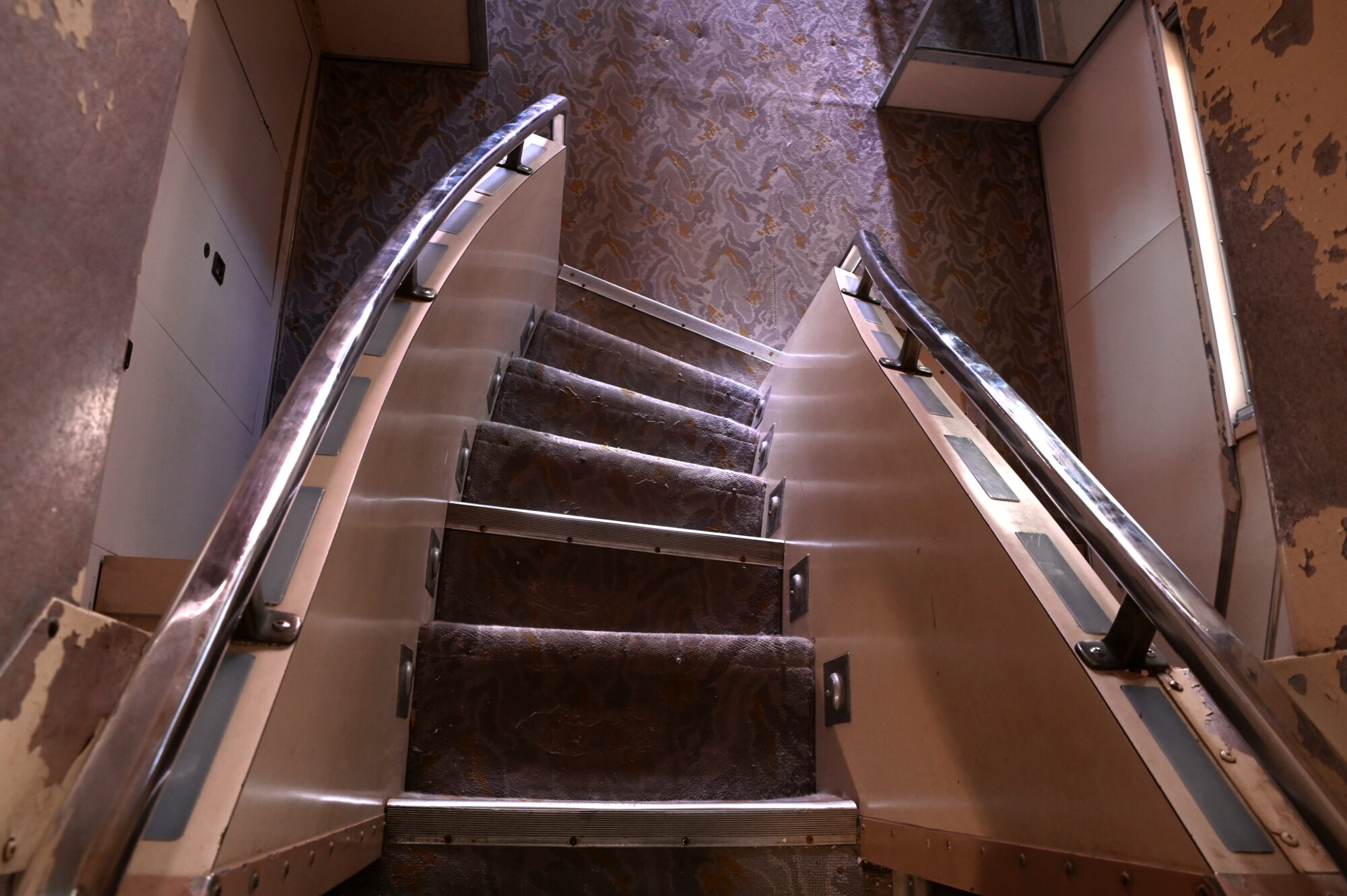
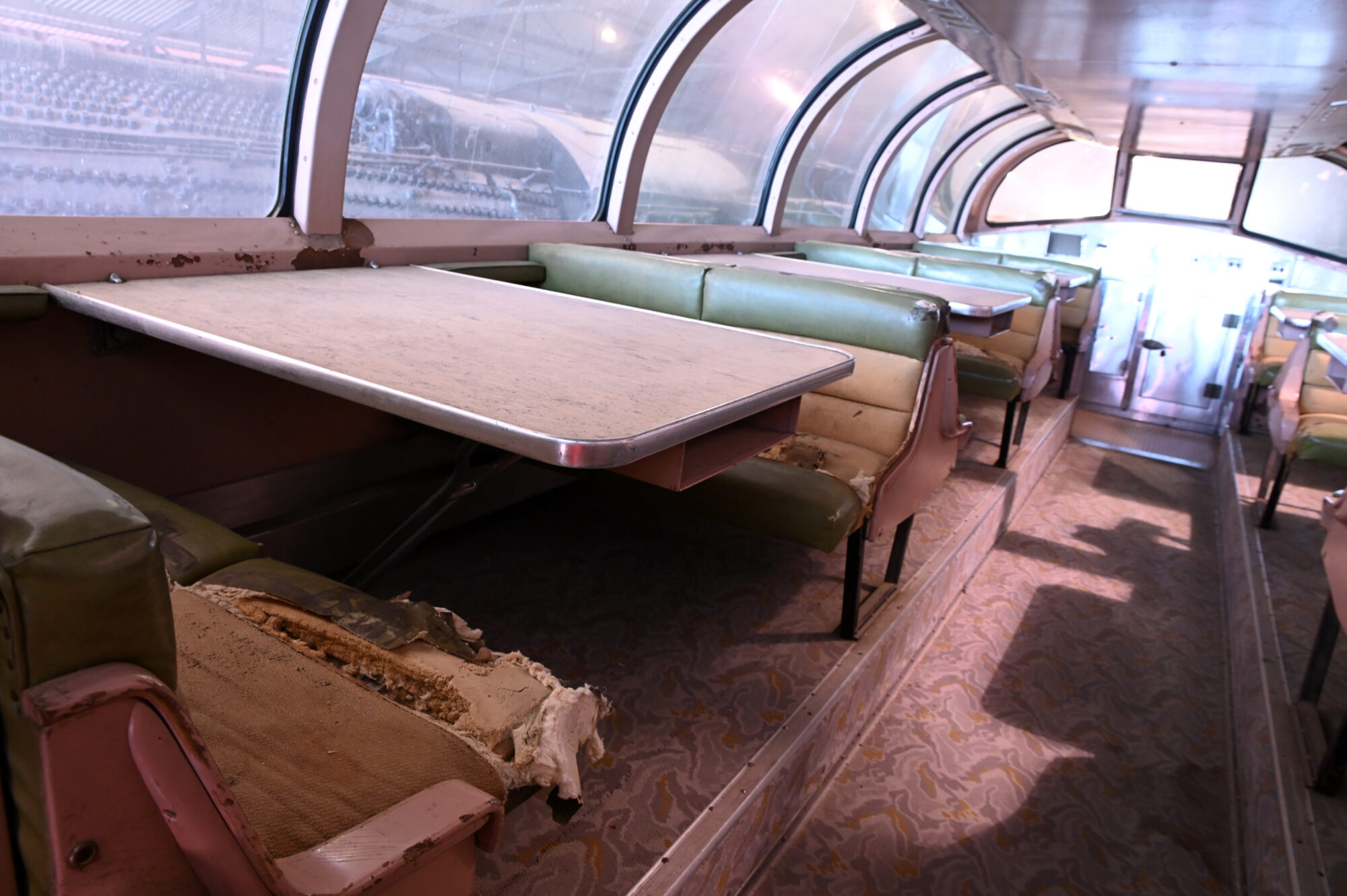
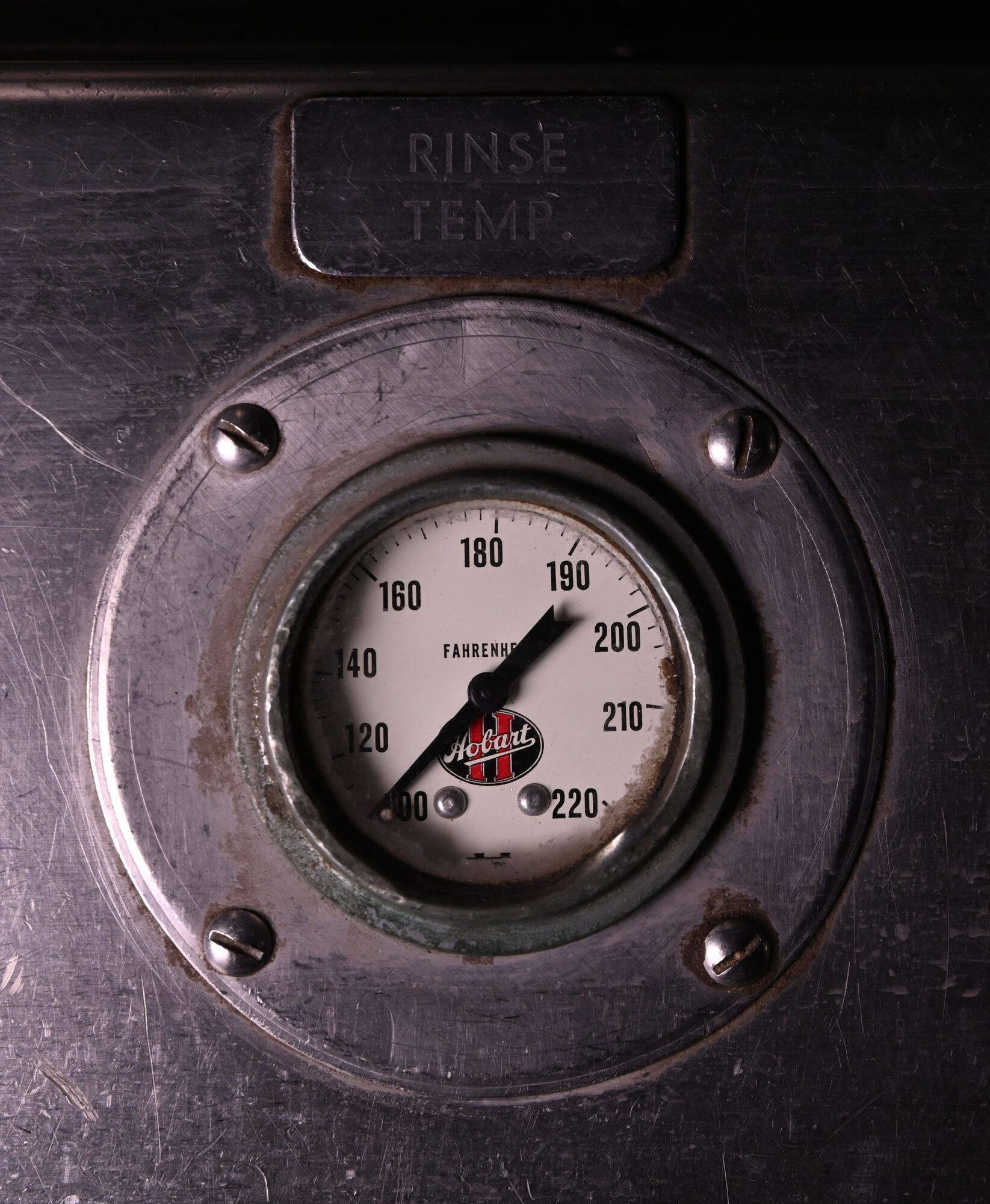
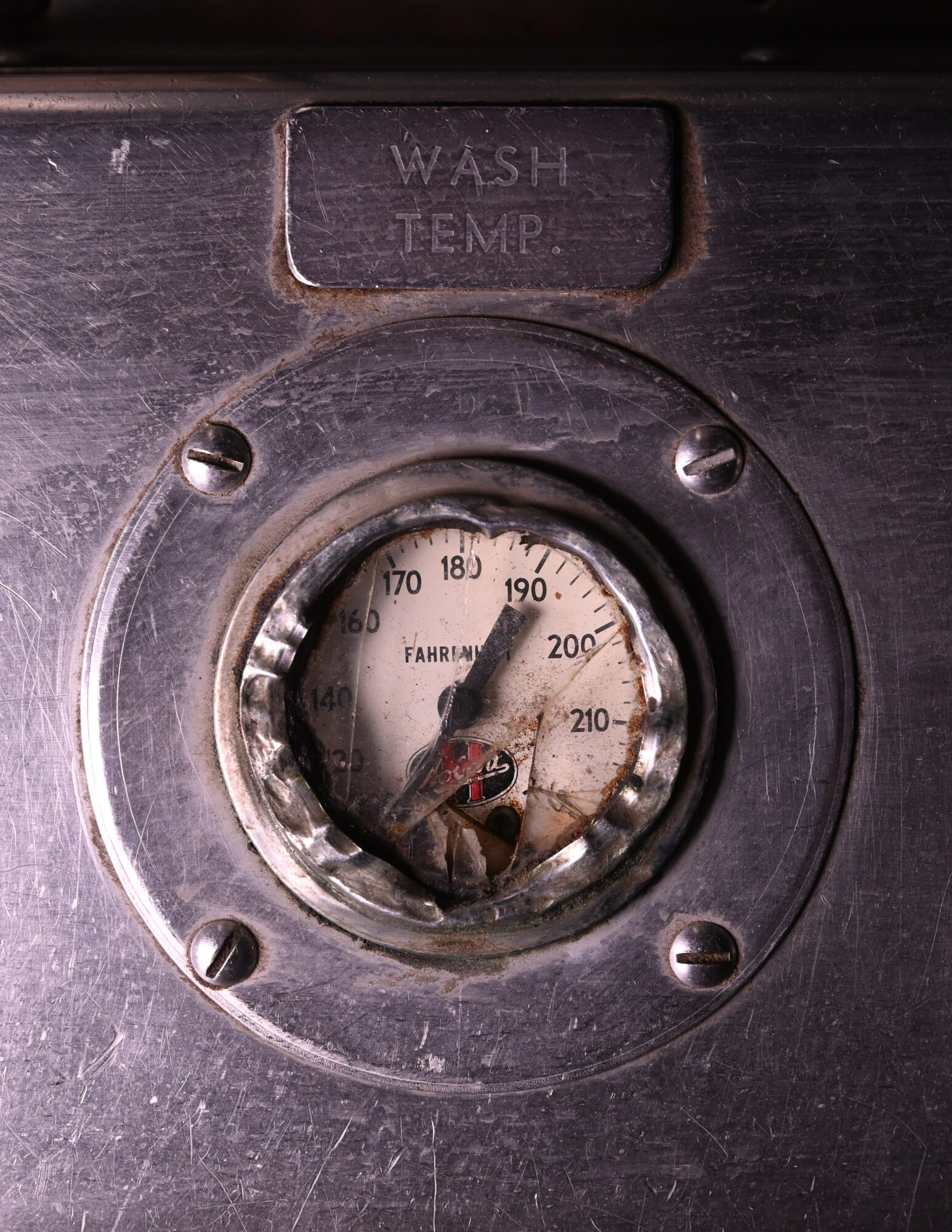
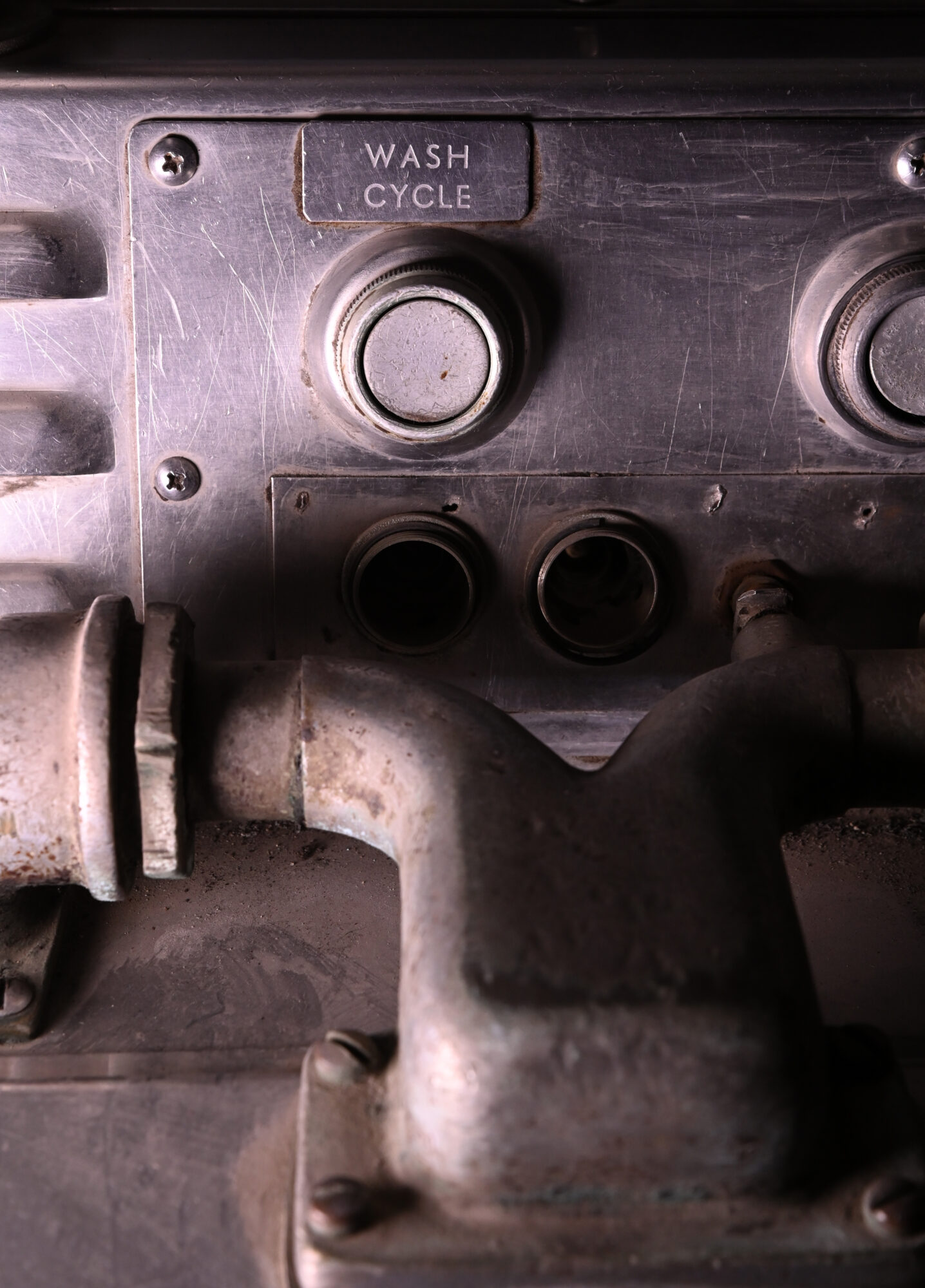
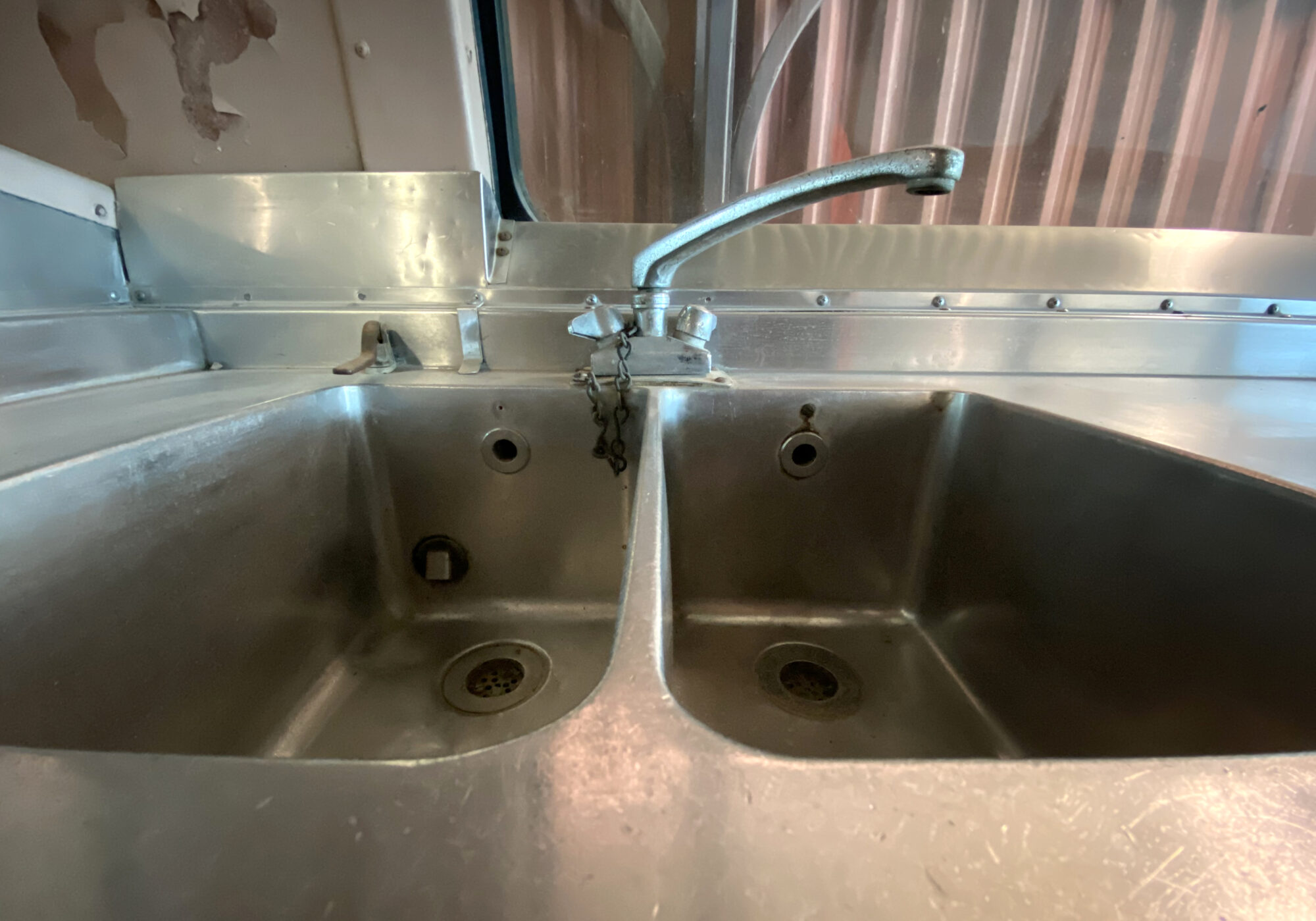
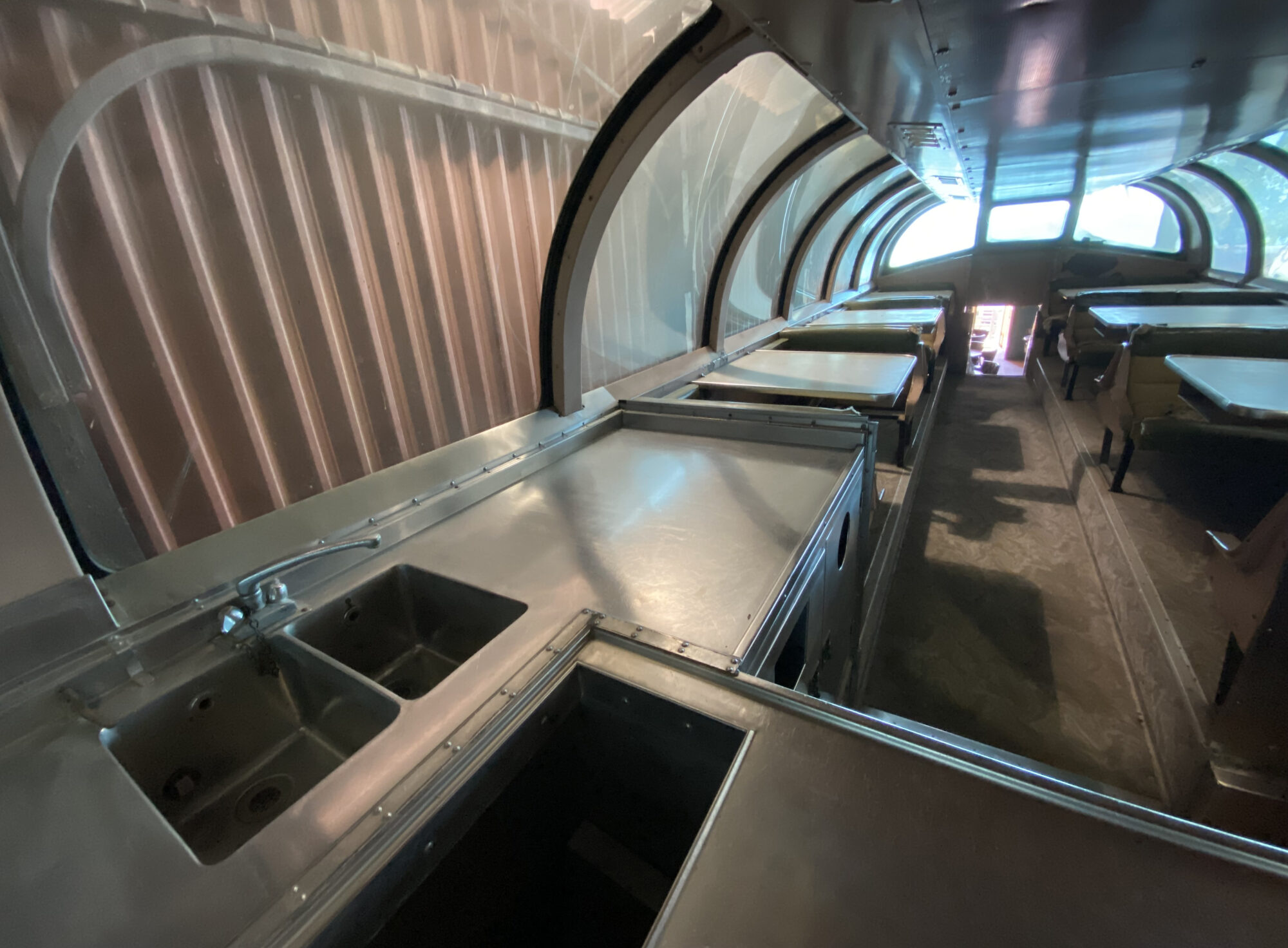
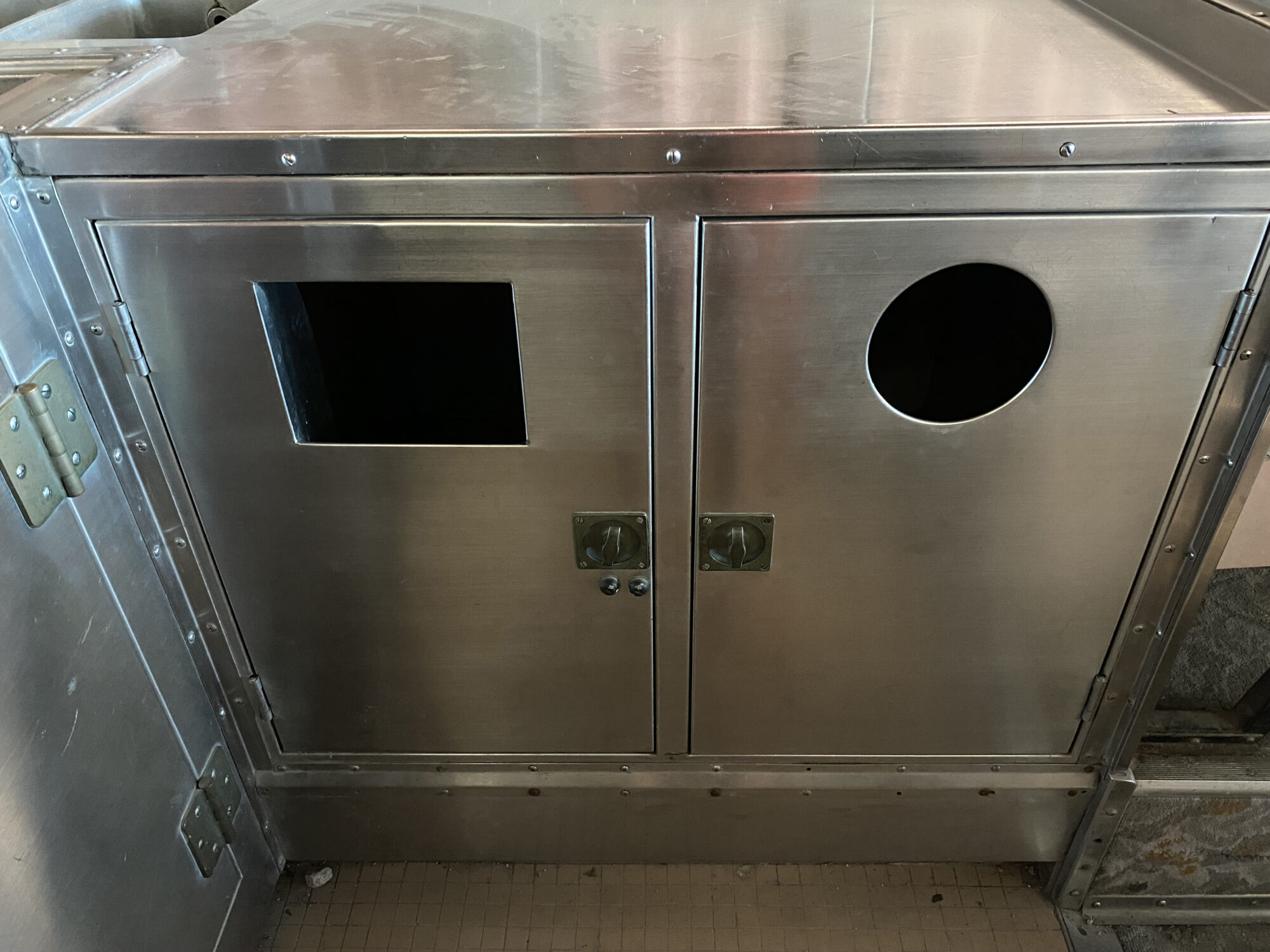
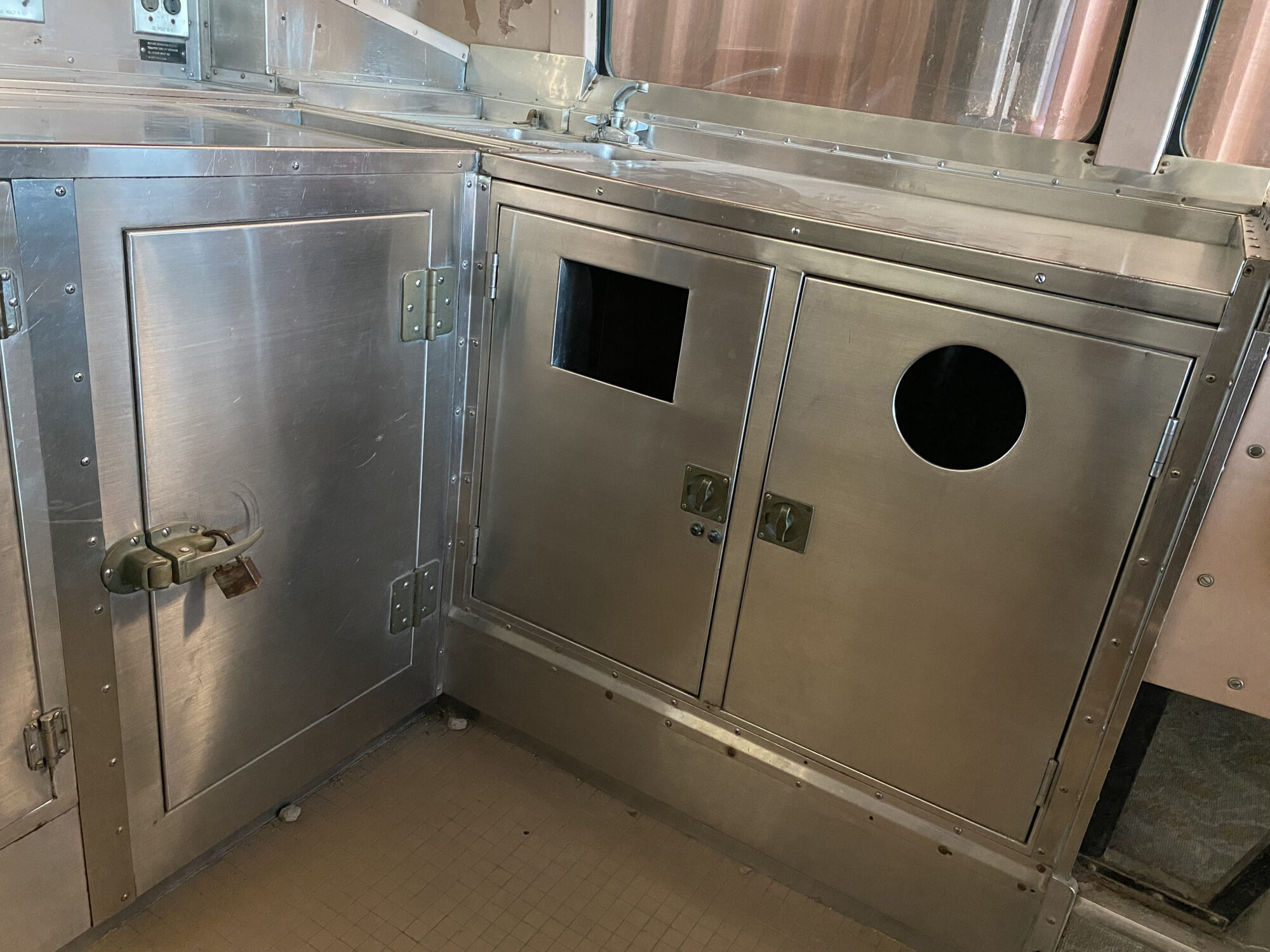
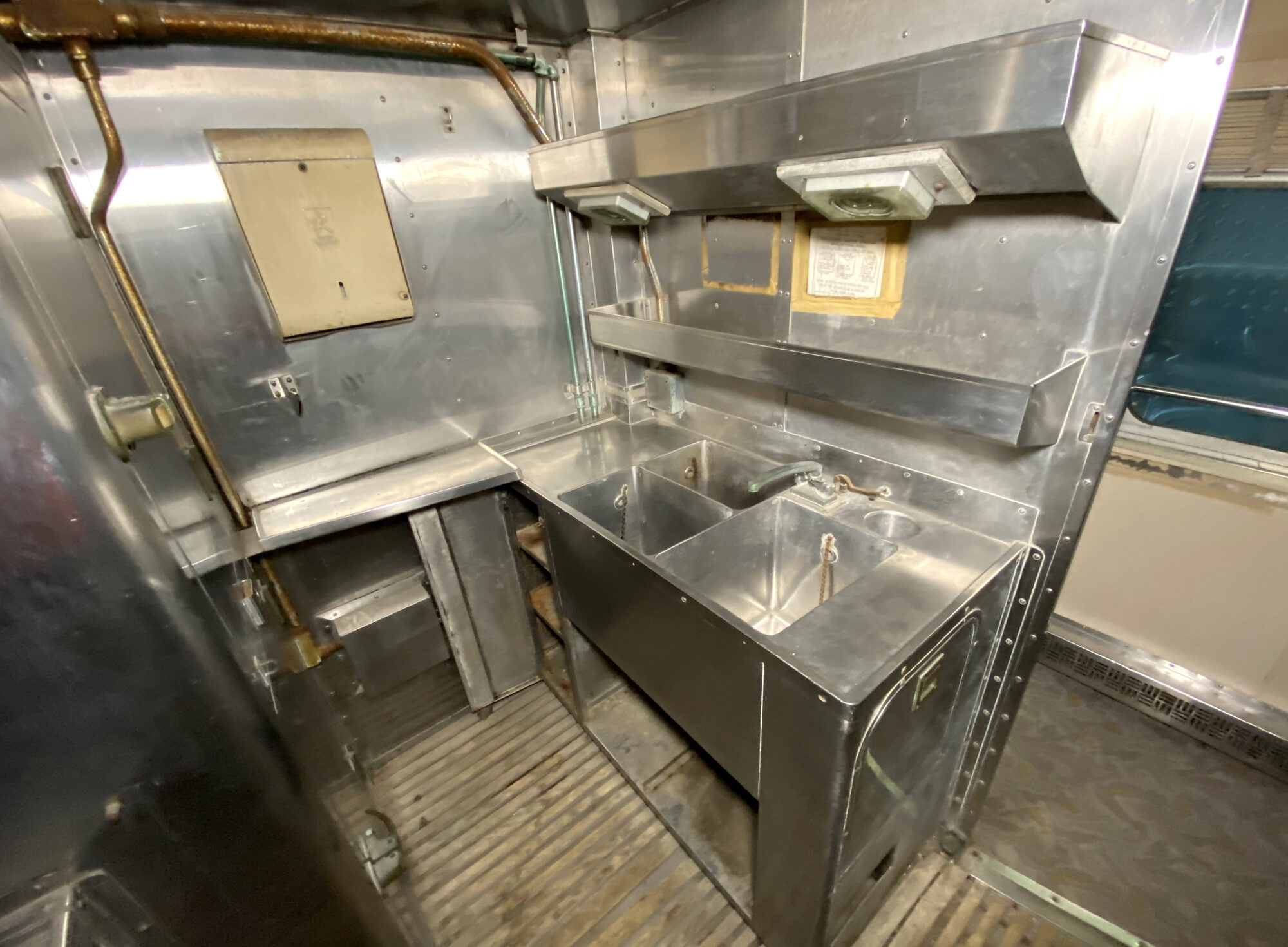
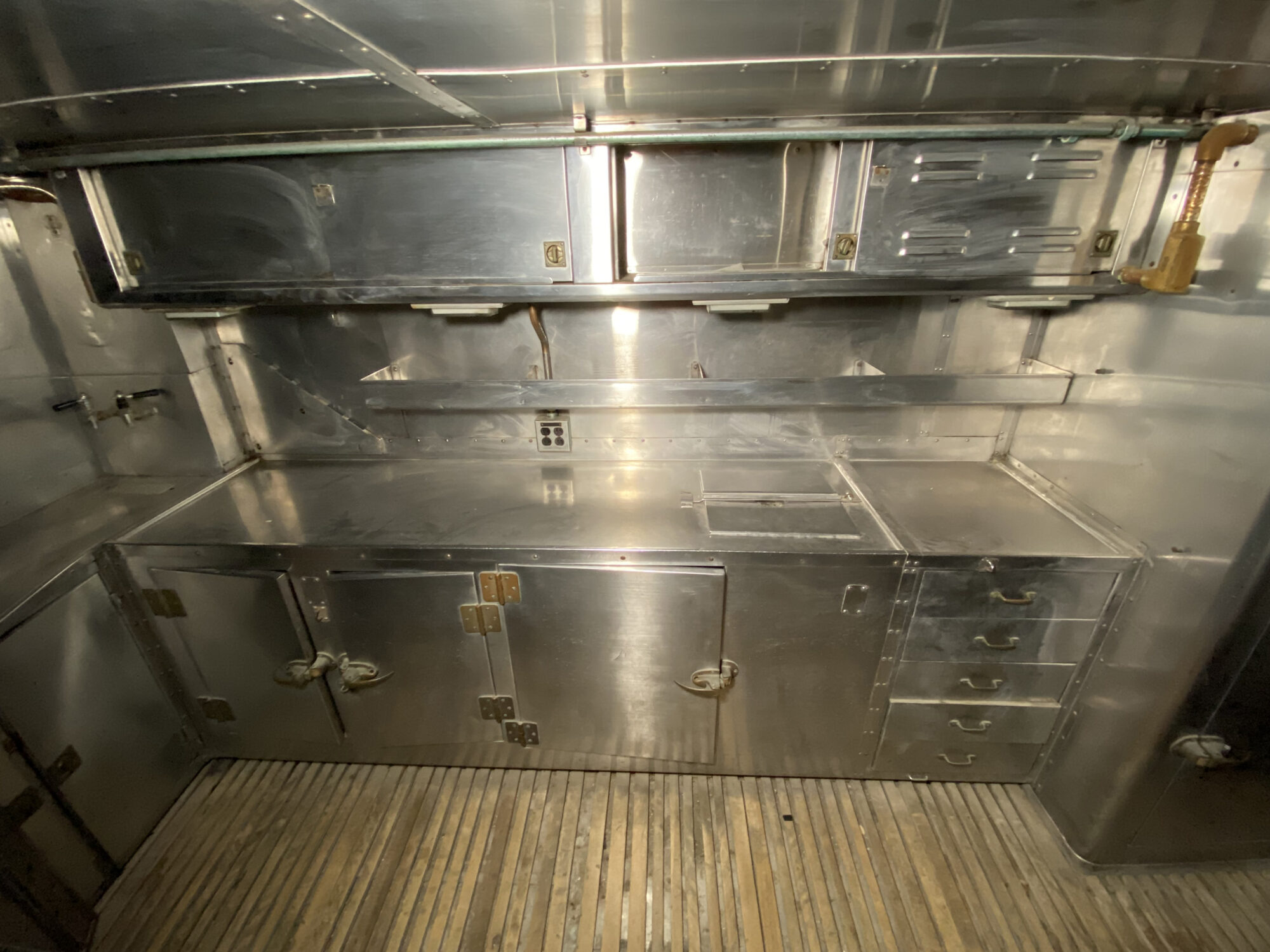
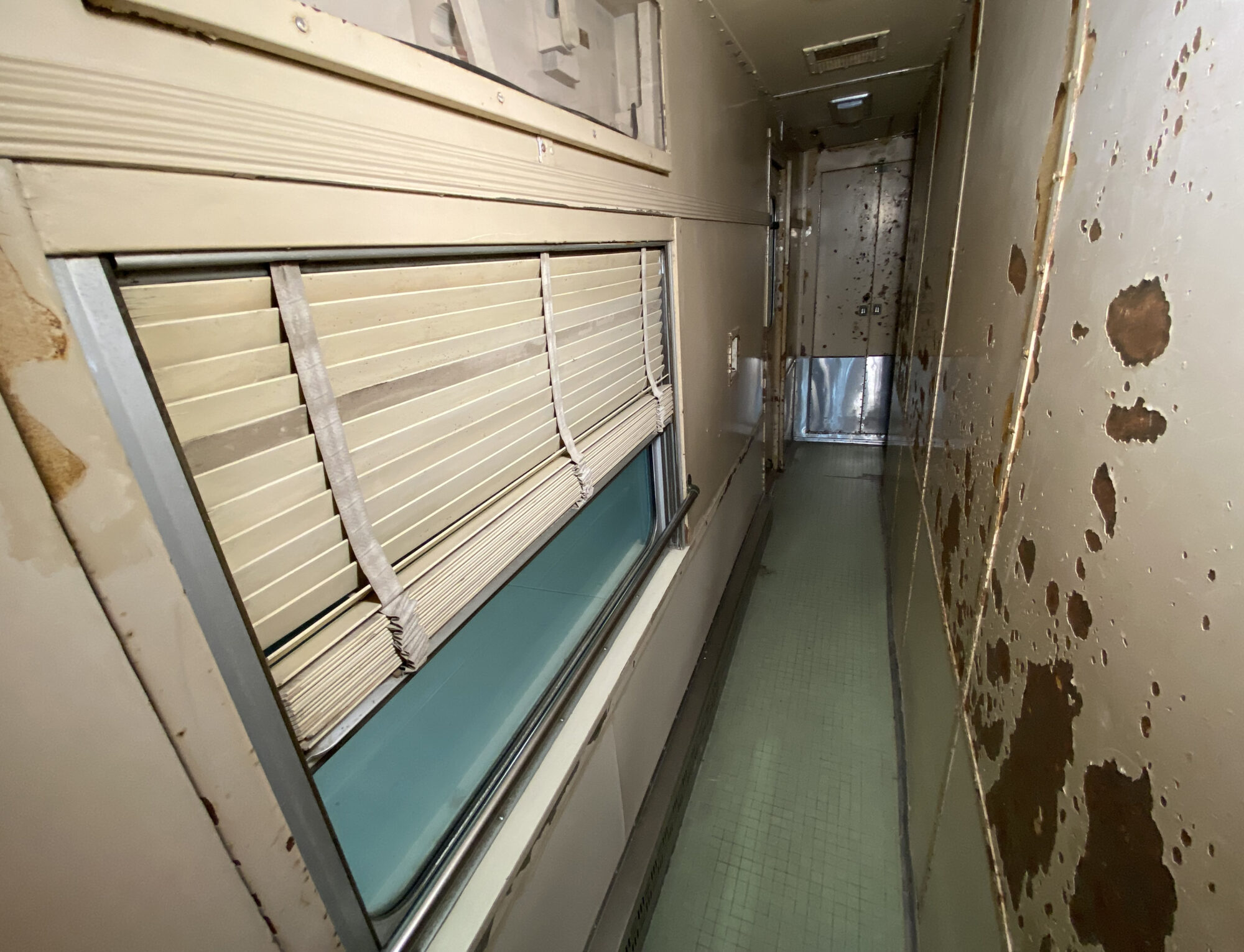
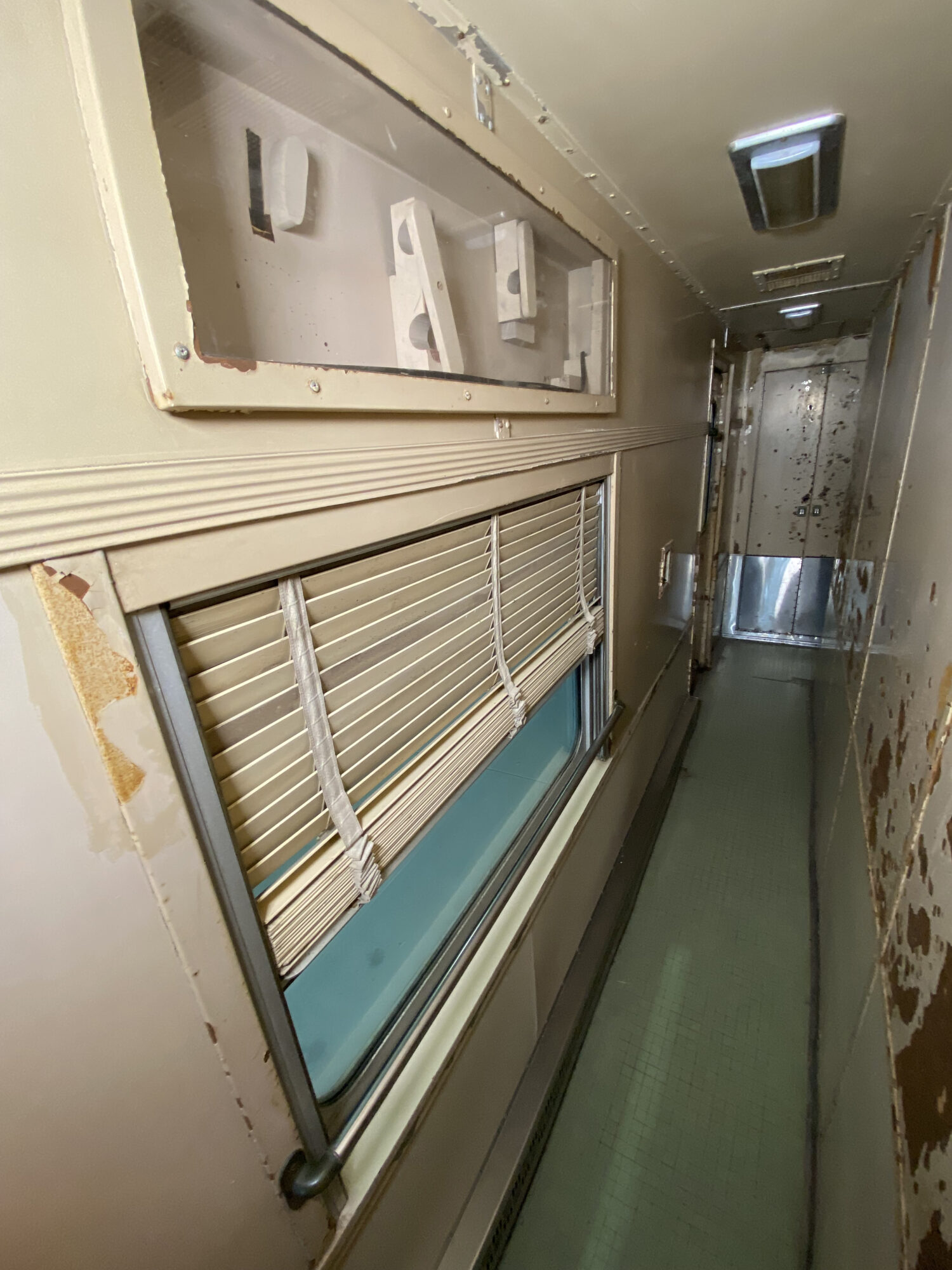
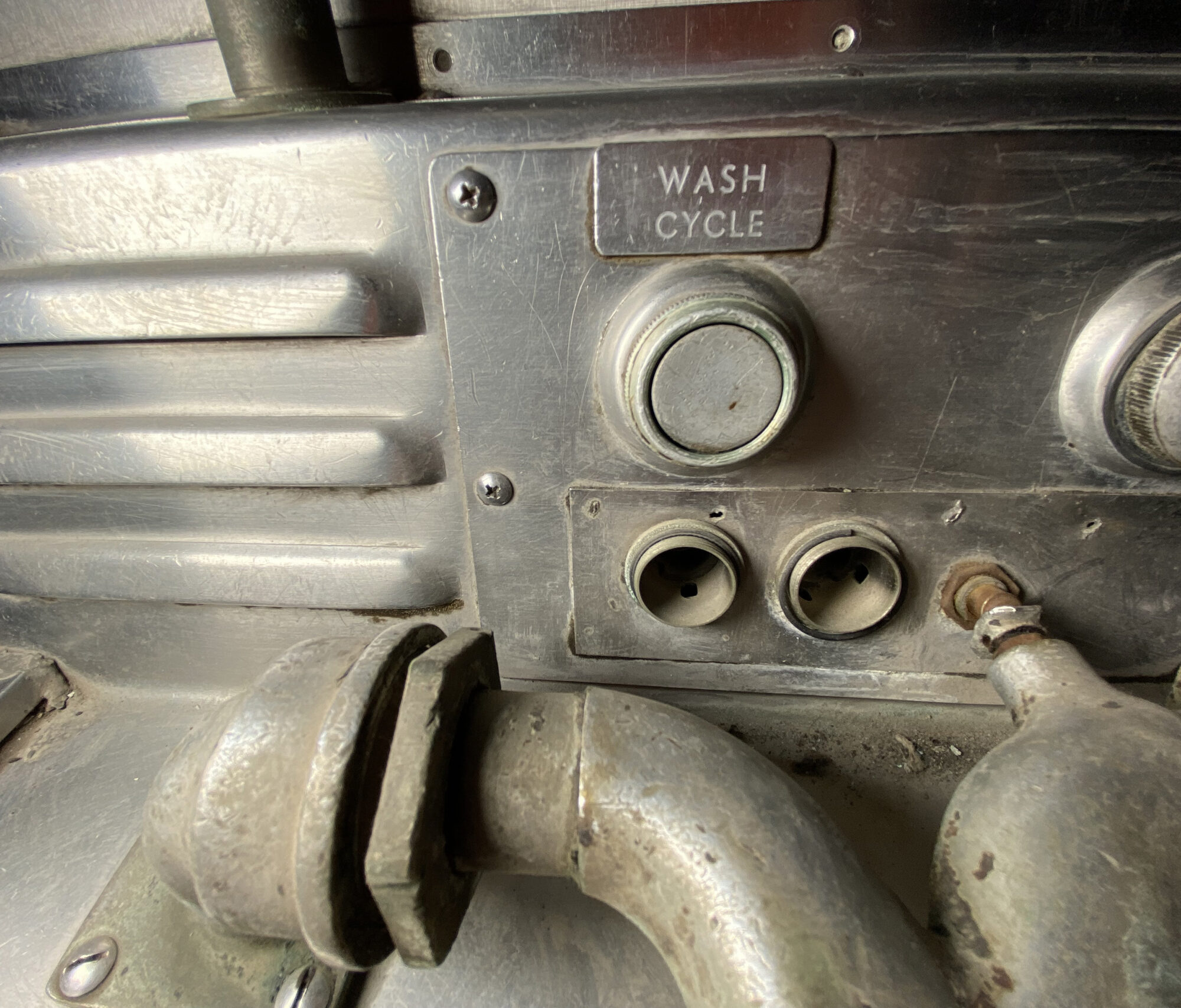
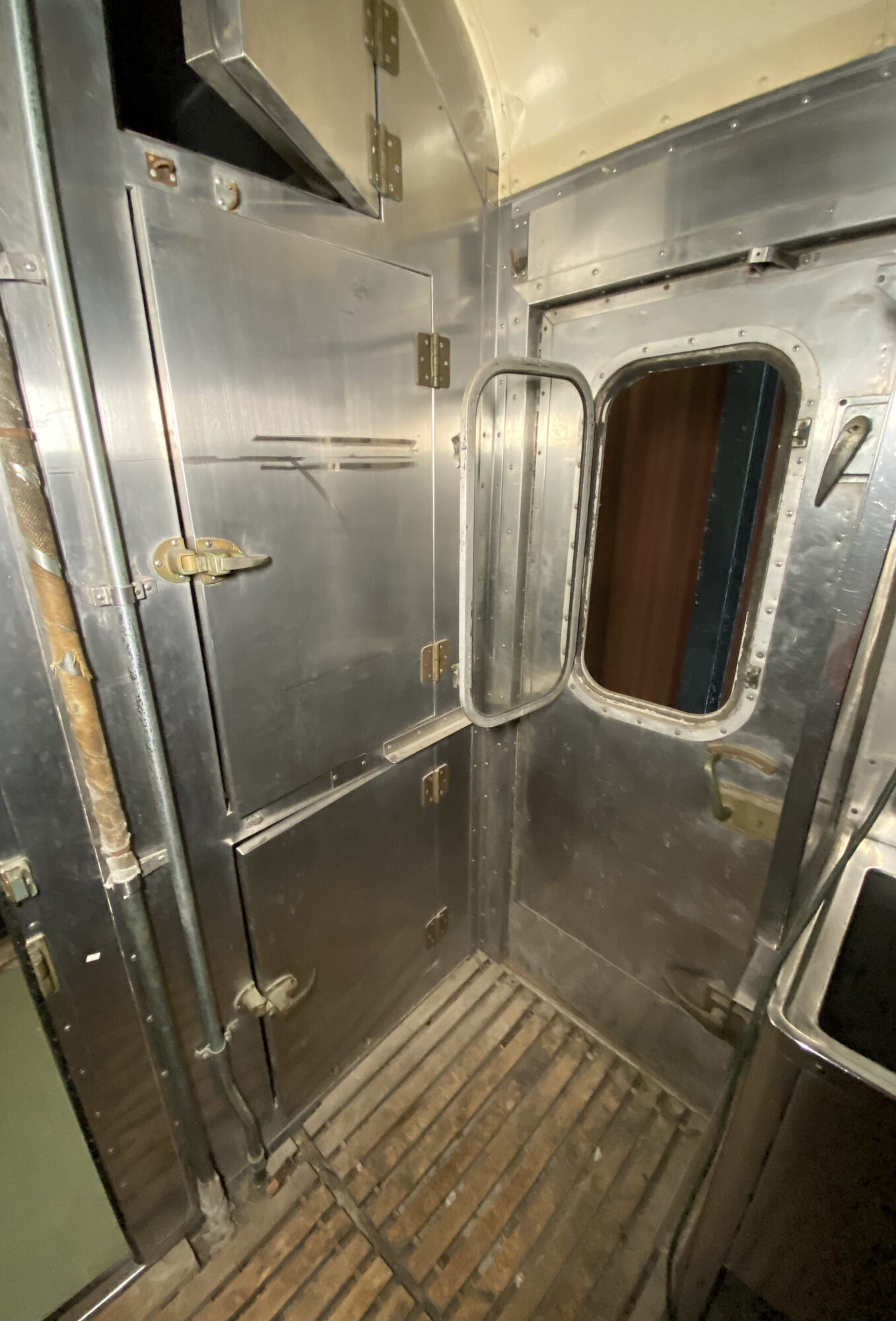
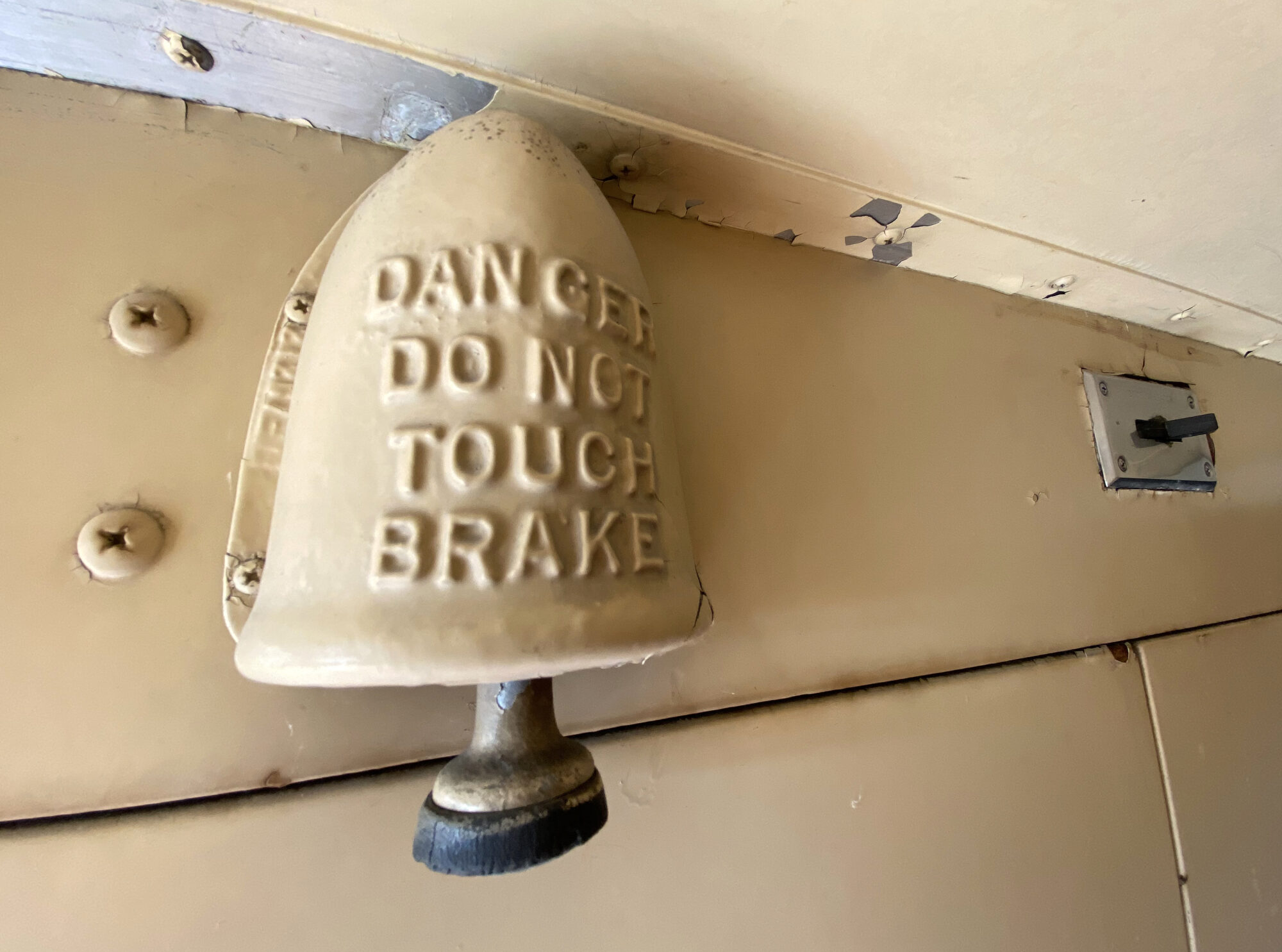
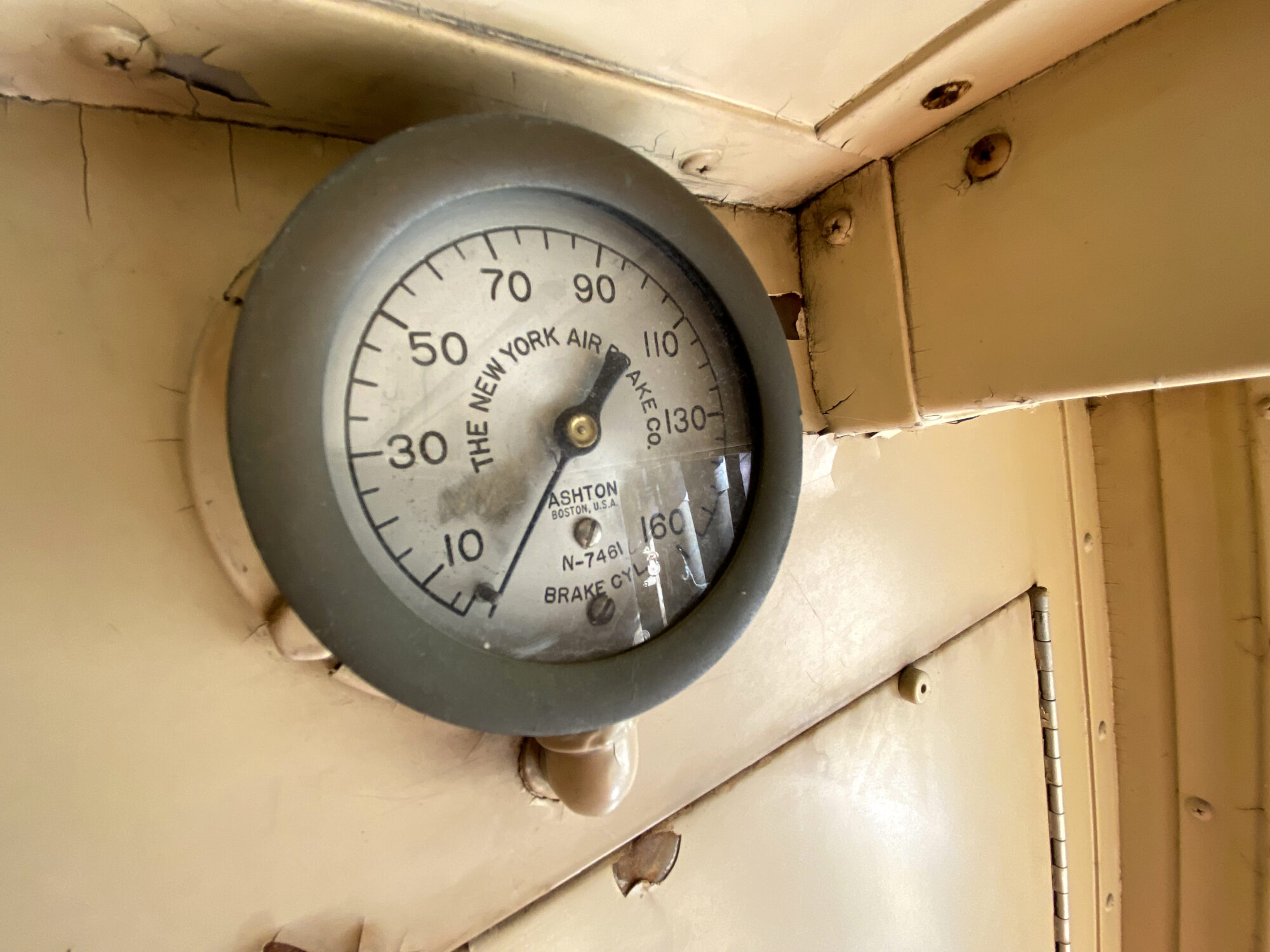
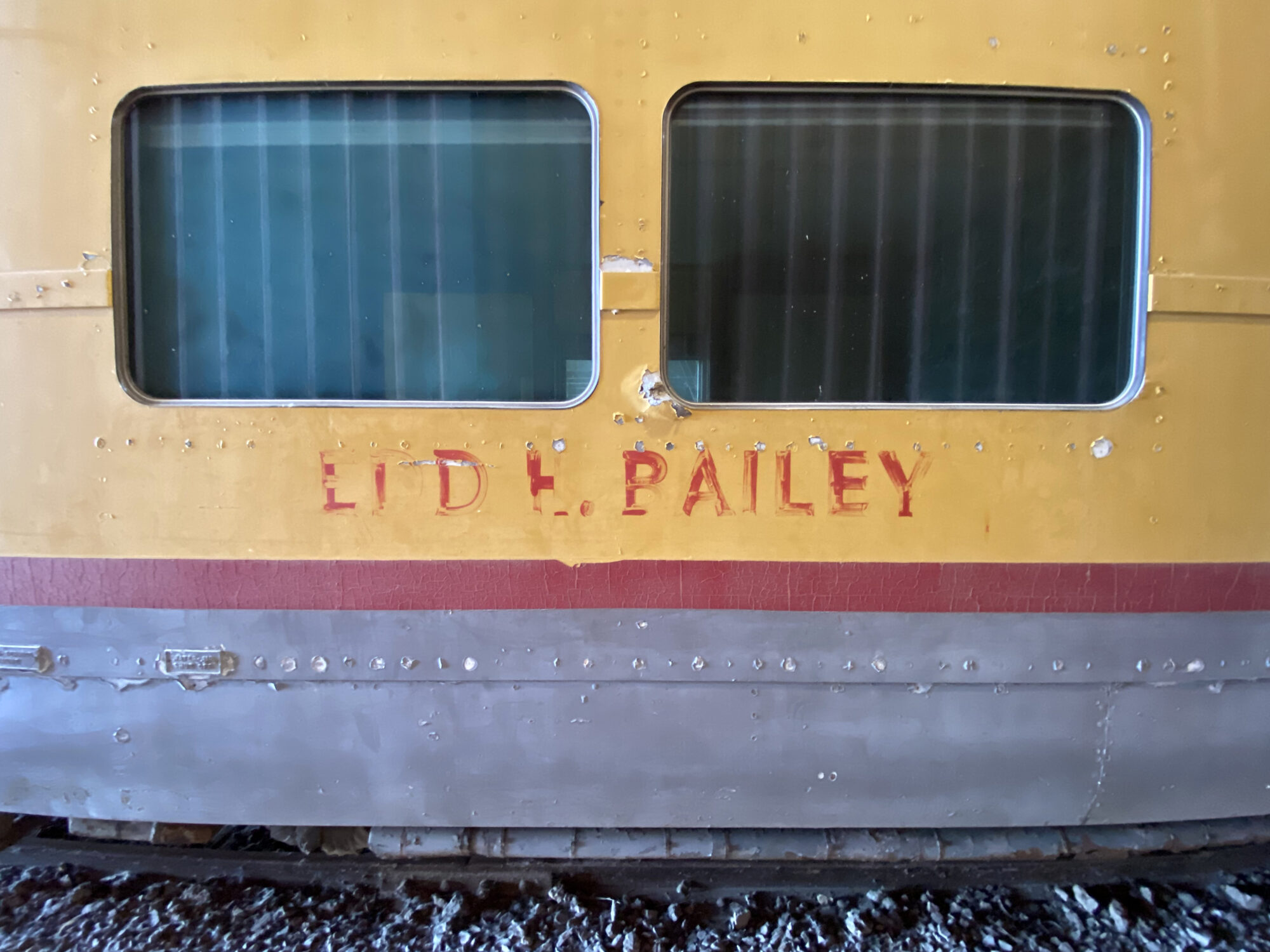
2024 Photos – Union Pacific #8003 Dome Diner, Pre-Restoration
Contact Us
Daniel Liedtke, Curator | (920) 437-7623 or dliedtke@nationalrrmuseum.org